

Close Menu
Daljoog News
    What's Hot
    Iran Fast Boats Raise Security Risks in Hormuz Strait

    Iran Fast Boats Raise Security Risks in Hormuz Strait

    April 25, 2026
    2PM Ok Taecyeon Marries After 10 Years of Love

    2PM Ok Taecyeon Marries After 10 Years of Love

    April 25, 2026
    Russia Gold Reserves Drop After Massive 22 Ton Sale.jpg The server cannot process the image. This can happen if the server is busy or does not have enough resources to complete the task. Uploading a smaller image may help. Suggested maximum size is 2560 pixels.

    Russia Gold Reserves Drop After Massive 22 Ton Sale

    April 25, 2026
    Facebook X (Twitter) Instagram
    Thursday, May 21
    Daljoog News
    Facebook X (Twitter) YouTube Instagram
    • Home
    • General
    • World
    • Business
    • Technology
    • Politics
    • Finance
    • Health
    • Lifestyle
    • Sports
    • Travel
    Daljoog News
    Home»Security»US Carrier at Risk as Iran’s Missiles Test China’s Strategy
    Security

    US Carrier at Risk as Iran’s Missiles Test China’s Strategy

    Andrew RogersBy Andrew RogersFebruary 17, 2026No Comments4 Mins Read
    Facebook Twitter Pinterest LinkedIn Tumblr Email
    Follow Us
    Google News
    US Carrier at Risk as Iran’s Missiles Test China’s Strategy
    US Carrier at Risk as Iran’s Missiles Test China’s Strategy
    Share
    Facebook Twitter LinkedIn Pinterest Email

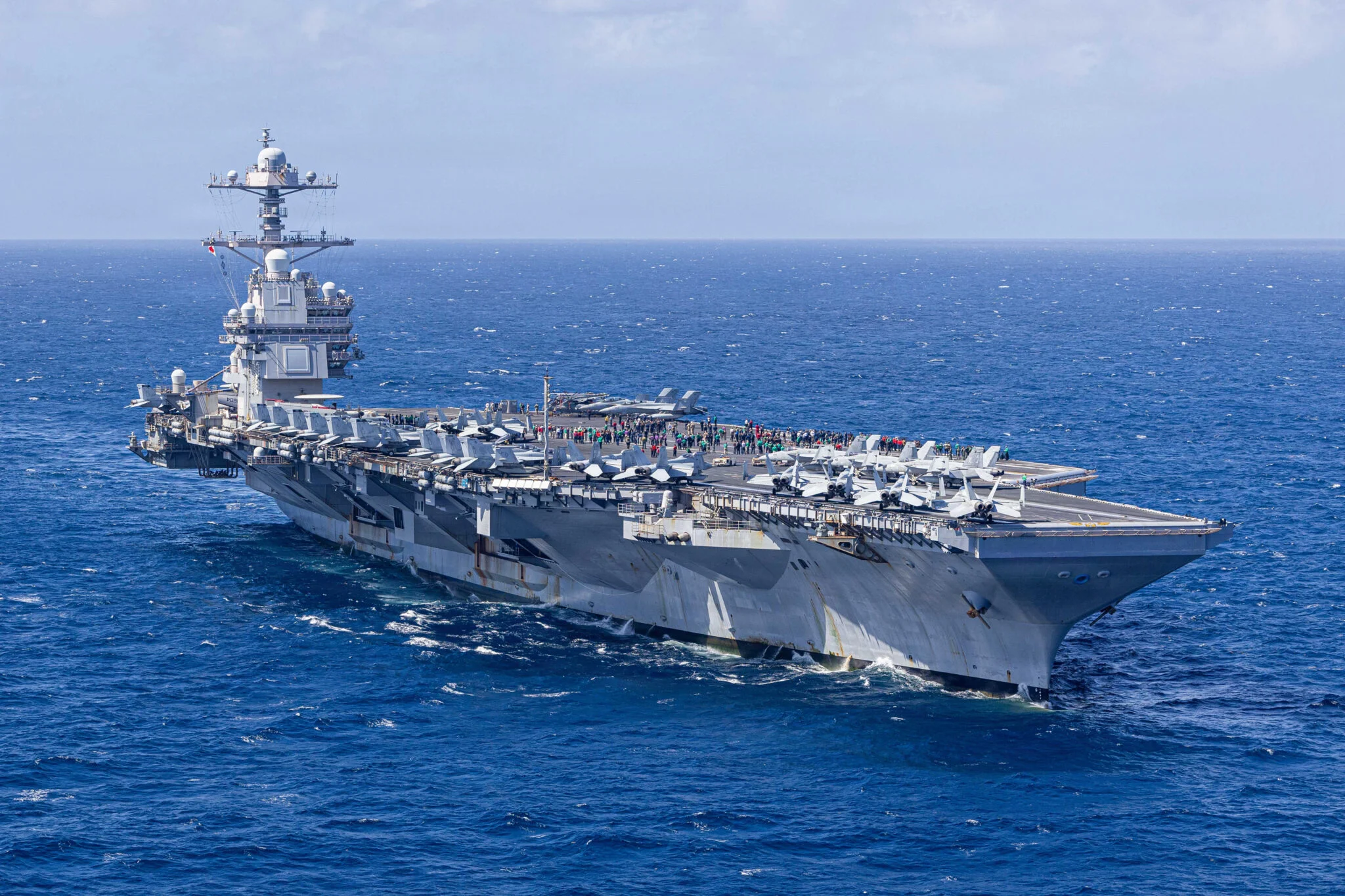
    The United States has deployed multiple aircraft carriers to the Middle East amid rising tensions with Iran, including the USS Abraham Lincoln and USS Gerald R. Ford. Military observers warn the standoff could escalate into a major confrontation at any moment.

    According to Daljoog News analysis, Beijing is quietly using the Iran crisis as a live testing ground for advanced “carrier-killer” strategies. China appears to be studying how modern missile technology could neutralize America’s symbol of naval dominance.

    The timing is significant. As Washington positions its carriers near Iranian waters, Beijing gains a low-risk opportunity to refine techniques it may later deploy in more contested regions such as Taiwan and the South China Sea.

    What Happened?

    Tensions in the Persian Gulf have prompted the US Navy to send its most advanced carriers, including the USS Abraham Lincoln and the USS Gerald R. Ford, into the region. The presence of these floating airbases signals readiness for large-scale conflict but also exposes them to new threats.

    Defense analysts report that China’s DF-26 and other long-range “carrier-killer” missiles can target ships from thousands of kilometers away. Pentagon assessments now acknowledge that engaging Chinese forces near its coast could result in certain defeat for American carriers.

    Western intelligence suggests that China has also been leveraging Iran’s ballistic missile arsenal. Satellite and targeting data from US carriers may be observed by Chinese systems, effectively turning Iran into a proxy testing ground for Beijing’s anti-carrier technology.

    China’s long-running program, known as the “Aerial” strategy, focuses on keeping American forces at a distance from key strategic zones. Iran’s current standoff serves as a practical rehearsal for this network, which integrates missile strikes, electronic warfare, cyberattacks, and communication disruptions.

    Why This Matters

    If China can demonstrate that its systems can successfully target and neutralize US carriers, the strategic balance in the Indo-Pacific and Middle East could shift dramatically. America’s ability to project power in crises—whether in Taiwan, the South China Sea, or the Persian Gulf—may be more limited than previously assumed.

    Moreover, US carriers operating in contested waters are no longer just vulnerable to missiles. Electronic interference and cyber operations could degrade their sensors, communications, and defense systems, leaving them exposed even before an attack occurs.

    This development challenges decades of US naval dominance and signals to allies and adversaries alike that carriers are no longer invincible symbols of American military might.

    What Analysts or Officials Are Saying

    Defense experts note that China has spent years refining methods to undermine carrier-based operations without engaging directly in open conflict. By observing US maneuvers through Iran, Beijing can test its missiles, electronic warfare capabilities, and command-and-control systems in real-world conditions.

    Western analysts describe this as a “live rehearsal” for potential conflicts over Taiwan. It allows China to assess how US fleets respond under pressure, including how they cope with simultaneous missile threats, satellite tracking, and cyber disruptions.

    Pentagon officials are reportedly aware of the risk but face a strategic dilemma: withdrawing carriers reduces influence in the region, while staying puts these assets at unprecedented risk.

    Daljoog News Analysis

    The Iran standoff is proving unexpectedly valuable for China. Without entering a confrontation, Beijing can monitor US naval operations, refine targeting for its missile arsenal, and study the effectiveness of electronic and cyber warfare against advanced carriers.

    For Washington, this situation underscores a new reality: traditional naval power alone may no longer guarantee dominance. Future conflicts could require integration of countermeasures against long-range missiles, electronic disruption, and precision-guided surveillance.

    This scenario also has political implications. Allies in Asia and the Middle East may question US reliability if carriers can be neutralized without significant engagement, while Beijing gains strategic intelligence that could inform future campaigns in Taiwan or contested maritime zones.

    What Happens Next

    In the short term, US carriers will likely continue operating near Iranian waters, maintaining deterrence while gathering intelligence. However, every deployment increases the risk of missile strikes or electronic interference.

    Analysts expect China to continue using Iran as a testing environment, potentially expanding experiments in cyber and electronic warfare. For the US, this may accelerate investments in missile defenses, anti-jamming systems, and tactical countermeasures.

    Looking ahead, the dynamics of naval power in the Indo-Pacific and the Middle East could shift significantly. If carrier-killer technologies are validated, Washington may need to rethink its approach to projecting force abroad, while Beijing gains a low-cost path to erode American advantages without direct war.

    Share. Facebook Twitter Pinterest LinkedIn Tumblr Email
    Andrew Rogers
    Andrew Rogers
    • Website
    • Facebook

    Andrew Rogers is a seasoned journalist and news analyst specializing in global affairs, politics, and finance. With a passion for investigative reporting, he delivers accurate, insightful stories that inform and engage readers worldwide.

    Related Posts

    USS Gerald R. Ford Disabled After Devastating 30-Hour Fire

    USS Gerald R. Ford Disabled After Devastating 30-Hour Fire

    April 1, 2026
    US May Target Iran Islands in Potential Ground Offensive

    US May Target Iran Islands in Potential Ground Offensive

    March 30, 2026
    ICE May Stay at Airports Until TSA Staffing Stabilizes Amid Shutdown

    ICE May Stay at Airports Until TSA Staffing Stabilizes Amid Shutdown

    March 30, 2026

    Comments are closed.

    Our Picks
    USS Gerald R. Ford Disabled After Devastating 30-Hour Fire

    USS Gerald R. Ford Disabled After Devastating 30-Hour Fire

    April 1, 2026
    US May Target Iran Islands in Potential Ground Offensive

    US May Target Iran Islands in Potential Ground Offensive

    March 30, 2026
    ICE May Stay at Airports Until TSA Staffing Stabilizes Amid Shutdown

    ICE May Stay at Airports Until TSA Staffing Stabilizes Amid Shutdown

    March 30, 2026
    Is Iran's chances of winning heavy?

    Is Iran’s chances of winning heavy?

    March 5, 2026
    Stay In Touch
    • Facebook
    • Twitter
    • Instagram
    • YouTube
    Don't Miss
    Trump’s Bold Threat That Stopped India-Pakistan War!

    Trump’s Bold Threat That Stopped India-Pakistan War!

    World May 13, 2025

    A possible nuclear war between India and Pakistan was stopped by a sharp warning from…

    Los Angeles police Shoot Woman with Non-Lethal Round Near Home

    Los Angeles police Shoot Woman with Non-Lethal Round Near Home

    June 12, 2025
    Immigration and Customs Enforcement

    Immigration and Customs Enforcement: Roles and Challenges

    June 15, 2025
    Neymar 2026 World Cup Brazil Selection Hinges on Ancelotti

    Neymar 2026 World Cup Brazil Selection Hinges on Ancelotti

    April 13, 2026
    About Us

    Daljoog News is a trusted news platform that brings you the latest global and local updates with accuracy and fairness. We are committed to clear and unbiased reporting, covering topics like politics, business, technology, science, and culture and more. Using the latest technology and expert journalism, we provide reliable coverage of important stories. Stay informed, inspired, and empowered with Daljoog News—your source for breaking news, the latest updates, and videos that matter.

    Email Us: info@daljoognews.com

    Our Picks
    California Threatens Paramount’s $110B Warner Deal

    California Threatens Paramount’s $110B Warner Deal

    February 28, 2026
    US Judge Dismisses Buffalo Wild Wings Lawsuit

    US Judge Dismisses Buffalo Wild Wings Lawsuit

    February 18, 2026
    Casey Wasserman to Sell Agency Amid Epstein File Fallout

    Casey Wasserman to Sell Agency Amid Epstein File Fallout

    February 15, 2026
    Latest News
    Iran Fast Boats Raise Security Risks in Hormuz Strait

    Iran Fast Boats Raise Security Risks in Hormuz Strait

    April 25, 2026
    2PM Ok Taecyeon Marries After 10 Years of Love

    2PM Ok Taecyeon Marries After 10 Years of Love

    April 25, 2026
    Russia Gold Reserves Drop After Massive 22 Ton Sale.jpg The server cannot process the image. This can happen if the server is busy or does not have enough resources to complete the task. Uploading a smaller image may help. Suggested maximum size is 2560 pixels.

    Russia Gold Reserves Drop After Massive 22 Ton Sale

    April 25, 2026
    Facebook X (Twitter) RSS YouTube Instagram
    • Home
    • About Us
    • Contact Us
    • Our Authors
    • Privacy Policy
    • Terms & Conditions
    • Sitemap
    © 2026 DaljoogNews.com

    Type above and press Enter to search. Press Esc to cancel.