

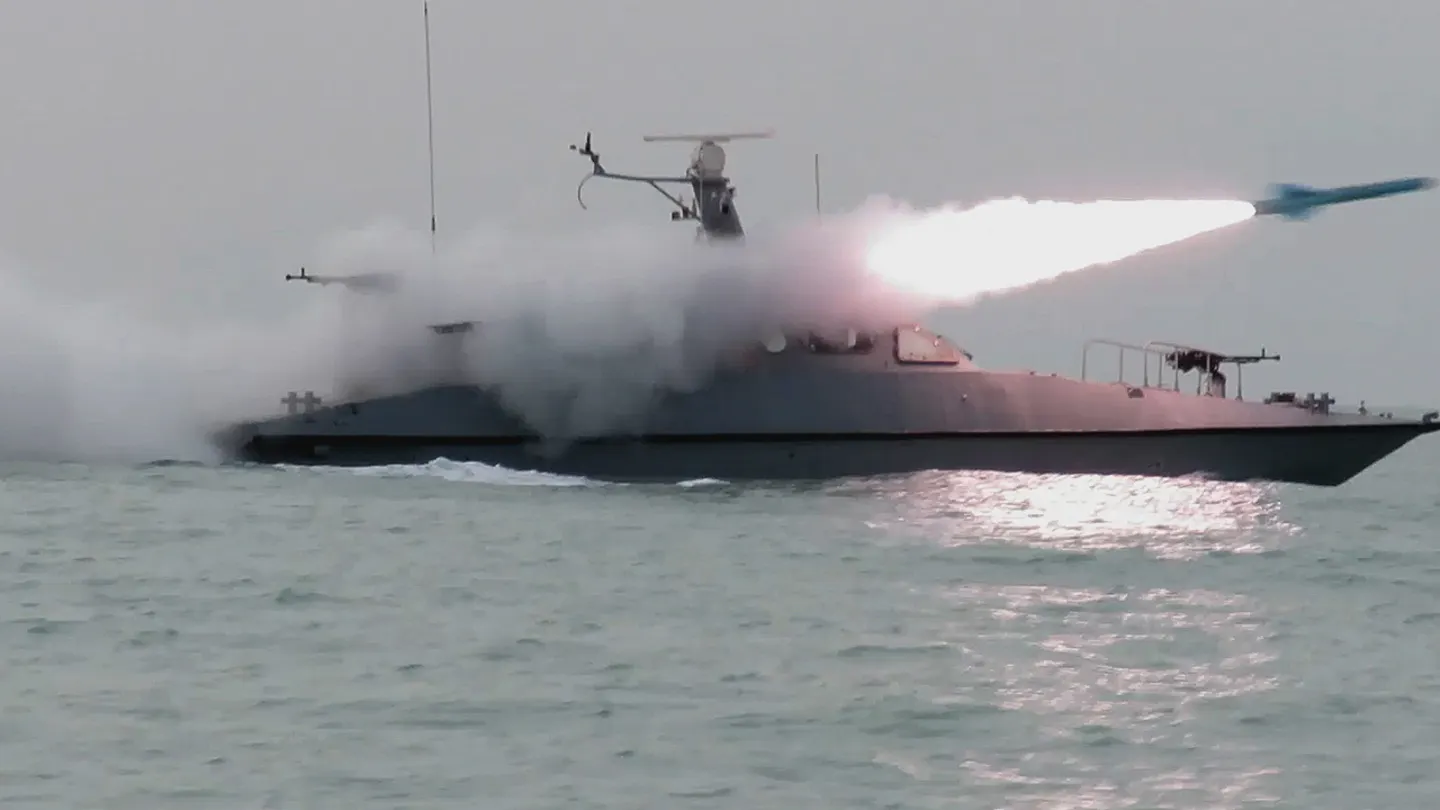
Iran’s Revolutionary Guard carried out a large-scale naval exercise in the Strait of Hormuz just one day before planned nuclear discussions with the United States.
According to Daljoog News analysis, the timing of the drill appears deliberate, underscoring Tehran’s strategic leverage over one of the world’s most critical oil transit routes as diplomatic engagement resumes.
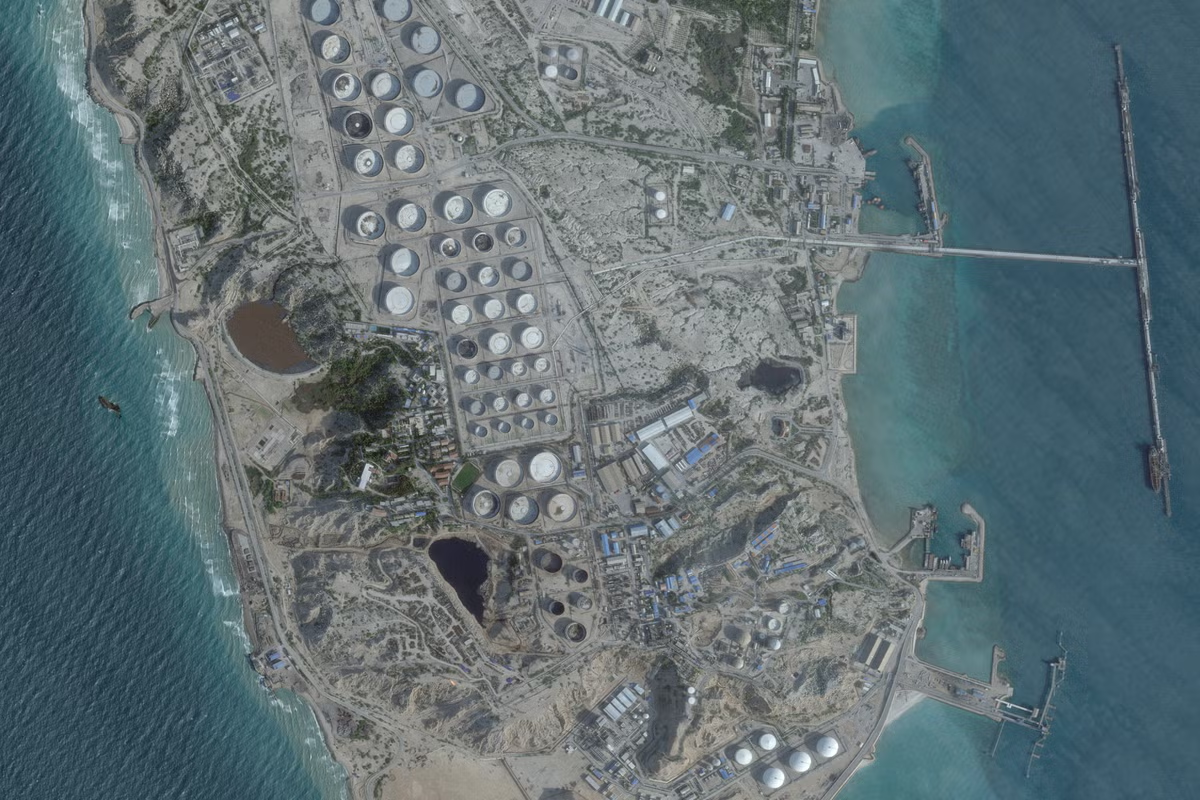
The maneuver unfolded in the narrow maritime corridor linking the Persian Gulf to the Gulf of Oman, a chokepoint that handles a significant share of global crude exports and remains central to regional security calculations.
What Happened?
The naval arm of the Islamic Revolutionary Guard Corps conducted the exercise on Monday in the Strait of Hormuz.
The operation was overseen by IRGC Chief Commander Mohammad Pakpour.
Iranian media reported multiple controlled explosions, missile launches and coordinated naval maneuvers as part of the drill, which was titled “Smart Control of the Hormuz Strait.”
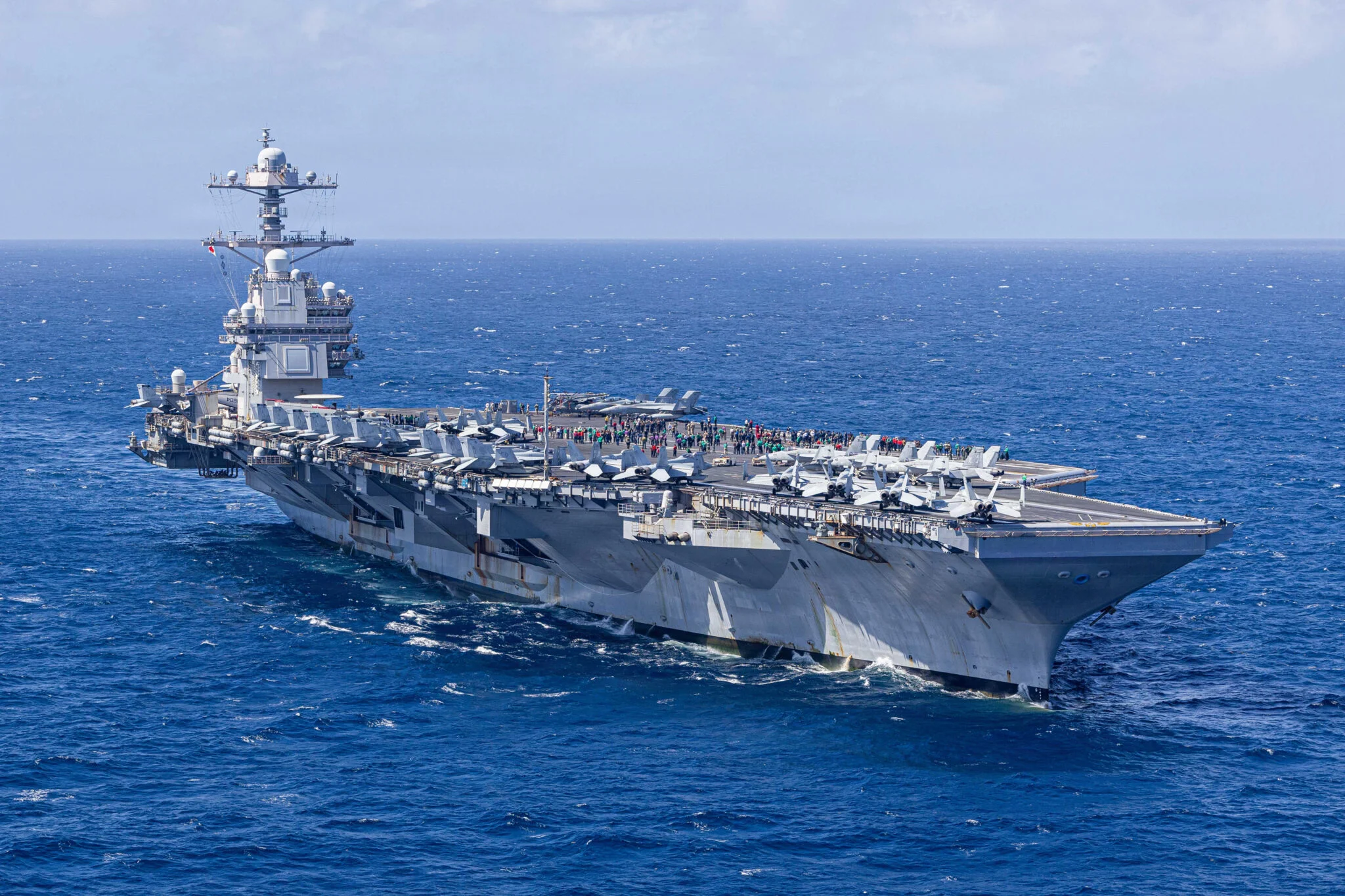
Fast attack boats, ship-launched missiles, drones and helicopters participated in the exercise. Officials said the goal was to test readiness and demonstrate the navy’s operational capability in a high-stakes maritime zone.
The display took place just before scheduled talks between Tehran and Washington over Iran’s nuclear program.
Iranian outlets indicated that naval preparedness was evaluated ahead of the diplomatic engagement, signaling that security and negotiation tracks are moving in parallel.
Why This Matters
The Strait of Hormuz remains one of the world’s most strategically sensitive waterways.
A large portion of oil exports from Saudi Arabia, Iraq, and the United Arab Emirates passes through this corridor before reaching global markets.
Any disruption in the strait could quickly affect energy prices and shipping insurance rates.
Iran has repeatedly warned that it could close or restrict the waterway in response to military pressure or sanctions.
By staging a visible drill days before nuclear talks, Tehran sends a message: it retains the capability to influence global energy flows if tensions escalate.
The exercise also highlights Iran’s dual-track approach—engaging diplomatically while reinforcing deterrence.
What Analysts or Officials Are Saying
Security analysts view the maneuver as calibrated signaling rather than preparation for imminent conflict.
They argue that Tehran often uses military drills to reinforce bargaining power during periods of diplomatic transition.
Regional observers note that similar exercises have preceded past rounds of negotiations.
Energy market experts are watching closely but have not reported immediate disruptions. Shipping lanes remain open, and no emergency maritime advisories have been issued.
Western officials have not publicly responded in detail, though diplomatic channels remain active ahead of the talks.
Daljoog News Analysis
The timing of this exercise is unlikely to be accidental.
Iran understands that the Strait of Hormuz is more than geography. It is leverage.
By demonstrating naval capability in a globally vital corridor, Tehran reinforces its strategic relevance just as nuclear negotiations resume.
The move also serves domestic audiences. Military visibility often bolsters internal narratives of strength and sovereignty.
At the same time, Iran must balance signaling with restraint. Any miscalculation in such a narrow waterway could trigger rapid escalation.
History shows that even minor maritime incidents in the Gulf can spiral into broader confrontation.
Tehran’s message appears measured: capability without immediate closure, warning without direct provocation.
Whether Washington interprets the drill as pressure or routine military activity may shape the tone of the upcoming talks.
What Happens Next
Attention now turns to the scheduled nuclear discussions between Iran and the United States.
Diplomats will likely proceed cautiously, aware of the broader security backdrop.
If talks advance constructively, military posturing may recede into routine exercises.
If negotiations stall, further demonstrations in the Strait of Hormuz cannot be ruled out.
Energy markets will continue to monitor the situation for signs of shipping disruption or renewed sanctions pressure.