


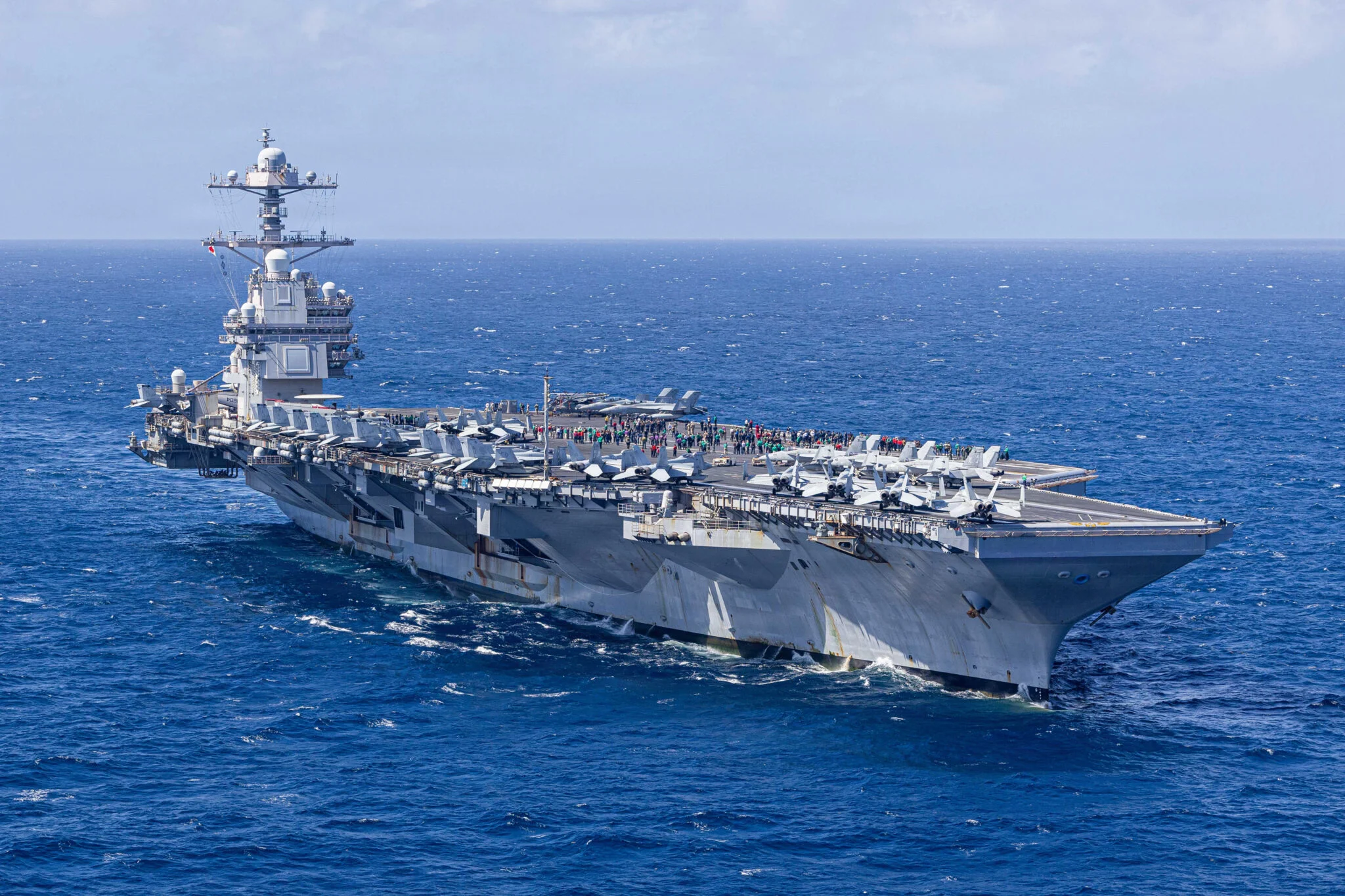
The USS Gerald R. Ford, once considered the pinnacle of U.S. naval power, has been rendered largely inoperative following a massive onboard fire. The blaze, which began on March 12 in the Red Sea, burned uncontrolled for more than 30 hours, causing extensive damage to one of America’s most advanced warships.
According to Daljoog News analysis, the incident exposes vulnerabilities in the Navy’s high-tech systems and highlights challenges in maintaining a fleet of increasingly complex vessels. The fire raises urgent questions about operational readiness and the effectiveness of automated safety mechanisms on next-generation ships.
The timing is critical. At a moment when geopolitical tensions in the Middle East and Venezuelan waters are rising, the temporary loss of the Gerald R. Ford represents both a tactical gap and a symbolic blow to U.S. naval prestige.
What Happened?
The fire started in the ship’s laundry area, initially described by U.S. Central Command as a minor incident. Within hours, the blaze escalated into a catastrophic event. For more than 30 hours, flames and intense heat swept through the vessel, displacing over 600 sailors and disrupting normal operations.
Naval reports indicate that the fire caused severe structural and electronic damage. Hallways, crew quarters, and key operational areas were compromised, leaving the ship essentially a stranded metallic wreck in a Croatian port. Aircraft stored on the upper deck are now largely inaccessible due to damage to elevators and hangars, rendering critical aviation assets unusable.
This incident surpasses previous onboard disasters, including the USS Forrestal fire of 1967, both in duration and in the scale of internal destruction. Sailors have been forced to sleep on decks and improvised areas, without basic amenities such as functioning laundry or dining facilities.
Why This Matters
The Gerald R. Ford is the most technologically advanced aircraft carrier in the U.S. fleet. Its temporary incapacitation creates a significant operational gap. Analysts point out that the Navy’s ability to project power in sensitive regions—particularly the Middle East—is now partially constrained.
The incident also underscores systemic challenges in naval logistics and maintenance. Chronic issues, including malfunctioning vacuum toilets and recurrent plumbing failures, have plagued the vessel for years. Repairing the fire damage alone is expected to take 12 to 14 months, keeping a cornerstone of U.S. sea power out of commission for the foreseeable future.
Beyond logistics, the fire represents a symbolic blow to U.S. naval dominance. Images of a once-proud floating city reduced to a disordered, smoke-filled vessel highlight both technological overreach and operational fragility.
What Analysts or Officials Are Saying
Military analysts describe the situation as a rare convergence of technological failure and human disruption. The ship’s advanced automated fire suppression systems did not perform as designed, raising concerns at the Pentagon about reliance on complex digital systems over manual safety protocols.
Internationally, the incident has drawn scrutiny. Iranian military officials have suggested that the fire reflects deeper weaknesses in U.S. naval operations, although Washington dismisses claims of sabotage. Meanwhile, observers note growing public skepticism within the U.S., fueled by the contrast between media reports and official reassurances.
Experts also stress the long-term operational impact. Disrupted carrier readiness limits rapid deployment capabilities, reduces training opportunities for naval aviators, and may affect strategic calculations in areas of high tension.
Daljoog News Analysis
The Gerald R. Ford fire is a cautionary tale about over-reliance on cutting-edge technology without sufficient redundancy. While the carrier represents a remarkable engineering achievement, its failure illustrates that technological sophistication can become a liability when maintenance and contingency planning lag.
The crisis also spotlights morale and leadership challenges. Sailors living amid unsanitary conditions and damaged facilities face not only physical risks but psychological strain, which in turn could affect overall force readiness. In a broader sense, this incident may prompt a reassessment of U.S. naval procurement and design philosophy, especially as future carriers grow larger and more complex.
Strategically, the fire temporarily reduces U.S. influence in critical maritime corridors, offering potential openings for rival powers to challenge U.S. operations without immediate naval opposition.
What Happens Next
Repairs on the USS Gerald R. Ford are expected to take at least a year. Naval engineers will prioritize restoring structural integrity, firefighting systems, and aviation capabilities, though full operational capacity may take longer.
In the interim, the U.S. Navy will likely adjust deployment schedules, relying on other carriers to fill operational gaps. Analysts will monitor the incident’s effect on naval exercises, regional deterrence strategies, and fleet readiness assessments.
The Gerald R. Ford case will also influence future carrier design and maintenance protocols. Ensuring that advanced technology does not outpace reliability will be a key lesson for the Navy’s next-generation vessels.