

After reshaping the automobile and rocket industries, Elon Musk has now announced plans to take artificial intelligence infrastructure into space. His goal is to expand the use of AI and chatbots without increasing pressure on Earth’s electricity grids.
According to Daljoog News analysis, the proposal represents not just a technological leap but an attempt to redefine global control over AI computing power.
As energy demand from AI systems continues to surge worldwide, Musk’s idea has emerged at a moment when concerns over sustainability and infrastructure limits are growing rapidly.
What Happened?
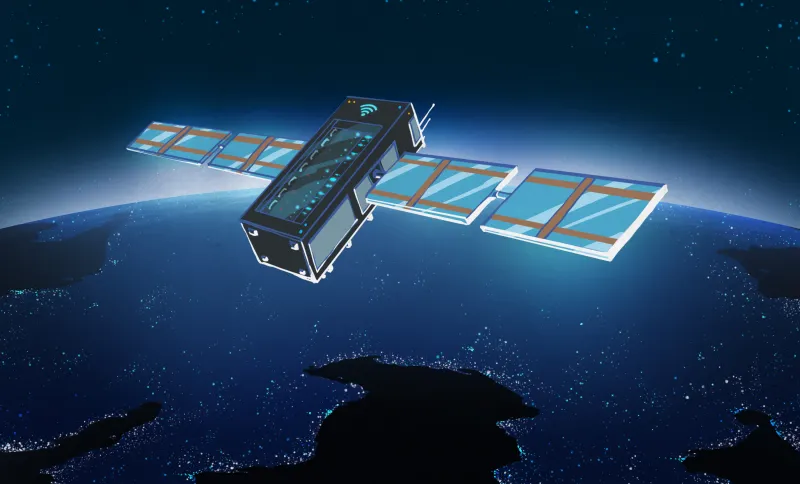
Elon Musk has revealed plans to build solar-powered data centers in Earth’s orbit by deploying up to one million satellites. These orbital facilities would handle AI model operations, chatbot services, and large-scale data processing.
Musk said the initiative could be financed by closer integration between his AI business and SpaceX. He also signaled plans to develop major intellectual property under a joint structure, potentially paving the way for long-term commercial expansion.
The core argument behind the project is that AI data centers on Earth are consuming increasing amounts of electricity, placing long-term strain on national power grids. Using direct solar energy in space, Musk believes, could bypass those limitations.
Why This Matters
The global expansion of artificial intelligence is creating serious challenges related to power consumption, environmental impact, and infrastructure capacity. Large-scale data centers require enormous amounts of energy, pushing many countries’ power systems to their limits.
If Musk’s plan succeeds, it could fundamentally change how AI infrastructure is powered. While this may reduce environmental stress on Earth, it also risks turning outer space into a new industrial zone.
There are also geopolitical implications. Countries or companies without access to space-based computing may become increasingly dependent on a small number of private space operators, potentially concentrating technological power in unprecedented ways.
What Analysts and Experts Are Saying
Many scientists and industry experts are urging caution. They warn that operating data centers in space presents major technical challenges.
Without air, dissipating heat generated by servers and AI chips becomes extremely difficult, increasing the risk of system failure. Experts also warn that deploying massive numbers of satellites would significantly increase space debris.
If Starlink’s satellite network expands to hundreds of thousands or even a million units, analysts fear high-speed collisions could threaten communication systems and weather monitoring networks.
Baizovat, CEO of Ether Flux, said that if expensive GPU chips used for AI fail in space, repairing or replacing them would be nearly impossible. Sending technicians into orbit is unrealistic, and carrying spare chips would be prohibitively costly due to their high prices.
Daljoog News Analysis
Musk’s proposal represents an extreme form of technological ambition. While it forces the industry to rethink the future of AI infrastructure, it also introduces risks on an unprecedented scale.
His biggest advantage is his own rocket launch system. By offering massive cost reductions in launch expenses, Musk holds a competitive edge over rivals. Analysts view this not only as a business advantage but also as a demonstration of power.
However, major questions remain unanswered. If space becomes a hub for data centers, who will regulate it? Who will be responsible for security, environmental damage, and orbital safety? These issues remain unresolved.
What Happens Next
Musk is not alone in this race. Starcloud, Google, and Jeff Bezos’s Blue Origin are also developing space-based data and satellite network projects.
In the coming months, debates over technical feasibility, investment models, and government approvals are expected to intensify.
Experts say only real-world testing will determine whether space-based AI data centers are a viable future solution or an ambitious but risky experiment.