



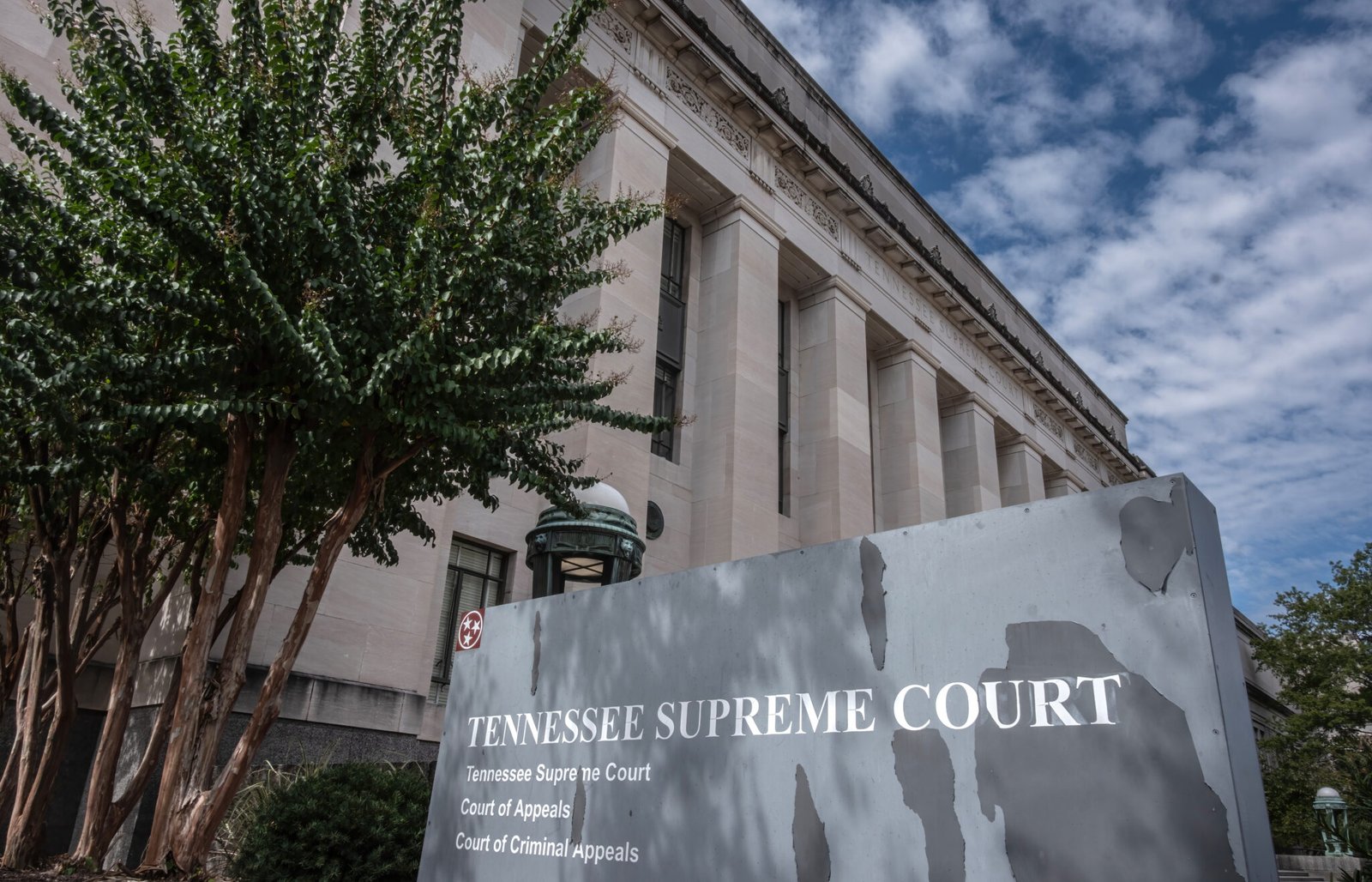
The Tennessee Supreme Court has upheld the state’s 2022 legislative redistricting maps, rejecting a lower court judgment that had found the state Senate map unconstitutional. The decision concluded that a voter in a misnumbered Davidson County Senate district did not have standing to challenge the map. The ruling also confirmed that the 2022 House redistricting plan is constitutional.
The legal dispute over Tennessee’s legislative maps has spanned multiple courts since the state legislature approved the new districts following the 2020 U.S. Census. The challenge to the Senate map was brought by a Davidson County voter who argued that the four Senate districts in her county were numbered nonconsecutively, in violation of the state constitution. Under previous maps, the districts were consecutively numbered, which determined the timing of staggered Senate elections.
The Supreme Court determined that the voter did not demonstrate a specific or tangible injury from the misnumbering, noting that the irregular numbering did not diminish the weight or influence of her vote. The court referenced prior redistricting cycles in 1990 and 2000 where Davidson County districts had also been nonconsecutive, and the voter had previously participated in elections without issue. The court emphasized that other plaintiffs may be able to establish standing in future cases if they present different facts.
Earlier challenges also targeted the House map, alleging that it divided more counties than necessary and ignored alternative plans that would have preserved county integrity. The court found that one plaintiff, who resided in Gibson County, did not prove the legislature lacked a legitimate basis for splitting the county between two districts. The court maintained that the House map met constitutional standards.
The redistricting controversy initially led to a three-judge panel issuing an injunction against the Senate map in April 2022. The panel cited the constitutional requirement that Senate districts in the same county must be numbered consecutively and required lawmakers to adopt a revised map within 15 days. State officials, including the governor, secretary of state, and elections coordinator, appealed to the Tennessee Court of Appeals. The Supreme Court intervened due to the urgency of the matter, lifting the injunction shortly after.
In a minority opinion, one justice argued that the voter had suffered a constitutional injury. The dissenting opinion stated that relocating the voter to a different Senate district disrupted her representation and that the staggered election schedule in Davidson County affected her voting rights. The minority also criticized the majority for minimizing the voter’s claims and suggested that standing should be more accessible in redistricting cases to ensure constitutional protections are upheld.
The Supreme Court’s decision affirmed that the voter in Davidson County could not challenge the Senate map based solely on numbering discrepancies, while upholding that other voters might pursue future claims under different circumstances. For the House map, the court confirmed that the division of Gibson County did not constitute a legal injury or violate the state constitution.
The ruling marks a significant step in Tennessee’s ongoing redistricting legal history. It clarifies how standing is determined in cases challenging the constitutionality of legislative maps and sets a precedent for how misnumbering or district splits are treated by courts. While the Senate map issue remains controversial, the decision demonstrates the state judiciary’s reliance on strict legal criteria to evaluate claims and underscores the complexity of balancing voter representation with legislative discretion.
Overall, the Supreme Court’s action concludes the immediate legal challenges to the 2022 redistricting cycle, allowing state elections to proceed under the current maps. The court’s ruling emphasizes that voters must show concrete harm to challenge legislative maps successfully, while reaffirming the constitutionality of both the Senate and House district boundaries as drawn in 2022.