

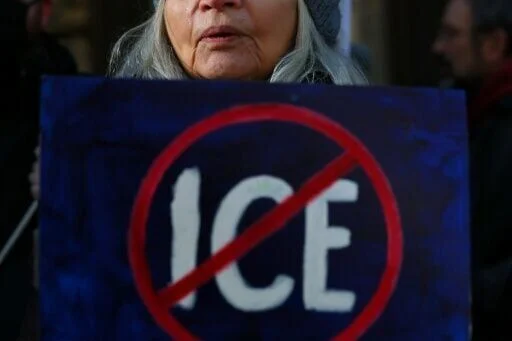
France has granted asylum to Russian activist Alexei Ishimov, who arrived in Paris on Monday after being detained by U.S. Immigration and Customs Enforcement (ICE). His wife, Nadezhda, did not arrive as planned, leaving the couple separated after nearly two years.
According to Daljoog News analysis, the situation highlights the complex intersection of U.S. immigration enforcement and international asylum efforts, as well as the ongoing risks faced by Kremlin critics abroad.
The couple fled Russia in 2022 amid a sweeping crackdown on opposition figures following Moscow’s invasion of Ukraine. France’s intervention offers a rare path to safety for Alexei, though uncertainty remains for Nadezhda.
What Happened?
Alexei Ishimov, 31, arrived in Paris from Seattle after France issued humanitarian visas to prevent deportation to Russia. His wife, 29-year-old Nadezhda, a former volunteer for the late opposition leader Alexei Navalny, was expected on a separate flight from Miami but did not appear.
Olga Prokopieva, head of the Paris-based association Russie-Libertes, said Nadezhda was denied boarding because she held a temporary travel document known as a laissez-passer rather than a passport. The organization, along with the Russian Antiwar Committee, is advocating for her to join Alexei in France as soon as possible.
The couple had initially left Russia in 2022 and traveled to Mexico before entering the United States in 2024. Alexei spent nine months in ICE detention in California and Washington before his release in January 2025 under ankle bracelet monitoring. Nadezhda, meanwhile, has been held at the South Louisiana ICE Processing Center for approximately 21 months.
Alexei has been in constant contact with international authorities seeking protection. He said he reached out to more than 100 countries beginning in May 2025, with only France providing consistent support. French diplomats coordinated closely with ICE to arrange a lawful path to safety.
Why This Matters
The case underscores the vulnerabilities faced by political dissidents and asylum seekers under U.S. immigration enforcement policies, particularly during the Trump administration’s crackdown. Since 2022, roughly 1,000 Russians, many asylum seekers, have been deported back to Russia, where they face arrest or persecution.
France’s intervention demonstrates the potential for European nations to offer alternative protections when U.S. authorities take a restrictive approach. For Kremlin critics, the risk of arbitrary detention abroad remains significant.
The ongoing separation of the couple also highlights the human cost of immigration procedures. Despite Alexei’s arrival in Paris, he remains distressed over his wife’s absence and the uncertain timeline for reunification.
What Analysts or Officials Are Saying
Activists monitoring the case, including Dmitry Valuev of Russian America for Democracy in Russia (RADR), note that U.S. courts had ordered Nadezhda’s deportation to Russia. Her travel to France would override that order but remains pending.
Observers point out that the couple’s case is emblematic of broader challenges faced by Russians seeking political asylum in the United States, including prolonged detention, limited access to legal counsel, and uncertain outcomes.
Alexei described the emotional toll, noting nearly two years of separation and constant stress. Advocates emphasize that resolution depends on coordination between French authorities, U.S. ICE, and international humanitarian groups.
Daljoog News Analysis
This situation reflects the delicate balance between national immigration policies and international humanitarian obligations. While the U.S. has aggressively pursued immigration enforcement, France has demonstrated the capacity to protect vulnerable political dissidents.
The case also highlights the logistical and bureaucratic obstacles inherent in international asylum, including travel documentation issues, differing legal jurisdictions, and extended detention periods. For Russian activists, the risk of returning home remains acute, making timely international intervention critical.
Alexei’s safe arrival in Paris represents a partial success, but the unresolved status of his wife underscores ongoing gaps in the global protection system for political refugees. Their plight serves as a reminder that humanitarian interventions often encounter procedural barriers that can prolong separation and insecurity.
What Happens Next
Efforts are underway to secure Nadezhda’s passage to France. Organizations including Russie-Libertes and the Russian Antiwar Committee are lobbying both French authorities and ICE to facilitate her travel.
Alexei has stated he will feel safe only once reunited with his wife. Activists remain hopeful that the temporary laissez-passer can be upgraded to allow her to travel immediately.