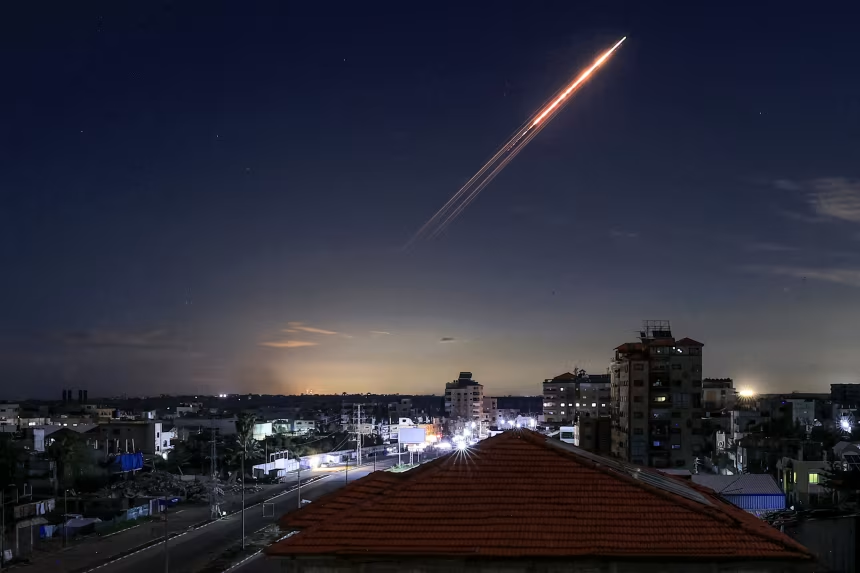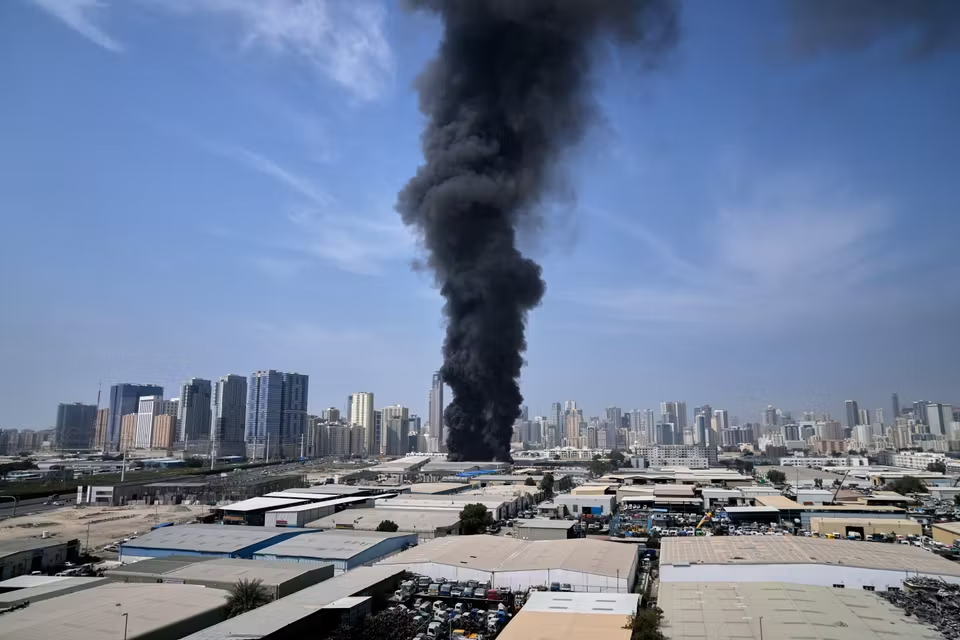
Iran has intensified its military operations across the Gulf, targeting U.S. installations in Qatar, the United Arab Emirates, and Kuwait. Multiple missile and drone strikes have already caused confirmed casualties among U.S. personnel.
According to Daljoog News analysis, these attacks demonstrate Tehran’s ability to project power across the Gulf and directly challenge U.S. and allied regional presence. The strikes also signal Iran’s willingness to escalate the conflict in response to Israeli and American actions.
The attacks come amid heightened tensions following recent U.S.-Israeli operations in Iran, raising fears of a broader regional confrontation and prompting security alerts across neighboring Gulf states.
What Happened?
On Tuesday morning, multiple explosions were reported in Doha, Qatar, as Iranian forces launched missile and drone strikes on U.S. facilities. In Dubai, the Revolutionary Guard targeted American military personnel, while Kuwait’s Arifjan base came under assault by ten drones. Iranian officials claimed the attacks successfully hit their intended targets.
U.S. and Kuwaiti authorities have yet to release full details about the scale of the damage. Washington has confirmed six U.S. military personnel were killed in the course of these operations. The attacks represent a significant expansion of hostilities from Iran, moving beyond its own borders into strategic locations across the Gulf.
Why This Matters
The targeting of American bases in three key Gulf countries underscores Iran’s capability to disrupt U.S. military operations and regional stability. These strikes increase the risk of miscalculations, which could rapidly escalate the conflict into a broader military confrontation.
Energy infrastructure and shipping lanes in the Gulf are also at heightened risk. Any disruption in this critical region could affect global oil supply, raise insurance costs for shipping, and add pressure to already volatile markets.
What Analysts or Officials Are Saying
Security experts note that Iran’s multi-pronged strike demonstrates both tactical planning and strategic signaling. Analysts believe Tehran aims to deter further U.S. or Israeli action while projecting its influence across the Gulf.
U.S. military analysts are reportedly reviewing defensive measures and contingency plans for additional strikes. Observers warn that the precision and coordination of the attacks suggest Iran could sustain longer-term operations if tensions persist.
Daljoog News Analysis
From a strategic viewpoint, Iran’s attacks mark a new phase in regional hostilities. By targeting multiple U.S. bases simultaneously, Tehran has signaled that it can strike across national borders without warning.
The confirmed deaths of six U.S. personnel indicate the potential for further casualties if retaliatory measures are taken. Regional allies and neutral parties now face increased pressure to navigate the crisis while avoiding direct involvement in hostilities.
The attacks also highlight vulnerabilities in Gulf security coordination. While U.S. forces maintain robust defenses, Iran’s use of drones and ballistic capabilities demonstrates that conventional safeguards may be insufficient against multi-directional threats.
What Happens Next
Immediate concerns focus on possible U.S. and Israeli counter-strikes. Regional bases will remain on high alert, and additional security protocols are expected for American personnel in the Gulf.
Diplomatic efforts to de-escalate the situation could intensify, with the United Nations, European powers, and Gulf allies potentially stepping in to mediate. Analysts caution that continued retaliatory cycles could further destabilize the Gulf and strain global energy markets.
The coming days will be critical in determining whether the conflict remains regionally contained or escalates into a broader confrontation.