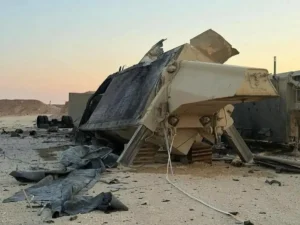
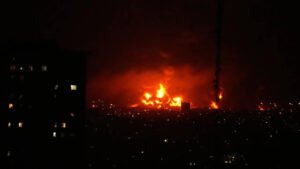

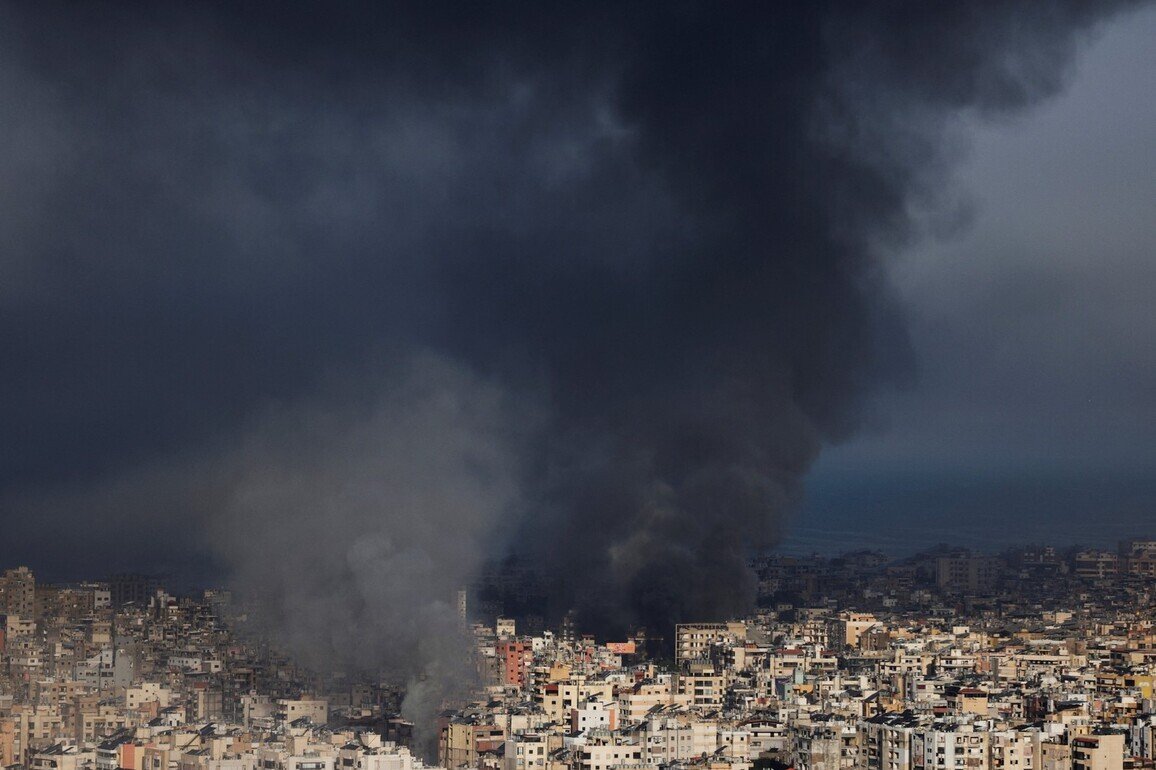
Northern Israel came under renewed attack as drones and missiles targeted several locations, triggering air raid sirens across the region. Iranian officials claimed responsibility for coordinated strikes that reportedly hit multiple targets, including areas near the port city of Haifa.
According to Daljoog News analysis, the latest wave of attacks signals a widening confrontation in which Iran, Hezbollah, and Israel are increasingly operating across several battlefronts at the same time.
The developments come at a moment when the Middle East is already experiencing one of its most volatile periods in years, with military exchanges stretching from Israel and Lebanon to the Gulf region.
What Happened?
Air raid sirens sounded across northern Israel after drones and missiles were launched toward several cities, including Haifa. Iranian authorities said the operation targeted strategic sites, though Israeli officials reported that air defense systems intercepted many of the incoming threats.
At the same time, the Lebanese militant group Hezbollah launched additional drones and rockets toward Israeli areas, including Nahariya and Kiryat Shmona. Israeli defense forces said their systems were activated to counter the attacks while emergency services responded across affected communities.
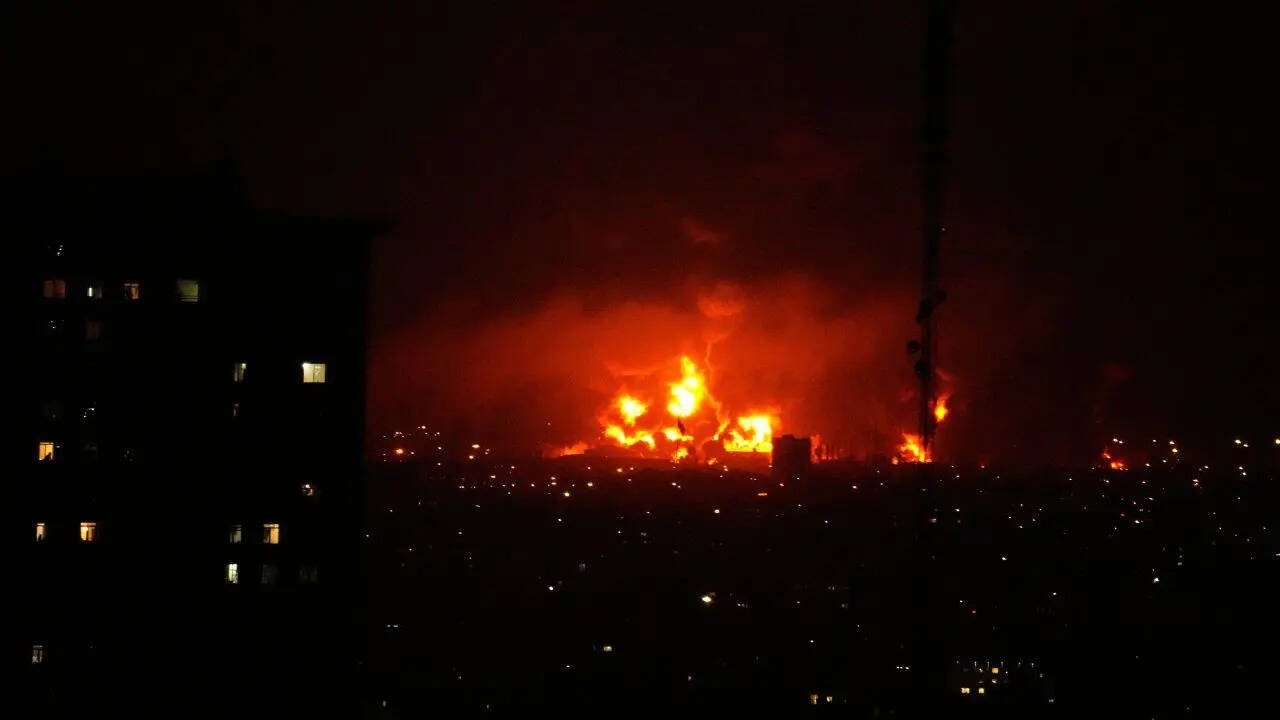
Israel retaliated shortly afterward by striking what it described as a key oil facility in southern Iran. Local media in Iran also reported explosions and military activity in several cities, including areas around Tehran.
The escalation did not stop there. Israeli forces launched a new military operation inside Lebanon, targeting locations believed to be linked to Hezbollah infrastructure.
Lebanon’s health ministry reported casualties following the strikes, while humanitarian groups warned that hundreds of thousands of civilians have been forced to leave their homes and seek shelter as the fighting intensifies.
Why This Matters
The latest attacks highlight how the conflict is expanding beyond a single front. Israel now faces simultaneous threats from Iranian missile capabilities and Hezbollah forces operating from neighboring Lebanon.
Northern Israel’s cities, including Haifa, host major economic and military assets. Any sustained attack on this region could disrupt infrastructure and affect maritime trade through the Mediterranean.
Meanwhile, Israeli military operations inside Lebanon risk deepening the humanitarian crisis there. Large-scale displacement has already been reported, raising fears that the country could face a prolonged period of instability.
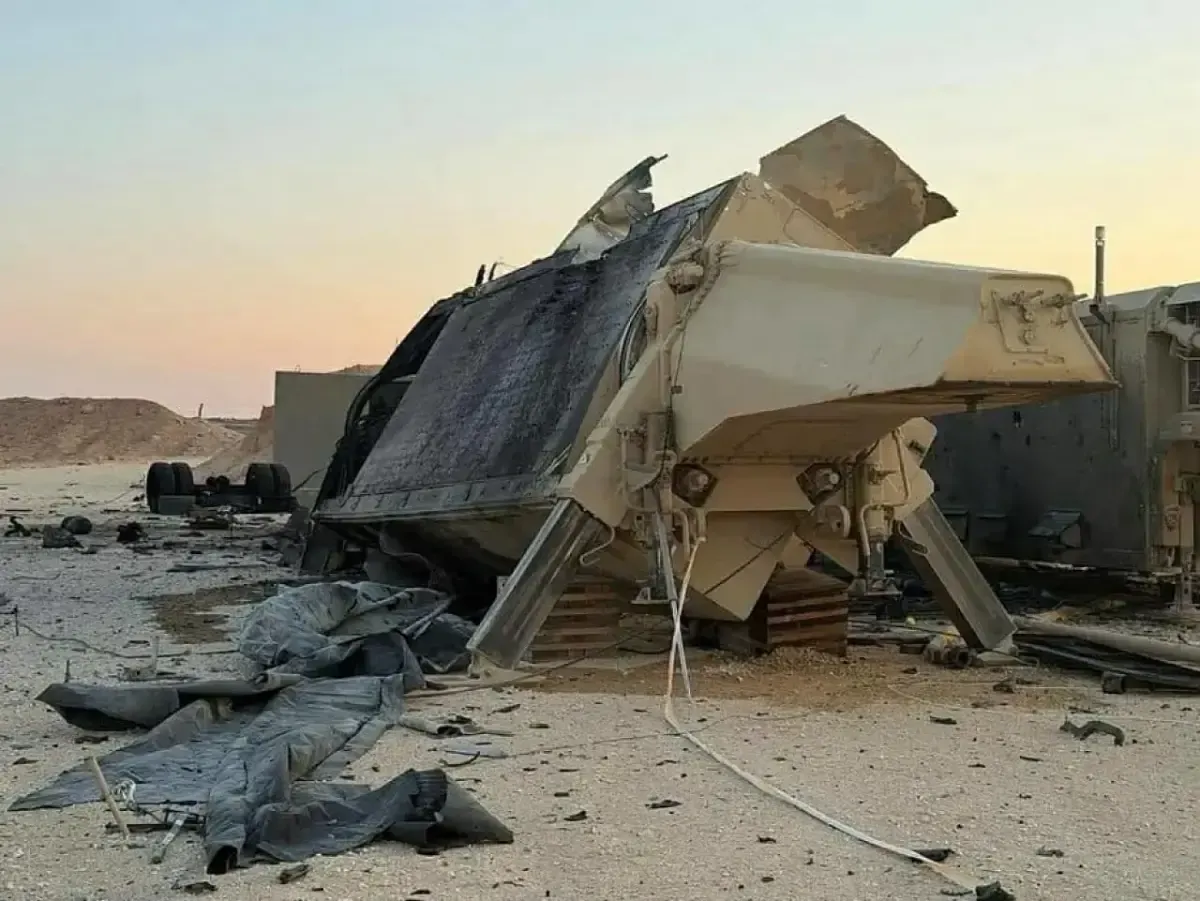
The confrontation is also spreading into the Gulf region. Iran’s Revolutionary Guard claimed responsibility for a missile strike targeting a U.S. military facility in Juffair, Bahrain. Regional authorities are investigating the incident amid growing security concerns.
The ripple effects of the conflict are already being felt across international markets and diplomatic channels, as governments attempt to prevent a wider regional war.
What Analysts or Officials Are Saying
Israeli Prime Minister Benjamin Netanyahu has placed responsibility for Hezbollah’s disarmament on the Lebanese government. He argues that Beirut must enforce the provisions of earlier ceasefire arrangements to prevent further attacks from Lebanese territory.
Netanyahu has also warned that Iran’s leadership poses a broader global threat, framing the confrontation as part of a larger struggle against Tehran’s regional ambitions.
Iranian officials have taken a sharply different stance. Ali Larijani, head of Iran’s National Security Council, said Washington’s strategy to destabilize Iran and weaken its leadership structure has failed. He claims the confrontation has strengthened domestic unity inside Iran.
U.S. President Donald Trump has also weighed in on the situation, stating that military actions against Iran are part of efforts to make the world safer. He suggested that Iran’s future leadership should prioritize stability rather than conflict.
Iran’s Foreign Minister Abbas Araghchi has warned that if tensions escalate further, responsibility will lie with the United States. He added that Iran will not target neighboring countries unless they allow their territory to be used for military operations against Tehran.
Daljoog News Analysis
The current escalation reflects a dangerous shift in Middle Eastern conflict dynamics.
For years, Iran and Israel engaged primarily through indirect confrontations involving proxy groups. Now the conflict increasingly involves direct missile strikes, cross-border operations, and attacks on strategic infrastructure.
Hezbollah’s involvement significantly complicates Israel’s security calculations. The group possesses one of the largest non-state missile arsenals in the world, making northern Israel particularly vulnerable during periods of intense confrontation.
At the same time, Iran appears determined to demonstrate that it can apply pressure across multiple fronts. By combining drone strikes, missile launches, and regional allies, Tehran is testing the limits of Israel’s defense systems and political resolve.
However, the expanding scope of the conflict raises the risk of miscalculation. A single large-scale strike causing mass casualties could rapidly trigger broader military intervention by global powers.
The situation therefore remains highly unstable, with each new exchange increasing the chances of a wider regional war.
What Happens Next
Military analysts expect continued exchanges in the coming days as both sides attempt to assert deterrence without triggering full-scale war.
Israel may intensify strikes against Hezbollah infrastructure in Lebanon and against Iranian-linked targets across the region. These operations are likely aimed at reducing the capacity for future missile attacks.
Iran, meanwhile, may continue to rely on combined drone and missile strategies while coordinating with allied groups to maintain pressure on Israeli defenses.
Diplomatic efforts are also expected to increase as international actors push for de-escalation. However, with tensions already spreading across multiple countries, the path toward stability remains uncertain.
For now, the region remains on edge as governments and military leaders assess their next moves in a rapidly evolving conflict.