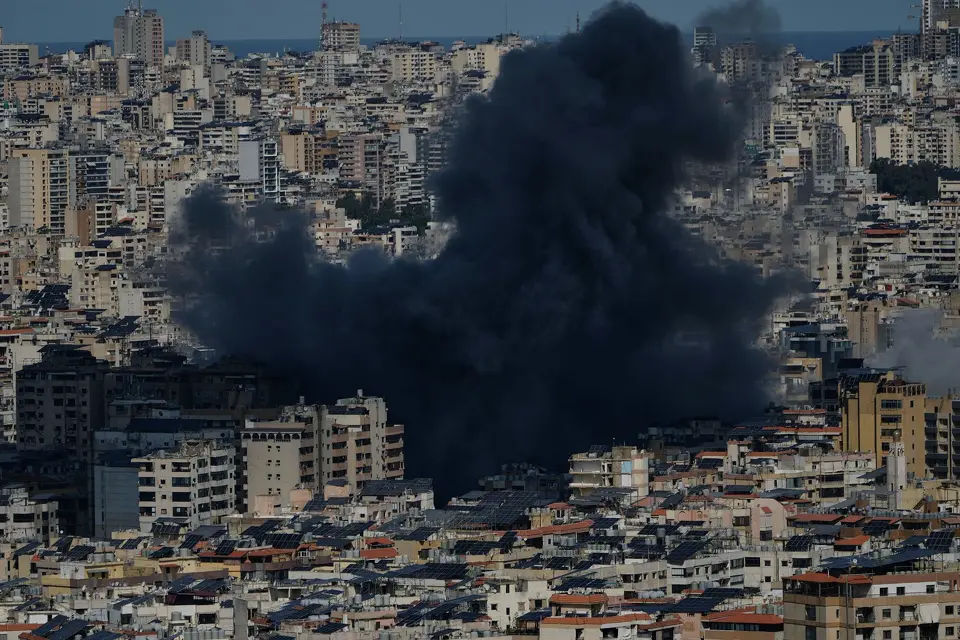



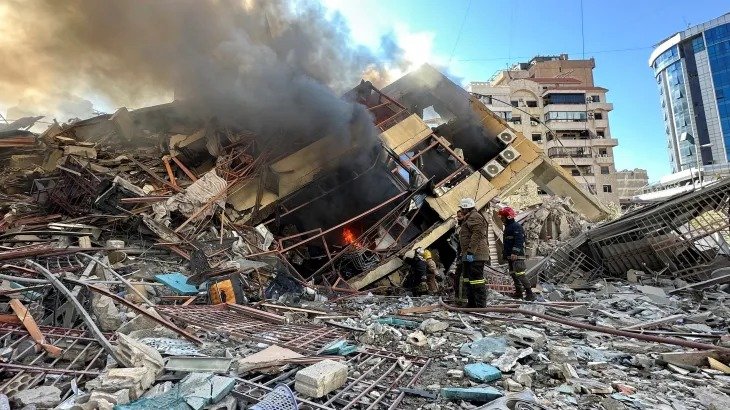
A wave of joint U.S. and Israeli military strikes inside Iran has left at least 40 people dead and pushed tensions across the Middle East to new levels. Explosions were reported in several Iranian cities, including Tehran and Isfahan, as airstrikes and missile exchanges continued into the eleventh day of fighting.
According to Daljoog News analysis, the coordinated attacks signal a widening confrontation that now extends beyond Iran and Israel, drawing in regional powers and raising fears of a broader Middle Eastern conflict.
The fighting began on February 28 and has since evolved into one of the most intense military escalations in the region in recent years, with multiple countries reporting missile interceptions and heightened security alerts.
What Happened?
Iranian officials and local media reported multiple explosions in Tehran on Monday as airstrikes hit several areas of the capital and nearby infrastructure.
One of the attacks struck a residential district in eastern Tehran, where emergency services reported casualties among civilians. Authorities said several people were killed and others injured during the strike.
In addition to the residential damage, Iranian cultural authorities reported that an ancient palace recognized as a heritage site suffered significant structural damage during nearby blasts.
Strikes were also reported in Isfahan, a city that hosts major military and industrial facilities. The exact targets remain unclear, but regional security sources suggest the operations focused on strategic infrastructure and military-related locations.
Iran’s Islamic Revolutionary Guard Corps later announced that it would intensify missile operations in response to the attacks.
The escalation has triggered security concerns across the Gulf region. Several countries reported intercepting drones or missiles believed to be linked to the broader confrontation.
Authorities in Bahrain said air defense systems protected the country’s main oil refinery. Saudi Arabia reported similar defensive actions near desert oil fields, while Kuwait and Qatar also activated air defenses.
Turkey announced that its defense systems neutralized a ballistic missile that appeared to originate from Iranian territory.
Why This Matters
The conflict is now affecting security far beyond the immediate battle zone.
Missile interceptions across multiple countries illustrate how quickly a localized confrontation can expand into a regional crisis.
The Middle East hosts some of the world’s most critical energy infrastructure, and even limited disruptions could have consequences for global oil markets.
Military analysts also warn that continued strikes on Iranian territory may provoke stronger retaliation from Tehran or allied armed groups operating across the region.
Lebanon remains a key concern.
Israeli forces confirmed additional strikes against Hezbollah infrastructure in southern Lebanon, where the Iran-aligned group maintains a large arsenal of rockets and missiles.
If Hezbollah becomes fully engaged in the conflict, northern Israel could face sustained attacks while Israeli forces respond with large-scale operations.
Such a scenario could transform the current confrontation into a multi-front regional war.
What Analysts or Officials Are Saying
U.S. President Donald Trump described the military campaign as a focused operation designed to neutralize Iran’s military capabilities.
He argued that Iran’s naval forces, air assets, and communications systems had suffered severe damage during the initial phase of fighting.
According to figures cited by the U.S. administration, more than 1,200 Iranian casualties may have occurred during the first ten days of hostilities.
Officials in Washington have also suggested that the campaign could end quickly if Iran’s military capacity continues to deteriorate.
However, regional observers note that Iran retains several options for retaliation, including missile strikes and actions by allied militias.
Meanwhile, diplomatic channels remain active.
Reports indicate that Trump and Russian President Vladimir Putin recently held a phone conversation focused on the possibility of reducing tensions and moving the crisis toward a political solution.
Regional governments are also expressing concern.
Saudi Arabia issued messages of sympathy to Gulf countries affected by missile threats and called for stability across the region.
Daljoog News Analysis
The current escalation represents a rare moment when direct military actions between Iran and a U.S.–Israel alliance appear to be unfolding simultaneously.
For decades, conflicts between these actors largely took place indirectly through proxy groups, cyber operations, and covert strikes.
The shift toward more open confrontation raises the stakes significantly.
Iran’s leadership must balance two competing pressures: demonstrating strength to maintain domestic and regional credibility while avoiding actions that could trigger overwhelming retaliation.
At the same time, the United States and Israel appear focused on weakening Iran’s strategic capabilities quickly, hoping to limit Tehran’s ability to sustain long-term resistance.
However, history suggests that military pressure alone rarely produces rapid political outcomes in the region.
Another unpredictable factor is public sentiment inside Iran.
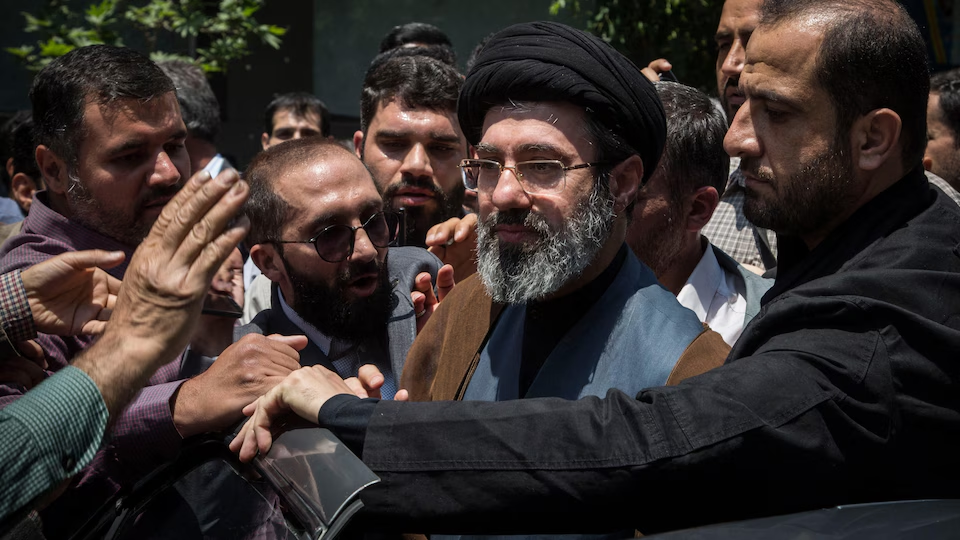
The announcement of a new Supreme Religious Leader, Mostafa Khamini, has already prompted demonstrations of support in Tehran, where crowds gathered to express unity in the face of external attacks.
Such moments of national mobilization can strengthen domestic resolve even during periods of military pressure.
This dynamic could complicate efforts to end the conflict quickly.
What Happens Next
Several indicators will determine whether the conflict intensifies or begins to slow.
First, observers will watch whether Iran follows through on its threat to launch additional missile strikes.
Second, the role of regional armed groups such as Hezbollah will be critical. Their direct involvement could expand the battlefield across Lebanon, Syria, and potentially Iraq.
Third, diplomatic engagement may accelerate.
International actors including Russia, European governments, and Gulf states are likely to push for negotiations aimed at preventing a wider war.
For now, the region remains on edge.
Military forces across the Middle East have heightened their alert levels, air defense systems are active in several countries, and political leaders are attempting to prevent further escalation.