

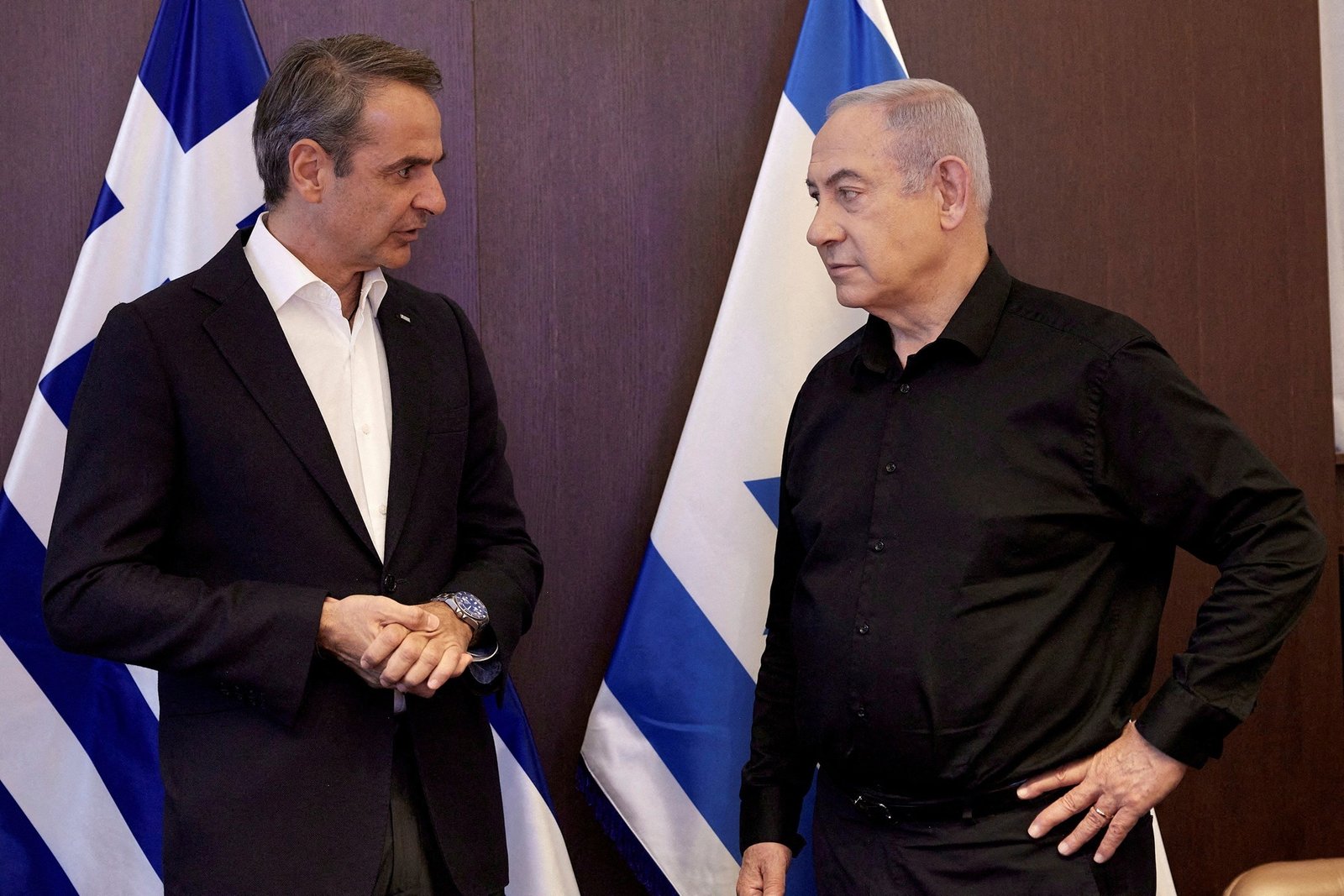
While Israel’s military campaign in Gaza has caused widespread casualties, including over 70,000 Palestinians, Greece has moved to deepen its military ties with Israel.
According to Daljoog News analysis, Athens’ decision highlights a complex mix of domestic politics, regional security strategies, and human rights considerations.
The timing has intensified debate, as Greece’s arms purchases and plans for joint production come amid growing international criticism of Israel’s actions in Gaza.
What Happened
In recent months, protests have erupted worldwide—including in the United States, the UK, Europe, and Asia—condemning the Israeli operations in Gaza. In Greece, demonstrators have taken to the streets in Athens, Thessaloniki, and other cities.
Despite the protests, Greece is advancing its military cooperation with Israel. Angelo Syrigos, chairman of Greece’s Parliamentary Defense Committee, told Al Jazeera that Greece is currently an important customer for Israeli defense systems, but the relationship would deepen further through joint production.
On December 4, Greece approved a $760 million deal to purchase 36 PULS rocket artillery systems from Israel, marking its largest arms purchase from the country to date.
Discussions are also underway for acquiring three Israeli missile defense systems—Spider, Barak, and David’s Sling—potentially worth several billion dollars.
Why This Matters
Greece’s decision is not just about purchasing weapons. It ties directly into the balance of power in the Eastern Mediterranean, tensions with Turkey, and broader European security politics.
Greek officials argue that Israel’s presence is strategically vital on the edge of a Muslim-majority Middle Eastern region. Deputy Foreign Minister Alexandra Papadopoulou stated that without Israel, Greece would face a Muslim-majority region directly on Europe’s borders.
As a result, Greece, Israel, and Cyprus have formed a tripartite security alliance, seen as a strategic counterweight to Turkey.
However, critics argue that prioritizing security interests over human rights is deeply problematic.
What Analysts and Officials Are Saying
Former Israeli Prime Minister Ehud Olmert described Greece as “extremely friendly” to Israel, with collaboration between the two governments closer than ever.
Greek Defense Minister Nikos Dendias highlighted Israel’s defense industry progress, noting that while Israel once only produced essential weapons, it now ranks among the world’s leading defense technology providers.
Greece’s main opposition party has strongly criticized this policy, saying that strengthening military ties with Israel amid a humanitarian crisis in Gaza undermines Greece’s moral position.
Council for Refugees head Lefteris Papazianakis said ignoring an international human rights crisis for strategic interests is a serious issue. He added that Greece, as a humanitarian country, has a duty to do more than remain silent.
Daljoog News Analysis
This new chapter in Greece–Israel relations underscores the tension between security politics and moral responsibility.
On one hand, Athens is seeking strong allies to counter Turkey and enhance its defense capabilities. On the other hand, Israel’s actions in Gaza have placed it at the center of a global human rights debate.
Daljoog News observes that while Greece’s security rationale is understandable, deepening military ties will increasingly expose it to international criticism—especially as more than 150 countries have recognized Palestine as an independent state, while Greece has yet to do so.
This dual stance could complicate Greece’s foreign policy in the long term.
What Happens Next
In the coming months, negotiations between Greece and Israel over missile defense purchases and potential joint production are likely to advance.
Meanwhile, international pressure regarding the Gaza conflict may push Greece to clarify its position, and debates over the recognition of Palestine could resurface in political discussions.
The domestic political impact in Greece will depend on the trajectory of the conflict, Europe’s stance, and public opinion.