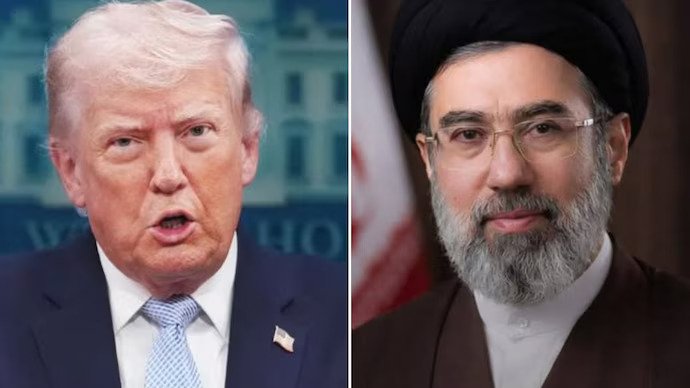




U.S.-Iran naval tensions have increased after Washington confirmed that a large US naval force is moving toward the Middle East. The deployment comes at a time of heightened regional strain and strong warnings from Iranian military leaders.
US President Donald Trump confirmed the move while speaking to reporters during his return to Washington after an international economic meeting. He said the deployment is not a declaration of war. He described it as close monitoring and a precautionary step.
The naval group includes a major aircraft carrier and several guided missile warships. These vessels are equipped with advanced air defense systems, drones, and missile capabilities. Officials say the ships are expected to position themselves near Iranian waters in the coming days.
US officials have voiced concern that American military bases in the Middle East could face missile attacks if tensions escalate. Because of this risk, the naval force has been reinforced with systems designed to intercept aerial threats and missiles.
Washington has stressed that the deployment is meant to deter conflict, not trigger it. The message from US leadership is that the military is prepared, but still focused on observation and defense.
Iran has responded with firm language. Senior commanders from Iran’s Islamic Revolutionary Guard Corps have warned the United States and Israel against what they called miscalculations. Iranian leaders said their country will not bow to pressure or threats.
Iranian officials emphasized that their defense forces are stronger and more organized than ever. They said any aggressive move would face a severe response. Tehran continues to frame its stance as defensive and focused on protecting national sovereignty.
The exchange of warnings has raised concerns among regional observers. Analysts say the naval deployment is a test of strength rather than an immediate step toward war. Both sides appear focused on signaling power while stopping short of confrontation.
The Middle East has seen repeated periods of tension in recent years. Military movements, sanctions, and regional conflicts have created an unstable environment. Naval deployments are often used to send political messages without direct engagement.
The presence of a large US fleet adds pressure to an already tense situation. At the same time, officials from both countries continue to say they do not seek open conflict. This balance between deterrence and restraint remains fragile.
Military experts note that aircraft carriers serve as mobile bases. They allow rapid response but also act as symbols of power. Their movement is closely watched by allies and rivals alike.
Iran’s leadership has long stated that it views foreign military presence near its borders as a threat. Past encounters in regional waters have led to brief standoffs but stopped short of sustained conflict.
Despite sharp rhetoric, there has been no confirmed exchange of fire linked to the current deployment. Diplomatic channels remain open, though progress has been limited.
The situation has drawn global attention. Any escalation could affect energy markets, shipping routes, and regional stability. For this reason, many countries are calling for restraint.
US Iran naval tensions continue to unfold as both sides monitor each other closely. The coming days will be critical in determining whether the show of force leads to dialogue or deeper confrontation.
For now, the focus remains on deterrence, readiness, and messaging. While war has not been declared, the growing military presence highlights how quickly tensions can rise in one of the world’s most sensitive regions.