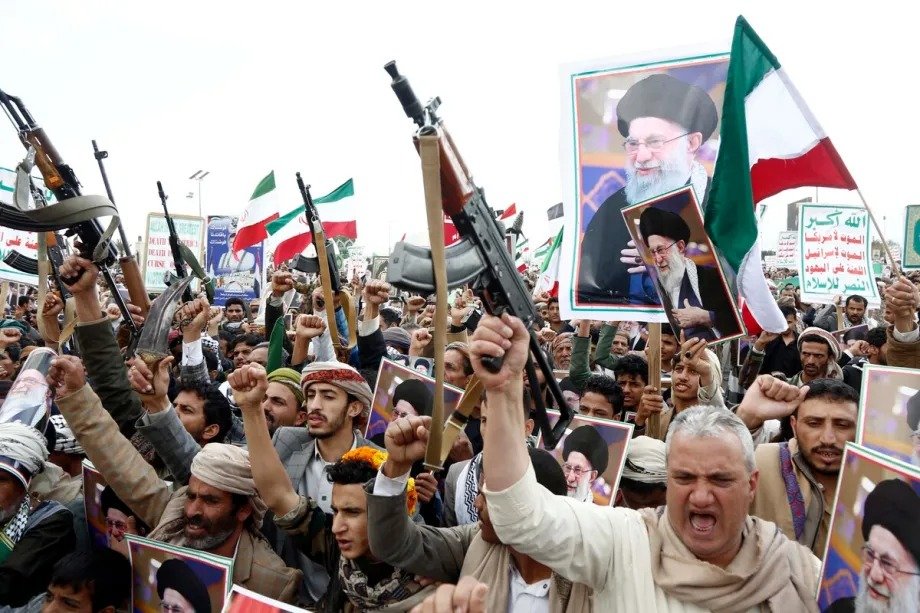


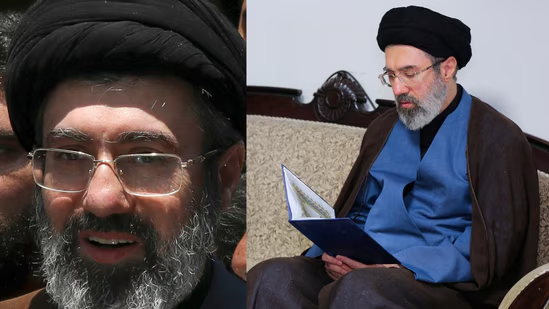
Iran has announced that Mojtaba Khamenei, the second son of Supreme Leader Ali Khamenei, will assume the country’s highest religious and political authority following his father’s death. The decision ends weeks of speculation over succession at a time of intense regional conflict.
According to Daljoog News analysis, the appointment signals continuity rather than reform. Mojtaba Khamenei has long been viewed by political observers as a key behind-the-scenes figure with strong ties to Iran’s most powerful security institutions.
The leadership transition comes as Iran faces expanding military confrontation with Israel and rising tensions with the United States, making the stability of the new command structure a critical issue.
What Happened?
Iranian media outlets reported that an interim leadership council approved Mojtaba Khamenei’s elevation to Supreme Leader. Reports suggest that his close relationship with the Islamic Revolutionary Guard Corps (IRGC) played a decisive role in consolidating support.
For years, analysts have identified Mojtaba as a potential successor. Though he has held no prominent public office, he has maintained influence within clerical and security networks.
Meanwhile, preparations are underway to bury Ali Khamenei in his birthplace of Mashhad, next to his father’s grave.
The succession unfolds against a backdrop of escalating violence. Iran has launched retaliatory strikes following the killing of its former leader. A drone incident targeted an oil facility in Fujairah in the United Arab Emirates, while missile strikes were reported near the U.S. Al Udeid Air Base in Qatar.
Iranian projectiles also struck Israel’s city of Ramat Gan, causing damage to buildings and vehicles. Casualties have been reported, though numbers remain unclear.
Israel, led by Prime Minister Benjamin Netanyahu, has vowed that operations will continue until its security objectives are achieved. Israeli strikes have targeted sites in Tehran and Qom, including areas linked to the Assembly of Experts.
In Lebanon, tensions have intensified as Israel and the armed group Hezbollah exchange fire. Israeli officials accuse Hezbollah of pushing Lebanon closer to direct involvement in the war.
Why This Matters
The Supreme Leader is the most powerful authority in Iran. He controls the armed forces, appoints key judicial and security figures, and shapes foreign policy.
A leadership change during active conflict increases uncertainty. Mojtaba Khamenei inherits not only his father’s institutional authority but also a volatile battlefield.
His close ties to the IRGC suggest that military influence within Iran’s political system may deepen further. That could mean a more security-driven approach to regional policy.
At the same time, the perception of dynastic succession may generate internal debate within Iran’s clerical establishment. The Islamic Republic was founded on revolutionary principles rather than hereditary leadership, making this transition politically sensitive.
Regionally, adversaries will assess whether the new leader signals escalation or consolidation.
What Analysts or Officials Are Saying
Political analysts describe Mojtaba Khamenei as a figure with significant informal power even before this announcement. They note that his longstanding coordination with the IRGC positioned him well for succession during crisis conditions.
Security observers argue that the timing of the decision reflects a desire to prevent any leadership vacuum while the country faces military pressure.
Israeli officials have emphasized that their operations are aimed at security objectives rather than leadership change, though rhetoric has hardened in recent days.
Regional diplomats are watching closely for signs of policy continuity or adjustment under the new Supreme Leader.
Daljoog News Analysis
Mojtaba Khamenei’s elevation represents continuity of Iran’s current strategic posture rather than transformation.
His influence behind the scenes has been widely discussed for years. Formalizing his authority during wartime consolidates power within familiar networks, particularly the IRGC.
However, leadership legitimacy will be tested not only externally but internally. Managing economic strain, public morale and political unity while confronting military threats requires more than institutional backing.
The regional environment adds further pressure. Israeli operations remain active, and cross-border exchanges involving Hezbollah risk widening the conflict.
Daljoog News assesses that the immediate priority for Iran’s new leadership will be projecting stability. Any sign of fragmentation could invite further external pressure.
What Happens Next
Attention now turns to how Mojtaba Khamenei defines his authority.
If military operations intensify, he may align closely with hardline security strategies. If diplomatic channels reopen, his leadership style will shape negotiation dynamics.
Internally, the clerical establishment and security institutions must maintain cohesion during transition.
Externally, Israel and regional actors will gauge whether the new Supreme Leader signals escalation or stabilization.
The coming weeks will reveal whether this succession strengthens Iran’s command structure or introduces new uncertainties at a critical moment in the region’s evolving conflict.