

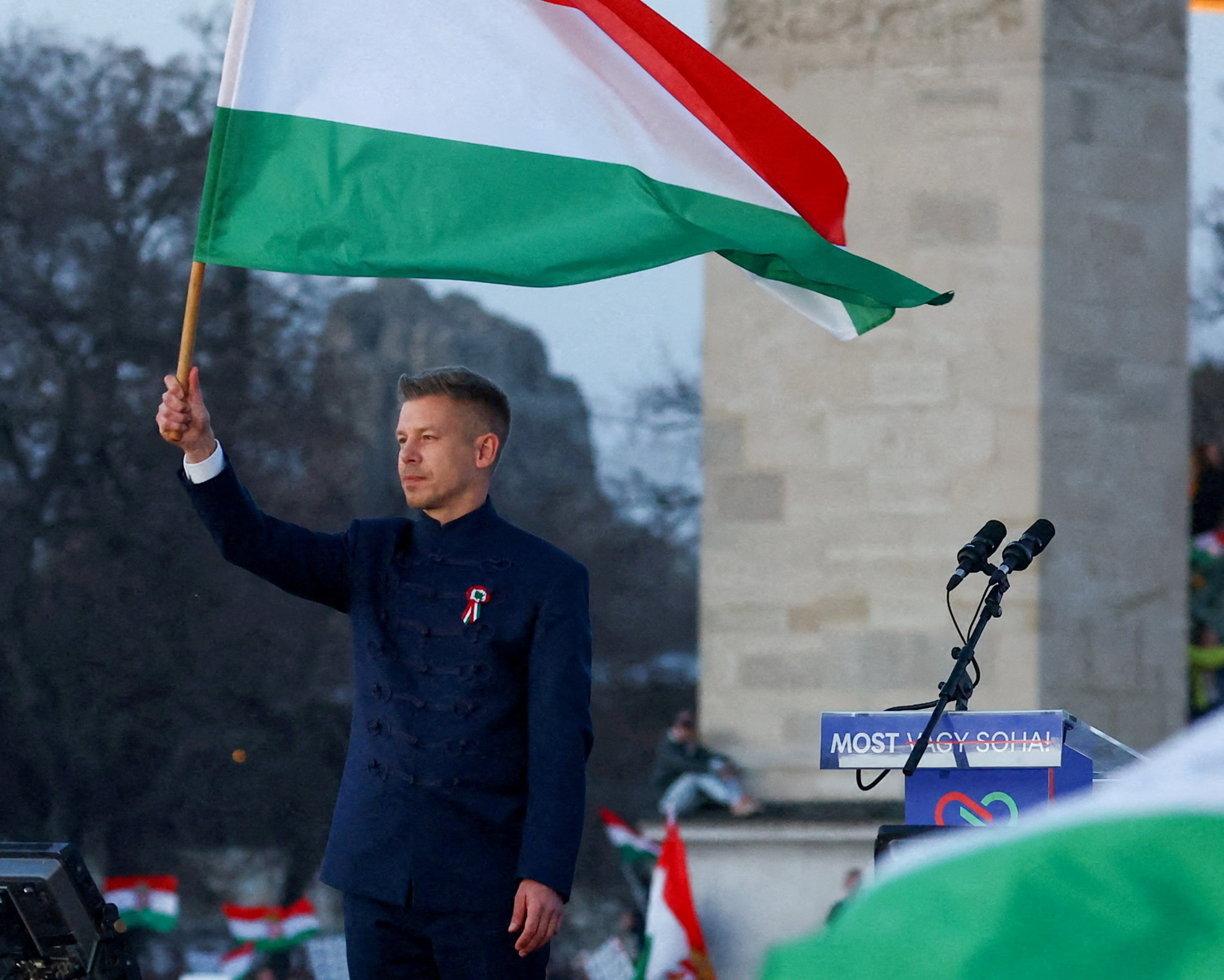
Hungary political shift is accelerating as Peter Magyar prepares to take over as prime minister, already engaging in high-level talks with European Commission officials and pushing for urgent financial negotiations before formally assuming office.
According to Daljoog News analysis, this transition is emerging as one of Hungary’s most consequential political realignments in years, combining EU funding disputes, governance reforms, and allegations of administrative misconduct.
The shift is unfolding ahead of a new parliamentary session, with Magyar positioning himself as a reform-focused leader aiming to restore frozen EU funds and restructure state governance.
What Happened?
Hungary political shift has entered a decisive phase as Peter Magyar met European Commission representatives in Budapest to discuss the release of billions of euros in suspended EU funds. His goal is to unlock the financial package before a critical deadline at the end of August.
Magyar stated that there is no time to waste and confirmed that his team is already working on a clear legal and policy framework to meet EU conditions. He said the reforms would be quickly translated into law once the new government is officially formed.
He expressed optimism that Hungary could recover the full amount of frozen funds for both citizens and businesses if negotiations succeed.
At the same time, Magyar raised serious concerns about the outgoing administration. He accused officials of attempting to conceal corruption and alleged that documents are being destroyed across several government departments, including defense and foreign affairs.
To address these claims, his political movement Tisza has launched an online reporting platform allowing citizens and officials to share evidence of alleged misconduct. Magyar urged public employees not to participate in any illegal destruction of state records, stressing that such documents belong to the nation.
Why This Matters
Hungary political shift is important because it directly affects both the country’s financial stability and its relationship with the European Union. The release of frozen EU funds is tied to governance reforms and transparency requirements.
If the funds are unlocked, they could significantly strengthen Hungary’s economy, supporting infrastructure development, businesses, and public services that have faced funding pressure.
However, allegations of document destruction during a government transition raise concerns about institutional transparency and accountability. If verified, such claims could lead to legal investigations and deepen political tensions.
The situation also reflects broader EU-Hungary dynamics, where financial support is closely linked to rule-of-law standards and administrative reforms.
What Analysts or Officials Are Saying
Observers of the Hungary political shift say Magyar is entering office under intense expectations, with both domestic voters and EU institutions closely watching his early actions.
Policy analysts note that securing EU funds will depend on how quickly Hungary implements reforms related to governance transparency, judicial independence, and public procurement systems.
Experts also warn that allegations of document destruction during transitions are highly sensitive, as they can undermine trust in state institutions and complicate reform efforts.
Political commentators suggest that Magyar’s early engagement with EU officials signals a pragmatic approach aimed at stabilizing financial relations before taking full control of government functions.
Daljoog News Analysis
Hungary political shift reflects a rare combination of financial urgency, political transition, and institutional reform pressure happening simultaneously.
Magyar’s approach shows a dual strategy: securing EU funds quickly while also addressing domestic concerns over corruption and governance failures. This balancing act will define the early success of his administration.
The corruption allegations, if substantiated, could significantly shape the political narrative and influence how smoothly the transition proceeds. Even without formal proof, they increase scrutiny on outgoing institutions.
At the same time, Hungary’s reliance on EU funding gives Brussels substantial leverage, meaning reforms are not optional but essential for economic stability.
The coming weeks will test whether Magyar can convert political momentum into administrative results under tight deadlines and high expectations.
What Happens Next
Hungary political shift will continue to evolve as Magyar moves closer to formally assuming the prime minister’s office and finalizing negotiations with the European Commission.
Key developments to watch include progress on EU funding conditions, potential investigations into alleged document destruction, and early legislative reforms.
Energy security, migration policy, and EU relations are expected to dominate the new government’s agenda as it attempts to balance national priorities with European requirements.
For now, Hungary stands at a critical turning point where political change and financial negotiations are tightly linked.