



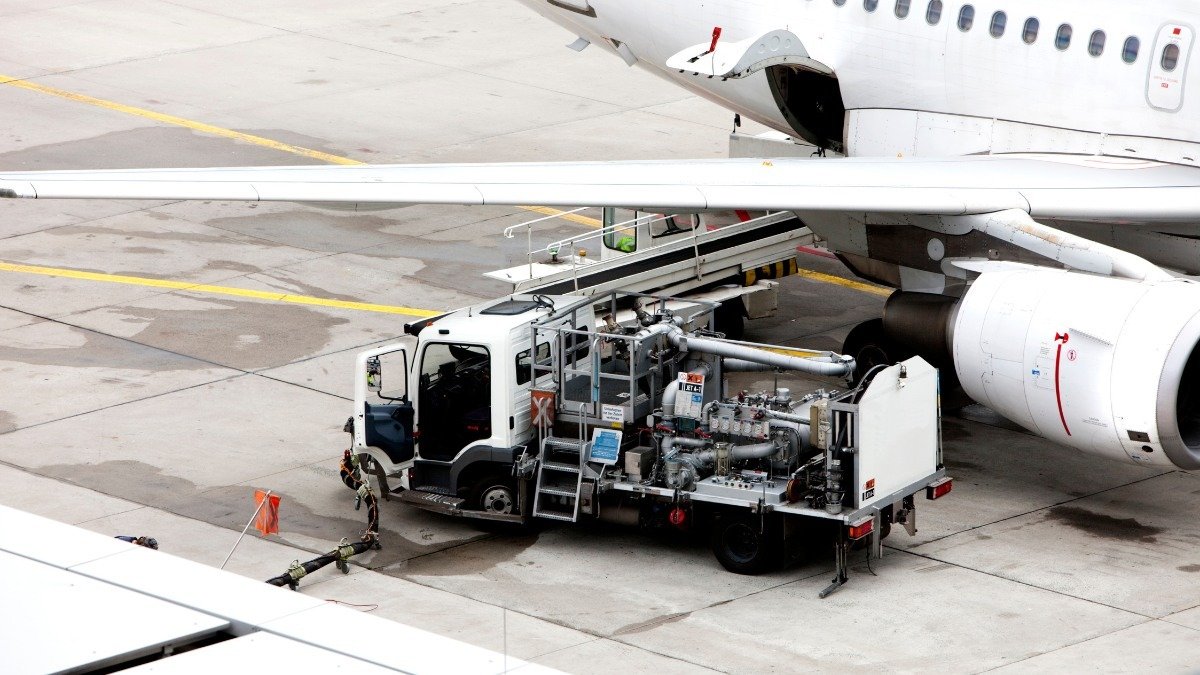
When you land at an airport, your attention often goes to baggage handlers, cleaners, or boarding bridges. Yet one essential task happens behind the scenes: refueling the plane. Depending on the aircraft and fueling method, this process can take anywhere from 20 minutes to several hours.
According to Daljoog News analysis, refueling isn’t just about topping off a tank—it’s a complex, highly regulated operation. Fuel is one of the largest operating expenses for airlines, and careful planning determines how much fuel is loaded, where, and when. These decisions balance safety, cost, and operational efficiency.
The timing of refueling also affects airline routes. For instance, some planes avoid certain long-haul flights over oceans to reduce fuel risks, while others take advantage of lower fuel costs at their home hub rather than topping off mid-journey.
What Happened?
Airplanes are refueled using two primary methods: underground pipelines or fuel trucks. Large airports typically rely on pipelines for efficiency and speed, while smaller regional airports often depend on trucks carrying between 3,000 and 20,000 gallons per trip. At these smaller locations, fuel contractors sometimes handle additional services such as lavatory maintenance.
The amount of fuel needed and the refueling method are the biggest factors influencing fueling time. A Boeing 737 Max, which holds roughly 7,000 gallons, can be refueled in about 20 minutes. In contrast, an Airbus A380-800, capable of carrying over 85,000 gallons, may require between one and five hours to fill, depending on equipment and the number of fueling points used.
When planes are fueled via pipeline, the process is usually faster. Boeing reports that a fully loaded 747-8, with 467 seats, takes about 110 minutes for a complete turnaround, roughly half of which is spent on refueling. Truck-based refueling depends on the number of trucks and nozzles. A single truck pumping at 300 gallons per minute could take over three hours to fill a large aircraft from empty. Multiple trucks working simultaneously speed the process significantly.
Why This Matters
Refueling is a critical component of airport operations and safety. Planes rarely land empty, and they do not always depart fully loaded, which affects turnaround times. Airlines must balance speed with safety, ensuring each step—from attaching a grounding wire to using the deadman switch—is followed to prevent accidents.
Efficient refueling affects more than just flight schedules. It directly influences fuel costs, airline profitability, and overall operational efficiency. Delays in refueling can cascade into broader logistical issues, affecting connecting flights, crew schedules, and airport traffic management.
What Analysts or Officials Are Saying
Airport and airline planners emphasize that refueling is one of the most safety-conscious operations at any airport. Fuel agents undergo specialized training to manage large quantities of jet fuel and are responsible for static grounding, fuel contamination checks, and emergency shutdown procedures.
Experts note that improving fuel infrastructure—like adding pipelines or high-capacity trucks—can significantly reduce turnaround times, giving airlines more flexibility for scheduling and routing. This is especially crucial for busy hubs where every minute of gate time matters.
Daljoog News Analysis
While passengers may see only the visible hustle of ground crews, refueling is a sophisticated blend of engineering, logistics, and safety protocols. For commercial aviation, every gallon matters: carrying too much fuel adds weight and reduces efficiency, while too little risks safety or limits operational options.
Smaller airports may experience longer fueling times due to truck capacity limits, whereas major hubs leverage pipelines for rapid turnaround. The differences in fueling time highlight how airport infrastructure, aircraft size, and flight planning intersect in ways most passengers rarely consider.
What Happens Next
Airlines and airports continue to explore ways to make refueling faster, safer, and more sustainable. Investments in pipeline networks, high-capacity trucks, and alternative fuels aim to reduce both time and environmental impact.
For passengers, understanding fueling logistics explains why some flights have longer ground times than others, even when boarding seems quick. Efficient refueling not only keeps flights on schedule but also ensures safety and optimal fuel use—a key factor in modern aviation.
Daljoog News will continue reporting on aviation operations, infrastructure innovations, and behind-the-scenes processes that keep global air travel moving efficiently.