


Iranian missile and drone attacks have reportedly damaged key US-linked radar infrastructure in the Middle East, raising alarms about the vulnerability of American military defense networks across the region. Satellite imagery reviewed by analysts suggests that several advanced radar systems in Jordan and the United Arab Emirates suffered major destruction following the strikes.
According to Daljoog News analysis, the attacks appear carefully targeted at the technological backbone that supports US-supplied missile defense batteries. By disabling radar networks, Iran may be attempting to weaken the detection and interception capabilities that protect American bases and allied facilities.
The escalation comes after weeks of intensifying confrontation involving Iran, the United States, and Israel. Military exchanges have expanded across several countries, transforming localized tensions into a wider regional security crisis with significant strategic implications.
What Happened?
Recent satellite imagery indicates that multiple radar installations supporting US defense systems were hit during Iranian missile and drone operations.
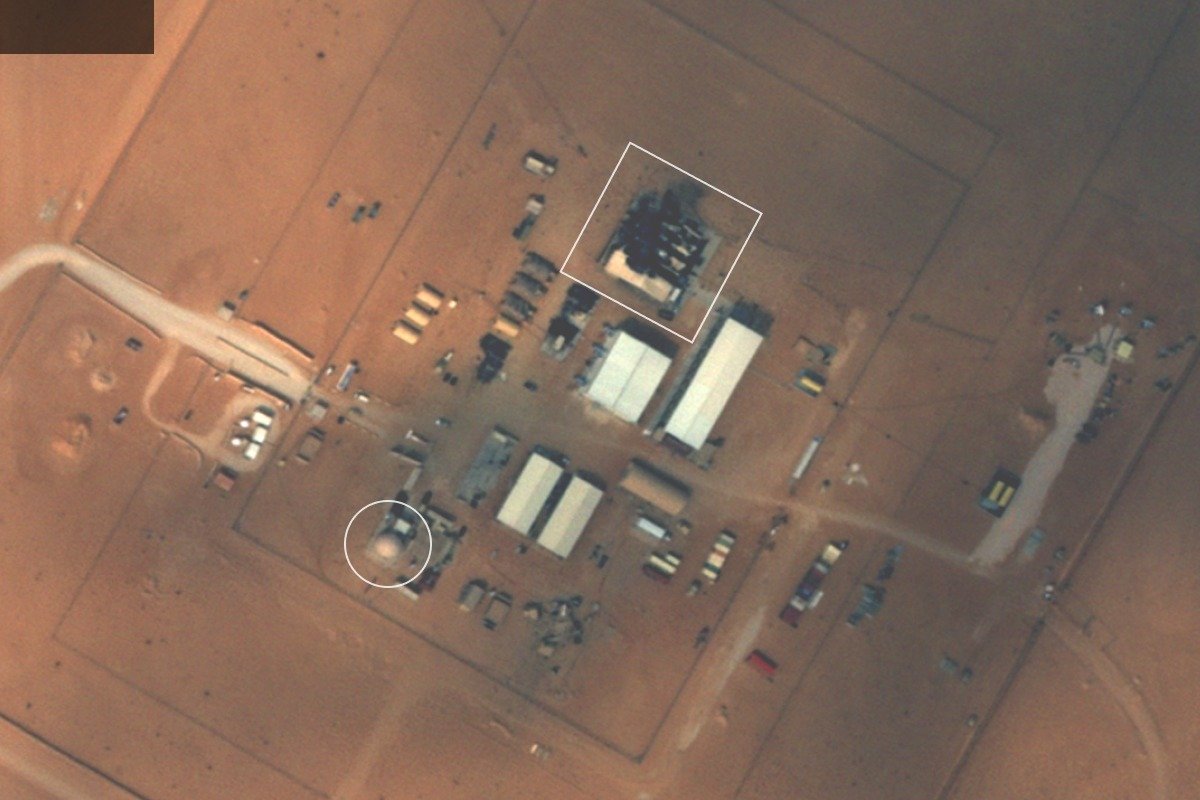
One of the most significant incidents occurred at Muwaffaq Salti Air Base in Jordan, a strategic installation that hosts US and allied forces. Analysts say a major radar unit believed to assist Patriot missile batteries at the base was severely damaged during the strike.
The base lies more than 500 miles from Iran’s borders, suggesting that Tehran employed long-range missile capabilities to reach the facility.
Military analysts reviewing the satellite images reported that the radar site now appears heavily damaged, with structures and support vehicles scattered across the area.
Separate damage assessments have also identified destruction at several installations in the United Arab Emirates.
Facilities located in the Ruwais and Sadr areas reportedly suffered impacts affecting radar equipment and related support vehicles used by US forces.
At least seven specialized infrastructure sites were identified as damaged in the satellite analysis.
These locations are believed to house early-warning radar systems and equipment used to track aerial threats, including missiles and drones.
Iran’s Islamic Revolutionary Guard Corps (IRGC) later issued a statement claiming responsibility for the operation.
The group said the strikes destroyed more than seven advanced radar systems used by US forces in the region.
Iranian officials described the campaign as part of a broader retaliatory operation targeting military assets connected to Washington and Israel.
Why This Matters
Radar networks are essential components of modern air defense systems.
They allow missile batteries to detect incoming threats, track their trajectory, and guide interceptor missiles toward their targets.
Without functioning radar, even advanced missile defense systems can struggle to identify and engage threats in time.
For US forces operating in the Middle East, these systems form the first layer of protection for bases, airfields, and strategic infrastructure.
If multiple radar installations have indeed been disabled, regional defense networks could face temporary blind spots.
Such vulnerabilities could increase risks for military facilities and complicate efforts to defend against missile or drone attacks.
The reported strikes also highlight Iran’s expanding missile reach.
Hitting targets hundreds of miles away suggests the use of longer-range precision weapons capable of bypassing regional defenses.
The broader regional security balance could therefore be affected if these capabilities continue to evolve.
What Analysts or Officials Are Saying
Iran’s Revolutionary Guard has portrayed the strikes as a successful retaliatory operation.
In official statements, the force claimed the attacks had effectively disrupted American surveillance capabilities across parts of the region.
Iranian military messaging framed the operation as a response to what Tehran describes as joint US-Israeli military actions against Iranian territory.
Western military observers, however, caution that battlefield claims from all sides should be examined carefully.
Independent confirmation of damage levels at several facilities remains limited.
Defense analysts note that modern radar networks often include backup systems and mobile units designed to restore coverage quickly after attacks.
Still, experts acknowledge that even temporary disruptions could complicate defensive coordination during periods of active conflict.
Diplomatic sources say regional governments are closely monitoring the situation due to the risk of further escalation.
Daljoog News Analysis
The reported destruction of radar infrastructure reflects a strategic shift in how modern conflicts are fought.
Rather than focusing solely on direct attacks against military bases, forces increasingly target the digital and technological systems that enable modern warfare.
Disabling radar effectively weakens the defensive shield protecting airspace.
For Iran, such strikes serve both military and psychological purposes.
They demonstrate the reach of Iranian missile technology while signaling that US regional defense networks are not immune to disruption.
However, the long-term military impact remains uncertain.
American forces maintain extensive redundancy in their command and detection systems, including airborne surveillance platforms, mobile radar units, and satellite intelligence.
Even so, repeated attacks on radar infrastructure could strain those systems if they occur simultaneously across multiple countries.
The situation also highlights the growing importance of drone and missile warfare in Middle East conflicts.
Relatively low-cost aerial weapons can now threaten high-value military infrastructure that once seemed well protected.
This technological shift is likely to shape future military planning throughout the region.
What Happens Next
Military planners across the Middle East are expected to reassess air defense readiness following the reported strikes.
Repair operations and equipment replacements will likely be prioritized at damaged installations in Jordan and the UAE.
At the same time, US and allied forces may increase surveillance patrols and deploy additional mobile radar systems to restore coverage.
Diplomatic pressure is also likely to intensify as international actors seek to prevent further escalation between Iran, the United States, and Israel.
Whether the current cycle of retaliation expands into a broader regional conflict remains uncertain.
For now, the strikes highlight how quickly technological infrastructure can become a primary battlefield in modern warfare.