

The long-running conflict that began with the creation of Israel in 1948 has entered a dangerous new phase, with confrontation now emerging between Israel and Iran. What once centered mainly on Palestinian territories has expanded into a wider regional struggle involving multiple countries and armed groups.
According to Daljoog News analysis, the current escalation reflects decades of unresolved territorial disputes, ideological rivalry, and shifting alliances across the Middle East. The direct involvement of Iran has transformed the conflict from a localized struggle into a strategic contest with global implications.
The situation has become especially volatile since the latest wars in Gaza and Lebanon widened the battlefield. Rising military activity across several fronts has increased fears that the region could slide toward a broader war involving powerful international actors.
What Happened?
The origins of the modern Middle East conflict trace back to 1948, when Israel declared independence following the end of British administration in Palestine.
Almost immediately after the announcement, neighboring Arab states, including Jordan, Egypt, and Syria, entered the war against the newly established state.
Israel ultimately survived the conflict and expanded its control beyond the borders initially proposed by international plans.
For Palestinians, the war marked the beginning of a mass displacement known historically as the Nakba, during which large numbers of people lost homes and land.
A second major turning point came in 1967 during the Six-Day War.
Within a matter of days, Israel captured several key territories, including the Gaza Strip, the West Bank, the Golan Heights, and East Jerusalem. The rapid territorial changes reshaped the political and security landscape of the region.
Another major conflict followed in 1973 with the Yom Kippur War, when Arab states launched a surprise attack on Israel.
Although the war restored some Arab military confidence, it failed to deliver a lasting political settlement.
In the 1990s, the Oslo Accords created hopes for a two-state solution between Israelis and Palestinians. However, those efforts eventually stalled as mistrust and political divisions deepened.
Why This Matters
The current phase of conflict is different from earlier wars because the battlefield is no longer confined to Israel and the Palestinian territories.
The war that erupted after the October 2023 attack by Hamas triggered an extended military campaign in Gaza that devastated large parts of the enclave and caused heavy civilian casualties.
Since then, violence has spread across borders.
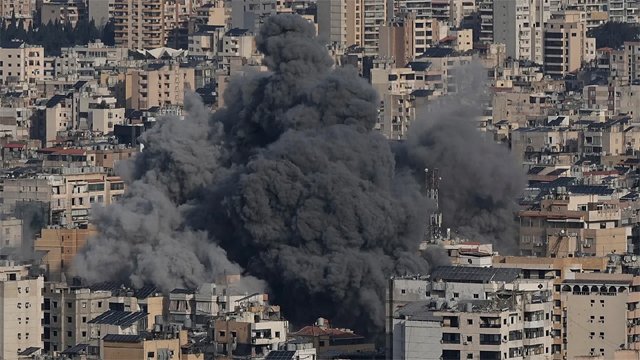
Clashes between Israel and Hezbollah along the Lebanese frontier have intensified into sustained military confrontations.
Israeli aircraft now regularly conduct strikes in areas connected to Hezbollah’s infrastructure, while cross-border exchanges of rockets and drones continue.
At the same time, tensions between Israel and Iran have moved closer to confrontation.
Israeli and United States operations targeting Iranian-linked facilities have raised fears of a broader regional war.
Meanwhile, attacks by the Houthis in the Red Sea have disrupted shipping routes and threatened global trade flows.
Security concerns around the Strait of Hormuz have also intensified, with warnings that any closure of the passage could send global energy markets into turmoil.
What Analysts or Officials Are Saying
Security analysts increasingly warn that the Middle East is entering one of its most fragile periods in decades.
Officials in several countries have expressed concern that the expanding conflict could draw additional powers into the crisis.
Western governments are monitoring the situation closely because of its potential impact on global oil markets and international shipping.
Diplomats also warn that the current confrontation risks undermining the few remaining diplomatic channels between regional rivals.
At the same time, military observers note that the introduction of advanced drones, missile systems, and cyber capabilities has changed the nature of warfare in the region.
Modern conflicts now involve a mix of conventional operations and indirect pressure through allied armed groups.
Daljoog News Analysis
The Middle East conflict has evolved from a territorial dispute into a complex geopolitical struggle involving multiple layers of power.
At its core remains the unresolved Israeli-Palestinian issue, but the broader confrontation now includes strategic rivalry between Israel and Iran.
Both countries see the regional balance of power as critical to their long-term security.
Iran has developed a network of allied groups across Lebanon, Syria, Iraq, and Yemen, allowing it to project influence far beyond its borders.
Israel, in response, has adopted a strategy focused on pre-emptive strikes and intelligence operations aimed at limiting Iran’s military reach.
This dynamic has produced a cycle of escalation that rarely settles into lasting stability.
Another major factor is the involvement of global powers.
The United States maintains strong security ties with Israel, while other international actors maintain diplomatic and economic relationships across the region.
As a result, any major escalation carries the risk of widening beyond the Middle East itself.
The situation today reflects the accumulation of decades of unresolved tensions rather than a single triggering event.
What Happens Next
The immediate future of the conflict will likely depend on several critical developments.
First, the intensity of the war in Gaza and the northern Israeli frontier will shape the level of regional military pressure.
Second, the relationship between Israel and Iran will remain the most important factor determining whether the conflict expands further.
If direct military exchanges between the two countries continue, the risk of a larger regional confrontation will increase significantly.
Diplomatic initiatives may attempt to reduce tensions, but past efforts show how difficult lasting agreements can be in such a deeply divided political landscape.
For now, the Middle East stands at a moment of extreme uncertainty.
Eight decades after the first Arab-Israeli war, the conflict that once centered on territory and identity has grown into a far broader geopolitical struggle with global consequences.