

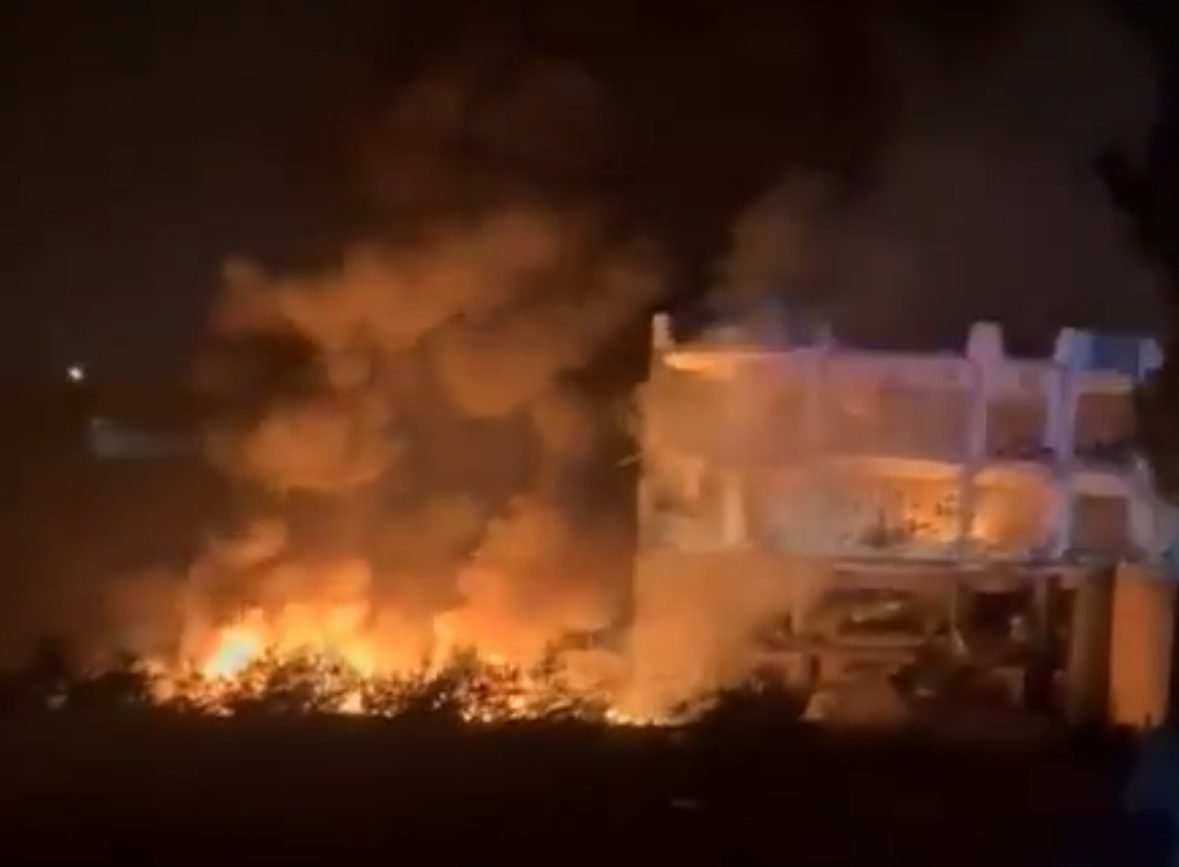
Israeli airstrikes across Lebanon have killed hundreds of people, including doctors, health workers, and children, as fighting between Israel and the armed group Hezbollah intensifies. One of the deadliest incidents struck a health center in southern Lebanon, where medical staff were among the victims.
According to Daljoog News analysis, the growing number of civilian casualties highlights how the conflict along the Israel–Lebanon border has evolved from limited exchanges of fire into a broader and increasingly destructive confrontation.
The attacks come as regional tensions remain high following months of fighting linked to wider Middle East conflicts. With strikes reaching deeper into Lebanese territory and rocket attacks hitting northern Israel, the risk of full-scale war continues to rise.
What Happened?
A series of Israeli airstrikes targeted multiple areas across Lebanon, leaving widespread destruction and heavy casualties.
In southern Lebanon, a health facility was struck, killing a doctor and at least 12 medical personnel. Local emergency responders said the attack also damaged medical equipment and vehicles used to transport injured civilians.
Another deadly strike occurred near the city of Sidon in the Arki area. At least nine people were killed there, including five children.
Additional casualties were reported in the town of Fawwar, where eight more people died during air raids.
An ambulance was also reportedly hit during the attacks, raising further concerns about the safety of emergency services operating in conflict zones.
Israeli forces also destroyed a bridge over the Litani River. According to the Israeli military, the bridge had been used by Hezbollah fighters to move between the northern and southern parts of Lebanon.
However, officials did not present public evidence supporting the claim.
Strikes also hit parts of the Lebanese capital, Beirut.
In the district of Bourj Hammoud, a residential building was reportedly struck by a drone. Other attacks targeted the Jnah and Naba neighborhoods.
Lebanese authorities reported that Israeli attacks across the country have now killed at least 773 people, including 103 children.
Why This Matters
The rising civilian toll underscores the increasing intensity of the Israel–Hezbollah conflict.
For years, confrontations along the Israel–Lebanon border were mostly limited to sporadic exchanges of rockets and artillery fire.
However, recent months have seen a sharp escalation.
Israeli strikes are reaching deeper into Lebanese territory, while Hezbollah has continued launching rockets into northern Israel.
The expanding battlefield now includes urban areas, transportation infrastructure, and critical public services.
Such developments raise fears that the conflict could evolve into a broader regional war, especially given the complex network of alliances across the Middle East.
Lebanon is already facing severe economic and political challenges. A prolonged war could place additional strain on the country’s fragile infrastructure and humanitarian system.
What Analysts or Officials Are Saying
Israeli military officials argue that their operations target Hezbollah infrastructure and fighters embedded within civilian areas.
They claim some transportation routes and buildings are being used to move weapons or personnel linked to the group.
However, humanitarian organizations and Lebanese authorities say many of the sites struck appear to be civilian locations, including medical facilities and residential buildings.
The Lebanese government has warned that repeated strikes on healthcare infrastructure could severely undermine emergency response capacity during the conflict.
Meanwhile, Hezbollah has continued its own military operations.
The group launched rocket attacks toward northern Israel, including areas in Upper Galilee.
These attacks triggered air raid sirens and prompted Israeli defense systems to respond.
Daljoog News Analysis
The latest strikes illustrate how quickly limited border clashes can escalate into a wider military confrontation.
Israel’s strategy appears focused on disrupting Hezbollah’s operational networks, including supply routes and transportation links across southern Lebanon.
At the same time, the growing number of civilian casualties risks intensifying international scrutiny and diplomatic pressure.
Strikes on healthcare facilities and emergency vehicles often draw strong reactions from global humanitarian groups and foreign governments.
For Hezbollah, continued rocket launches serve both military and symbolic purposes. The group aims to demonstrate that it can maintain pressure on Israel despite the scale of Israeli air operations.
The conflict also carries wider strategic implications.
Hezbollah maintains close ties with Iran, and any major escalation involving the group could deepen regional tensions involving Tehran and its allies.
This interconnected network of actors means that fighting along the Israel–Lebanon border rarely remains confined to one front.
What Happens Next
The immediate future of the conflict will likely depend on whether military operations continue to intensify or whether diplomatic efforts can slow the escalation.
Israel is expected to maintain pressure on Hezbollah positions, particularly in southern Lebanon, where the group maintains significant infrastructure.
At the same time, Hezbollah has signaled it will continue retaliatory strikes as long as Israeli attacks persist.
International mediators may attempt to revive ceasefire negotiations, but previous efforts have struggled to produce lasting agreements.
For civilians on both sides of the border, the most urgent concern remains safety.
As airstrikes and rocket attacks continue, communities in Lebanon and northern Israel face the growing risk of a prolonged and destructive conflict.