
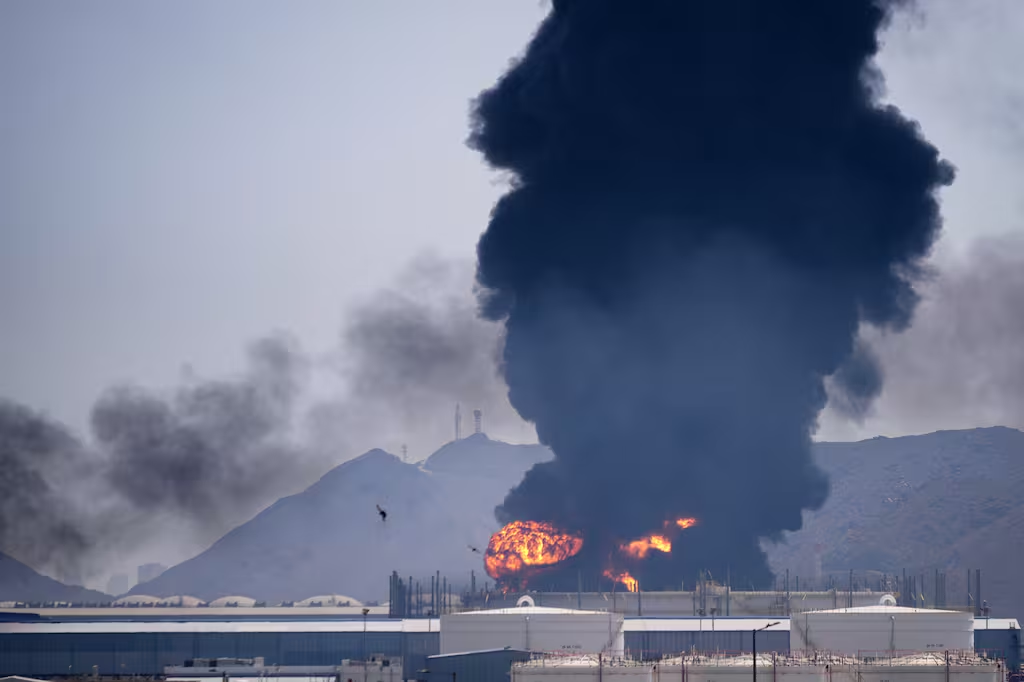
Iran has issued a warning urging residents near several major port areas in the United Arab Emirates to immediately move away, claiming the locations could soon become military targets. The warning specifically mentioned areas around key maritime hubs in Dubai, Abu Dhabi, and Fujairah.
According to Daljoog News analysis, the warning signals a potential expansion of Iran’s military campaign across the Gulf region, where American military facilities and logistics networks are closely tied to critical shipping infrastructure.
The announcement comes as the conflict between Iran and Israel intensifies and missile exchanges increasingly threaten regional trade routes and energy supplies.
What Happened?
Iranian authorities have warned civilians in the United Arab Emirates to avoid areas surrounding several strategic ports, raising concerns about possible military action in the coming hours.
The advisory reportedly referenced locations near Dubai’s Jebel Ali port as well as the Khalifa port area in Abu Dhabi and facilities in Fujairah. These locations are among the region’s most important maritime logistics hubs.
Iranian sources indicated that the warning was connected to the presence of American military personnel and undisclosed defense infrastructure in or near those locations.
Officials suggested that such facilities could now be considered legitimate military targets as tensions continue to rise.
The warning was first reported by Iranian media outlets and later cited by international broadcasters. The statements indicated that potential strikes could occur within a short timeframe, though no specific details about planned operations were provided.
At the same time, Iranian forces reportedly began another wave of missile launches targeting Israeli territory and US military positions across the Middle East.
Military authorities in the region have not yet released comprehensive information about the scale of the attacks or the locations affected.
Why This Matters
The warning directed at residents near major UAE ports raises serious concerns about the security of global trade routes.
Ports such as Jebel Ali and Khalifa serve as vital logistics gateways for international shipping, including energy shipments and commercial goods moving between Asia, Europe, and Africa.
Any military strike near those facilities could disrupt maritime operations and create shockwaves across global supply chains.
Another major concern involves the Strait of Hormuz, a narrow waterway that connects the Persian Gulf to international waters.
Iran has reportedly taken steps that effectively restrict passage through the strait during the current escalation.
Roughly one-fifth of the world’s seaborne oil exports pass through this critical chokepoint. Even limited disruptions can have immediate consequences for energy markets and transportation costs.
Regional governments and shipping companies are therefore closely monitoring the situation.
What Analysts or Officials Are Saying
Iranian defense officials have signaled that the country may deploy more advanced weapons as the conflict continues.
A spokesperson for Iran’s defense ministry indicated that Tehran intends to expand the use of sophisticated ballistic missiles and other high-capability weapons systems.
Military observers believe this could include longer-range missile variants as well as improved drone technologies.
These capabilities allow Iran to strike targets across much of the Middle East without relying on traditional air power.
Security analysts say the warning issued to civilians may also serve a strategic purpose. By publicly identifying potential target zones, Iran could be attempting to reduce civilian casualties while reinforcing its claim that the intended targets are military installations.
Regional air-defense systems in Israel and several Gulf states have already been activated in response to recent missile launches.
Details about interception results and damage assessments remain limited.
Daljoog News Analysis
Iran’s warning to residents near key UAE ports represents a significant escalation in the messaging surrounding the conflict.
By highlighting locations linked to American military presence, Tehran appears to be signaling that infrastructure connected to US operations could fall within its operational reach.
However, the situation also illustrates the risks inherent in modern hybrid warfare.
Military installations are often located near major transportation hubs, ports, and airports. Any attack near such areas could easily disrupt civilian economic activity even if the intended targets are military.
For Gulf states, the challenge lies in protecting critical infrastructure without allowing regional tensions to spiral into a broader war.
The Gulf region has invested heavily in air-defense networks and maritime security systems in recent years. Yet the growing use of drones and precision missiles continues to test those defenses.
From a global perspective, the stability of shipping routes and energy supply chains remains the most immediate concern.
Even the perception of risk near major ports or the Strait of Hormuz can influence global oil prices and shipping insurance costs.
What Happens Next
Regional governments are expected to increase security around major ports, energy facilities, and military bases as tensions continue to rise.
Air-defense systems across the Gulf are likely to remain on high alert, while shipping companies may adjust routes or delay departures if the threat level increases.
Diplomatic channels could also become more active as international actors attempt to prevent the conflict from spreading further across the region.
The coming days will be critical in determining whether the situation stabilizes or escalates into a broader confrontation involving multiple Gulf states.