

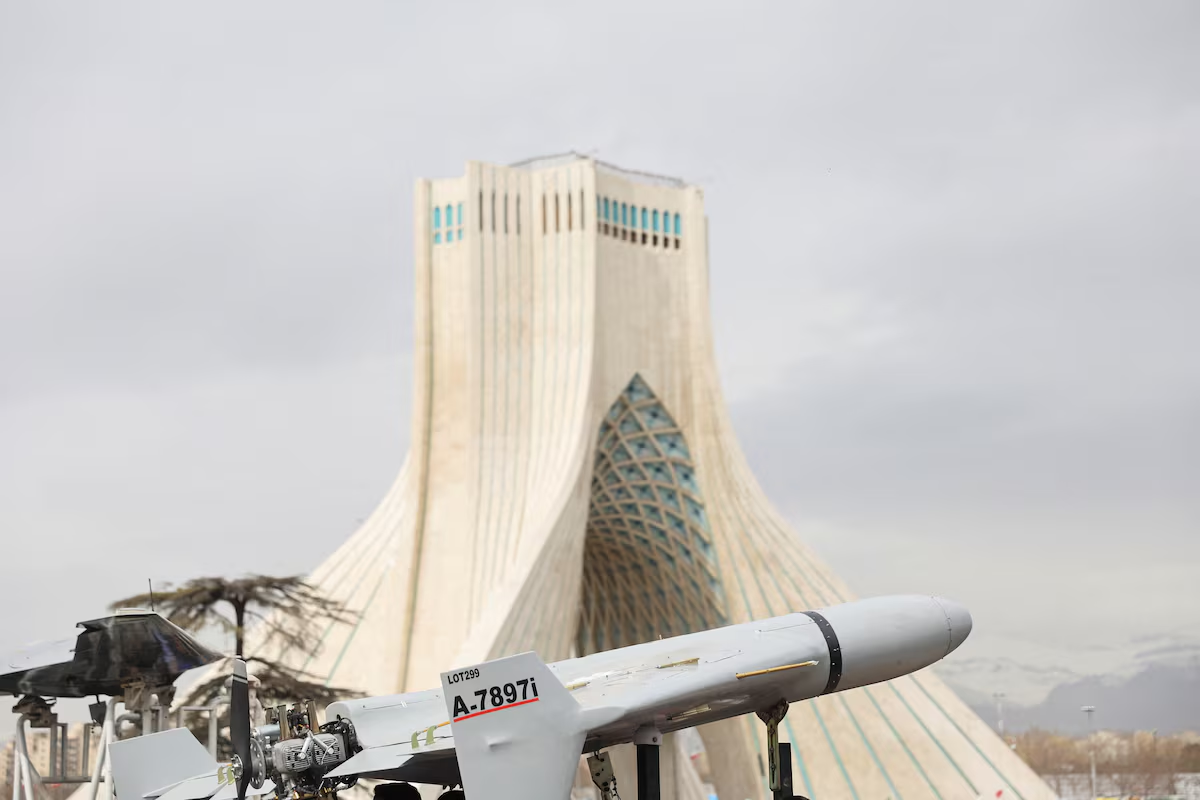
Ukraine’s President Volodymyr Zelensky has accused Russia of using Iranian-made Shahed drones in attacks against U.S. military targets.
According to Daljoog News analysis, the claim underscores the expanding role of drone technology in modern warfare and raises concerns about the proliferation of Iranian drones in global conflicts.
The allegation also comes amid ongoing tensions between Iran, Russia, and Western powers, highlighting how unmanned aerial systems are becoming a key factor in both regional and international security dynamics.
What Happened?
In an interview broadcast on CNN on Saturday, Zelensky stated that Iran supplied Shahed drones to Russia, which have since been deployed in attacks on U.S. military installations.
He explained that, according to Ukrainian intelligence, these drones began being used extensively during the late stages of Russia’s 2022 military operations in Ukraine. Thousands of Shahed drones were reportedly launched by Russian forces during that period.
Initially supplied by Iran, Russia has reportedly begun producing its own Shahed drones domestically while continuing to employ Iranian models in its operations.
The U.S. military has also confirmed that such drones are being used in ongoing operations targeting Iranian facilities, further emphasizing the weapon system’s global reach and strategic impact.
Why This Matters
The deployment of Iranian Shahed drones by Russia represents a significant shift in modern warfare, where unmanned aerial vehicles can strike high-value targets without risking personnel.
For the United States and its allies, this development raises new security challenges, particularly in safeguarding military bases and critical infrastructure from drone attacks.
Additionally, the use of foreign-supplied drones by Russia highlights how international partnerships and weapons proliferation can influence the dynamics of conflicts far from the supplier’s territory.
The escalation also signals that drone technology will likely remain a central factor in both tactical operations and strategic planning in future conflicts.
What Analysts or Officials Are Saying
Security analysts note that Iran’s Shahed drones have become a highly adaptable tool in conflicts where precision strikes are necessary, and their use by Russia demonstrates the increasing intersection of technology and geopolitics.
Ukrainian officials assert that the drones have significantly impacted the battlefield and raised the threat level for Western military assets.
Meanwhile, U.S. and European analysts are monitoring the proliferation of Iranian drones to allied and adversarial powers alike, warning that these systems could shift operational strategies in multiple regions.
Daljoog News Analysis
The Shahed drone’s use by Russia underscores how unmanned aerial technology has evolved into a strategic weapon in international conflicts. By incorporating foreign-supplied drones, Russia enhances its operational capabilities while keeping human losses low.
For Iran, supplying such drones strengthens its geopolitical influence and signals its capacity to affect conflicts beyond its borders.
The situation illustrates the growing complexity of global warfare, where alliances, technology transfers, and asymmetric tactics intersect. Monitoring these developments is critical to understanding both regional security and broader global military trends.
What Happens Next
The continued deployment of Shahed drones will likely prompt heightened defensive measures by the United States and its allies. Military strategists may invest more in counter-drone systems, surveillance, and missile defense technologies to mitigate the threat.
Diplomatically, Iran’s role as a drone supplier to Russia may attract additional scrutiny, sanctions, or international pressure from Western nations.
Meanwhile, Russia’s domestic production of Shahed drones suggests long-term reliance on this technology in current and future military operations, potentially reshaping battlefield strategies in Ukraine and beyond.
Global security analysts will be closely watching both the operational use of these drones and the diplomatic responses they provoke.