



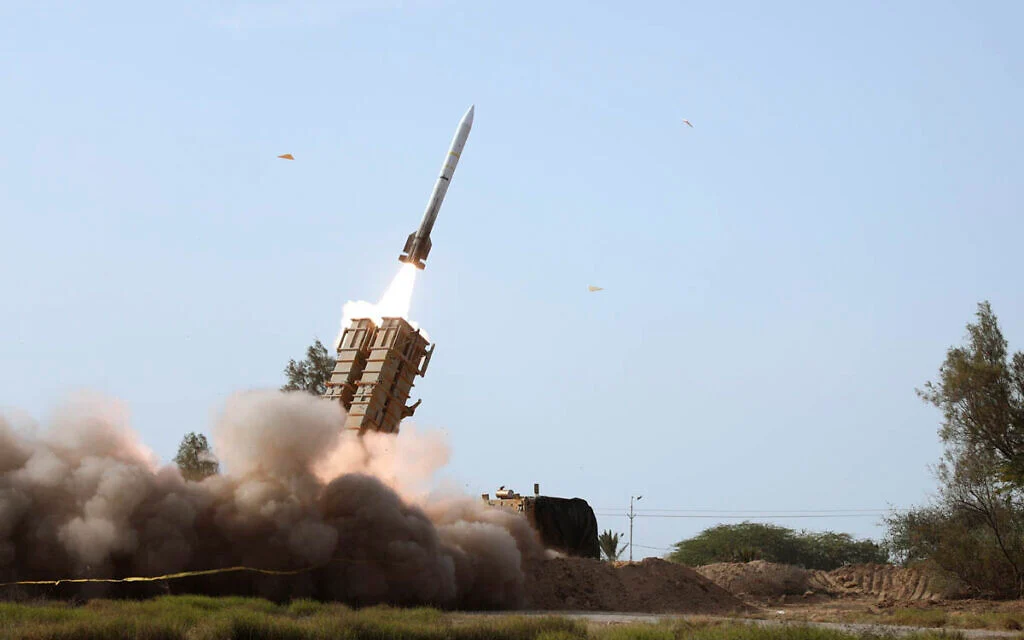
Iran has intensified its attacks on Israel, launching hundreds of ballistic missiles and thousands of suicide drones targeting military installations. The campaign marks a new phase in the ongoing Middle East conflict and demonstrates Tehran’s growing missile capabilities.
According to Daljoog News analysis, the deployment of Sejil missiles and other advanced systems underscores Iran’s strategy of overwhelming Israel’s air defenses, including Iron Dome and David’s Sling, by exploiting speed and maneuverability advantages.
The strikes come as part of “Operation True Promise Four,” a broader counteroffensive following previous U.S. and Israeli operations in the region. Iran has also revealed that many of its missiles date back nearly a decade, highlighting the persistence and readiness of its arsenal.
What Happened?
Iran has fired around 700 ballistic missiles and deployed approximately 3,600 suicide drones against Israel. Targets include military command centers, defense infrastructure, and aerospace facilities. Among the systems used are the Sejil medium-range missile, along with Ghadar and Emad models.
The Sejil missile can reach 2,000–2,500 kilometers and travels at speeds more than 13 times that of sound. Its high velocity and maneuverability make it extremely difficult for Israeli air defense systems to detect or intercept before impact. While the majority of Iran’s newer missile models have not yet been deployed, their presence in the arsenal signals Tehran’s capacity to escalate further.
Why This Matters
The scale and sophistication of Iran’s attack challenge Israel’s defensive posture and could alter strategic calculations in the region. The combination of high-speed missiles and large numbers of drones is designed to overwhelm conventional air defenses, potentially striking targets that were previously considered secure.
For Israel and the U.S., this represents not just a military challenge but also a geopolitical signal. The operation demonstrates Iran’s intent to assert its influence and deter further external strikes, while projecting technological competence to regional and global observers.
What Analysts or Officials Are Saying
Military analysts note that Sejil and other Iranian missile models provide both range and precision, allowing Tehran to strike deep into enemy territory. Experts highlight that high-speed missiles reduce reaction time for defense systems, complicating interception efforts and raising the risk of collateral damage.
Officials also emphasize that many of Iran’s missiles, although developed years ago, remain operational and strategically significant. The use of suicide drones alongside ballistic missiles reflects a combined-arms approach that seeks to exploit vulnerabilities in air defense networks.
Daljoog News Analysis
Iran’s missile and drone barrage represents a deliberate strategy of technological intimidation and operational deterrence. Daljoog News observes that this approach leverages both numerical superiority and advanced maneuverable weapons to challenge Israel’s defense systems.
While the immediate objective is to retaliate against strikes, the broader implication is Iran’s demonstration of strategic depth. The Sejil missile’s range, speed, and precision signal Tehran’s ability to project power beyond its borders and reshape regional calculations in a high-stakes conflict.
What Happens Next
As the conflict continues, analysts expect additional missile strikes, potential deployment of newer missile systems, and intensified use of drones. Israel and U.S. forces may seek to adapt their defenses, while Iran demonstrates readiness to escalate further if provoked.
Observers will also monitor how these attacks influence regional security, energy transportation routes, and the diplomatic landscape. The situation highlights the growing role of advanced missile technology in modern warfare and the increasing difficulty of maintaining strategic stability in the Middle East.