


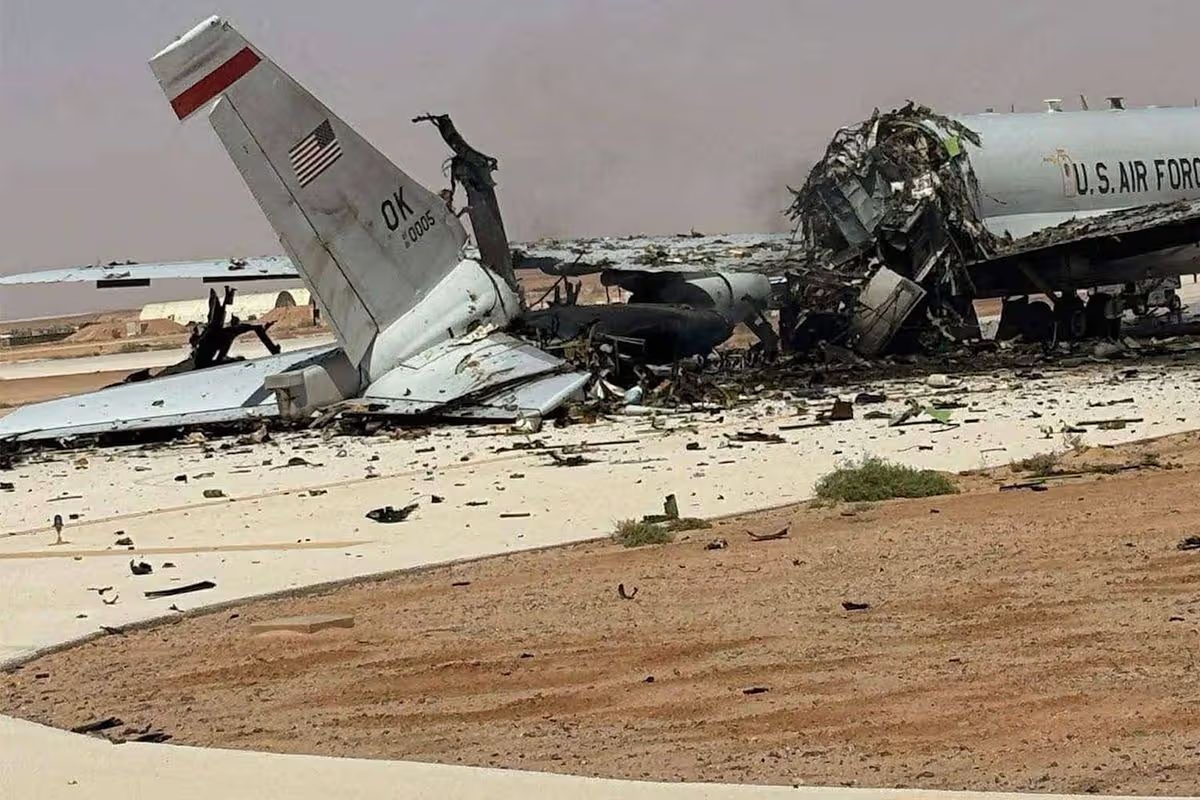
Iran has carried out a coordinated drone and missile strike on Prince Sultan Air Base in Saudi Arabia, reportedly destroying a high-value US radar aircraft and damaging several military assets. Early reports also indicate that at least 12 American personnel were killed, marking a sharp escalation in regional tensions.
According to Daljoog News analysis, the strike appears to have been carefully planned to hit a critical surveillance asset rather than simply inflict broad damage. The focus on airborne radar capability signals a shift toward targeting battlefield awareness systems.
The attack comes at a time when Middle East tensions remain elevated and control of airspace plays a decisive role in military strategy. The incident highlights growing risks around key US and allied installations in the region.
What Happened?
Iranian forces launched a combined drone and missile assault on Prince Sultan Air Base, a major military hub used by the United States in Saudi Arabia. The base supports regional air operations and plays a central role in monitoring aerial threats.
One of the most significant losses reported is a US airborne early warning aircraft, often described as a flying radar system. These aircraft can detect incoming drones, missiles, and enemy jets from hundreds of miles away while guiding defensive and offensive responses in real time.
Several other military aircraft were also damaged during the strike, although the full extent of the losses has not yet been officially confirmed. The destruction of such a specialized platform represents a rare and costly setback.
Reports of casualties further underscore the seriousness of the attack. At least 12 US personnel are believed to have been killed, though authorities are still verifying details.
Why This Matters
Airborne radar aircraft are among the most critical tools in modern warfare. They serve as mobile command centers, providing commanders with real-time intelligence and enabling faster and more precise decisions during combat.
The US military operates only a limited number of these systems, with estimates placing the fleet at around 16 aircraft. Each unit costs roughly $500 million and requires years to build and deploy. Losing even one significantly affects operational readiness.
The strike also raises concerns about vulnerabilities in advanced defense systems. Prince Sultan Air Base is considered a well-protected facility, making the success of this attack particularly alarming for both US forces and regional allies.
For Saudi Arabia and other partners, the incident highlights the increasing sophistication of Iran’s drone and missile capabilities. It suggests that existing defense measures may need urgent upgrades to counter evolving threats.
What Analysts or Officials Are Saying
Security analysts view the attack as a strategic move aimed at weakening US surveillance dominance. By targeting airborne radar, Iran may be attempting to limit Washington’s ability to monitor and respond quickly to threats across the region.
Experts also note that such aircraft are typically shielded by multiple layers of protection, including missile defense systems and patrol aircraft. The fact that the strike succeeded points to a highly coordinated operation designed to overwhelm defenses.
US defense officials have acknowledged the seriousness of the incident, though they have not yet outlined a clear response. Regional allies are reportedly reviewing their own security arrangements in light of the breach.
Daljoog News Analysis
This attack reflects a broader evolution in modern conflict, where the focus is shifting from traditional targets to high-value intelligence and surveillance systems. Destroying a radar aircraft is not just about physical damage; it disrupts the flow of information that underpins military operations.
The strike also sends a strong signal about Iran’s capabilities and intent. It demonstrates that even the most advanced and expensive assets are within reach if defenses are overwhelmed or miscalculated.
For the United States, the incident raises difficult questions about deployment strategy and risk management. Concentrating critical assets in exposed locations may no longer be sustainable in an era of precision strikes and drone warfare.
What Happens Next
The immediate focus will be on how Washington responds. Military retaliation remains a possibility, but diplomatic efforts could also be pursued to prevent further escalation.
In the short term, the US is likely to reinforce air defenses and reconsider how high-value assets are positioned in the region. Additional surveillance systems may be deployed to fill the gap left by the destroyed aircraft.
Regional allies are expected to tighten security and increase coordination with US forces. There may also be a renewed push to invest in advanced defense technologies capable of countering complex drone and missile attacks.
Looking ahead, this incident could reshape strategic calculations across the Middle East. It underscores how quickly the balance of power can shift when critical systems are taken offline.