

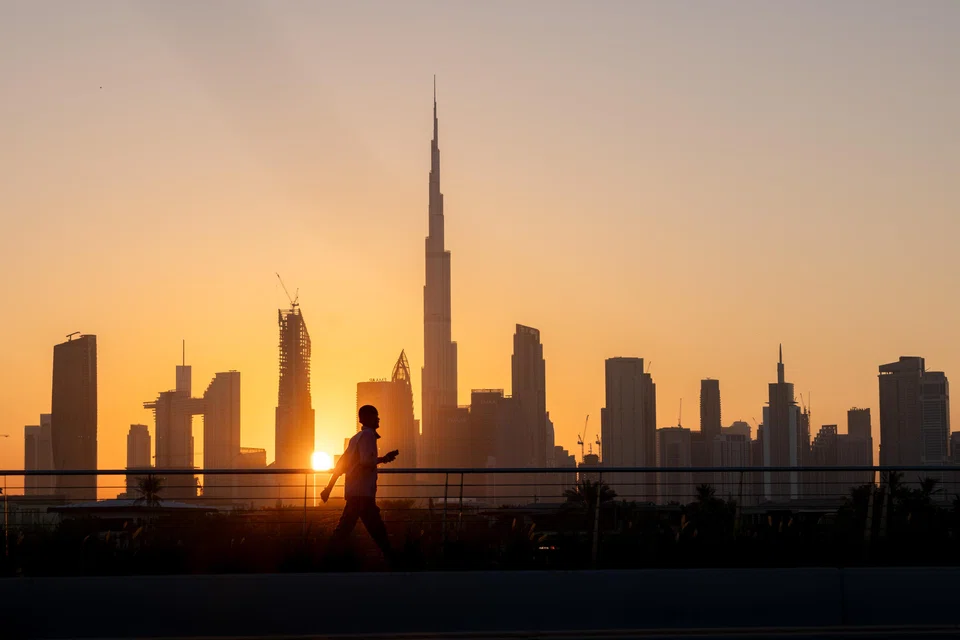
Leading economist Jeffrey Sachs has warned that a potential war involving Iran could severely damage major Gulf cities such as Dubai and Abu Dhabi, exposing vulnerabilities in their economic and security structures.
According to Daljoog News analysis, the warning highlights a growing concern that the region’s most advanced urban hubs may not be built to withstand prolonged military conflict, especially missile or drone-based warfare.
The statement comes at a time of rising geopolitical tension across the Middle East, where shifting alliances and military posturing are increasing the risk of broader regional instability.
What Happened?
Jeffrey Sachs issued a stark assessment of the risks facing the United Arab Emirates if tensions with Iran escalate into open conflict.
He argued that cities like Dubai and Abu Dhabi, known for tourism, finance, and luxury development, lack the structural resilience of hardened military zones. These urban centers were built as economic hubs, not defensive strongholds.
Sachs pointed to the growing threat of long-range missile strikes and drone warfare, which have become central features of modern conflicts in the region. Such threats could directly target infrastructure-heavy cities.
The warning also comes amid heightened regional tensions involving Iran and its adversaries. The presence of United States military bases across the region adds another layer of strategic sensitivity.
Iran has also issued warnings, indicating that any country allowing its territory to be used for attacks on Tehran could face consequences. This places Gulf states, including the UAE, in a complex position.
Why This Matters
The warning raises serious concerns about the long-term stability of the UAE’s economic model.
The country has spent decades building a global reputation for safety, investment security, and economic openness. Any perception of risk could quickly affect investor confidence and tourism flows.
Dubai and Abu Dhabi are key hubs for trade, finance, and aviation. Disruptions in these cities could have ripple effects across global markets, especially in the energy and logistics sectors.
The UAE’s strategic alignment with the United States and its role in regional normalization efforts, including the Abraham Accords, have increased its geopolitical visibility.
However, that visibility may also increase exposure during periods of heightened conflict.
What Analysts or Officials Are Saying
Analysts say Sachs’ warning reflects broader concerns about how modern warfare is changing risk calculations in the Middle East.
Experts note that drones and precision missiles can bypass traditional defenses and target economic infrastructure with greater accuracy.
Some observers point out that Gulf countries have invested heavily in air defense systems. However, they caution that no system can fully protect against sustained or coordinated attacks.
Discussions have also referenced past geopolitical thinking, including views associated with Henry Kissinger, emphasizing that alliances can carry both benefits and risks.
Regional governments have not publicly confirmed the warning, but security awareness has increased across key locations.
Daljoog News Analysis
Sachs’ remarks highlight a deeper issue within the Gulf’s development strategy.
The UAE has built one of the most successful economic models in the region, centered on stability and global integration. Yet this model depends heavily on external security guarantees and a predictable geopolitical environment.
Daljoog News analysis suggests that the greatest risk may not be immediate destruction but a loss of confidence. Even limited conflict could disrupt the perception of safety that supports the UAE’s economy.
The country’s reliance on strategic partnerships, particularly with the United States, creates both protection and exposure. This balance becomes more fragile as regional tensions rise.
The current situation shows how economic success and geopolitical risk are increasingly interconnected in the Middle East.
What Happens Next
The next phase will depend on whether tensions escalate or stabilize through diplomatic efforts.
Observers will watch for further statements from Iran, the United States, and Gulf countries, as well as any changes in military positioning.
The UAE may continue strengthening its defense systems while also working to reduce geopolitical risks through diplomacy.
Global markets will remain sensitive to developments. Any sign of instability affecting major Gulf cities could trigger immediate economic reactions.
While no direct conflict has been confirmed, the warning underscores a period of uncertainty where strategic decisions will play a key role in shaping the region’s future.