

Close Menu
Daljoog News
    What's Hot
    Iran Fast Boats Raise Security Risks in Hormuz Strait

    Iran Fast Boats Raise Security Risks in Hormuz Strait

    April 25, 2026
    2PM Ok Taecyeon Marries After 10 Years of Love

    2PM Ok Taecyeon Marries After 10 Years of Love

    April 25, 2026
    Russia Gold Reserves Drop After Massive 22 Ton Sale.jpg The server cannot process the image. This can happen if the server is busy or does not have enough resources to complete the task. Uploading a smaller image may help. Suggested maximum size is 2560 pixels.

    Russia Gold Reserves Drop After Massive 22 Ton Sale

    April 25, 2026
    Facebook X (Twitter) Instagram
    Friday, May 1
    Daljoog News
    Facebook X (Twitter) YouTube Instagram
    • Home
    • General
    • World
    • Business
    • Technology
    • Politics
    • Finance
    • Health
    • Lifestyle
    • Sports
    • Travel
    Daljoog News
    Home»Geopolitics»Iran’s Strategic Advantage in the Strait of Hormuz Keeps U.S. and Israel on Edge
    Geopolitics

    Iran’s Strategic Advantage in the Strait of Hormuz Keeps U.S. and Israel on Edge

    Andrew RogersBy Andrew RogersMarch 17, 2026No Comments4 Mins Read
    Facebook Twitter Pinterest LinkedIn Tumblr Email
    Follow Us
    Google News
    Iran’s Strategic Advantage in the Strait of Hormuz Keeps U.S. and Israel on Edge
    Iran’s Strategic Advantage in the Strait of Hormuz Keeps U.S. and Israel on Edge
    Share
    Facebook Twitter LinkedIn Pinterest Email

    Iran continues to withstand repeated attacks despite expectations from the U.S.-Israeli alliance that decisive strikes would topple Tehran’s leadership. Plans to end the conflict swiftly have faltered, demonstrating the complexity of modern warfare in the region.

    According to Daljoog News analysis, Iran’s geographic advantages, particularly its control over the Strait of Hormuz, allow it to leverage global energy markets as a form of strategic defense. Even with diminished conventional forces, Tehran can prolong hostilities and exert pressure without large-scale military engagement.

    The ongoing conflict underscores how geography, asymmetric tactics, and long-term preparation can outweigh short-term firepower, creating a protracted and costly struggle for adversaries like the United States and Israel.

    What Happened?

    The Trump-Netanyahu strategy initially aimed to assassinate Iran’s top leadership to force a rapid regime change. The plan assumed that eliminating key figures would trigger a swift victory and end the war within weeks. Despite repeated airstrikes and targeted operations, Iran has maintained operational cohesion and continues to resist external pressure.

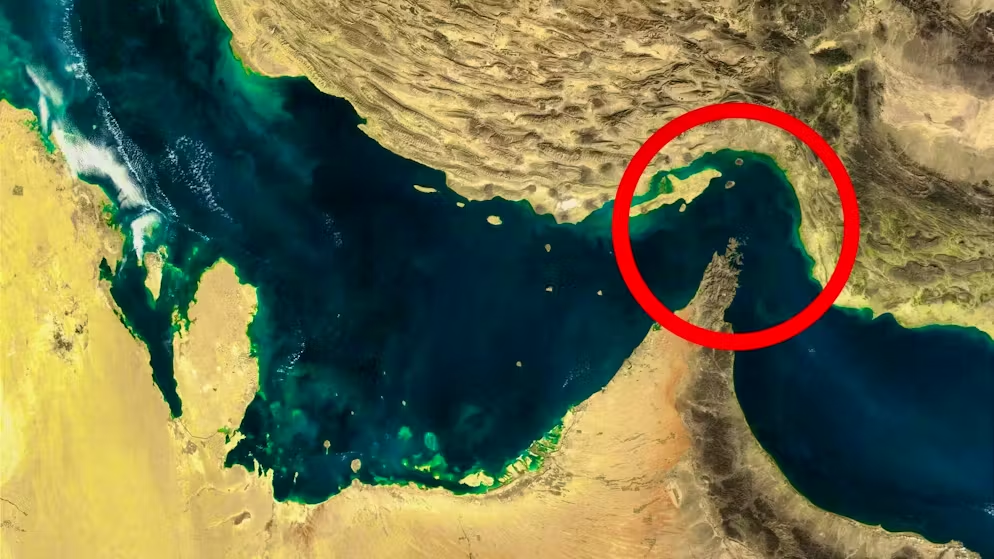
    A central element of Iran’s defensive strategy is the Strait of Hormuz. This narrow maritime corridor handles nearly 20 percent of global oil shipments. By controlling just this passage, Iran can disrupt international trade and extend the conflict, creating economic pressure that compels adversaries to reconsider their approach.

    Iran’s forces utilize a combination of fast-attack boats, anti-ship missiles, and strategically placed naval mines. These methods allow the country to defend its waters effectively without deploying massive warships. The shallow depth and narrow width of the Strait amplify the effectiveness of relatively inexpensive tools like limpet mines or small drones, capable of damaging multi-million-dollar vessels.

    Why This Matters

    The Strait of Hormuz gives Iran a natural choke point, making it nearly impossible for opponents to guarantee safe passage for oil shipments. This geographic leverage allows Iran to dictate terms and extend conflicts on its own schedule. Even with U.S. and Israeli forces actively targeting Iranian assets, the country can maintain operational pressure through asymmetric naval tactics.

    Fast-attack boats, known as Ashura-class, are particularly effective in swarm tactics, where multiple small vessels overwhelm larger ships. Their speed, maneuverability, and ability to deploy mines or missiles make them ideal for narrow waterways like Hormuz. Combined with the threat of diver-deployed limpet mines, these tactics create a high-risk environment for any naval coalition.

    The economic consequences are equally significant. Prolonged disruptions in the Strait can drive global oil prices up, forcing the United States and its allies to reconsider military escalation or negotiate under Iran’s terms. Every day of continued conflict costs billions for American forces while Iran’s minimal investment in asymmetric defenses yields disproportionate leverage.

    What Analysts or Officials Are Saying

    Military analysts stress that Iran’s approach is the result of decades-long planning. The country has developed parallel military structures with multiple units capable of independent operations, creating redundancy and confusion for any adversary. This complexity makes it difficult for conventional forces to achieve decisive victories, even when superior in technology or firepower.

    Experts also note that U.S.-Israeli reliance on short-term ceasefires has repeatedly backfired. Past negotiations failed to secure lasting peace, and attempts to coerce Tehran into early talks are unlikely to succeed. Iran’s insistence on foreign troop withdrawals as a precondition for negotiations further complicates the possibility of ending hostilities quickly.

    Daljoog News Analysis

    The conflict demonstrates how strategic geography, long-term preparation, and asymmetric capabilities can counterbalance conventional military superiority. Iran’s ability to exploit the Strait of Hormuz highlights the limits of traditional strike-based strategies and underscores the importance of economic and logistical factors in modern warfare.

    Daljoog News analysis suggests that the U.S.-Israeli coalition underestimated Iran’s resilience and overestimated the impact of high-intensity strikes. Even with extensive aerial and naval campaigns, asymmetric tactics such as swarming fast-attack boats, limpet mines, and coastal missile systems enable Iran to maintain both operational flexibility and strategic leverage.

    What Happens Next

    The war in the Persian Gulf is likely to remain protracted. Iran’s continued control of strategic waterways ensures that any escalation carries high economic and military costs for adversaries. Observers will monitor the deployment of fast-attack craft, naval mines, and drone operations closely, as these small-scale tactics have outsized strategic implications.

    For the United States and Israel, the immediate challenge is sustaining military pressure while managing economic consequences and global energy security. Long-term, Iran’s preparedness, asymmetric capabilities, and geographic advantage make a quick resolution improbable, signaling a drawn-out struggle where both military and economic dimensions will shape outcomes.
    Share. Facebook Twitter Pinterest LinkedIn Tumblr Email
    Andrew Rogers
    Andrew Rogers
    • Website
    • Facebook

    Andrew Rogers is a seasoned journalist and news analyst specializing in global affairs, politics, and finance. With a passion for investigative reporting, he delivers accurate, insightful stories that inform and engage readers worldwide.

    Related Posts

    Caspian Sea Route Strengthens Russia Iran Axis

    Caspian Sea Route Strengthens Russia Iran Axis

    April 22, 2026
    Sachs Warns UAE Cities at Risk in Iran Conflict

    Sachs Warns UAE Cities at Risk in Iran Conflict

    March 31, 2026
    Trump has mulled timeline for Iran strikes, but no decision yet

    Trump has mulled timeline for Iran strikes, but no decision yet

    February 19, 2026

    Comments are closed.

    Our Picks
    Caspian Sea Route Strengthens Russia Iran Axis

    Caspian Sea Route Strengthens Russia Iran Axis

    April 22, 2026
    Sachs Warns UAE Cities at Risk in Iran Conflict

    Sachs Warns UAE Cities at Risk in Iran Conflict

    March 31, 2026
    Trump has mulled timeline for Iran strikes, but no decision yet

    Trump has mulled timeline for Iran strikes, but no decision yet

    February 19, 2026
    USS Abraham Lincoln, F-35s, and “Only Jedi” Mentioned in Report

    USS Abraham Lincoln, F-35s, and “Only Jedi” Mentioned in Report

    February 5, 2026
    Stay In Touch
    • Facebook
    • Twitter
    • Instagram
    • YouTube
    Don't Miss
    Trump China Iran Warning Raises Global Tensions 2026

    Trump China Iran Warning Raises Global Tensions 2026

    World April 12, 2026

    Trump China, Iran warning US President Donald Trump has issued a sharp caution over reports…

    Israelis Fleeing to Cyprus Amid War Fears

    Israelis Fleeing to Cyprus Amid War Fears

    June 28, 2025
    Somalia and Türkiye Sign Historic Oil Agreement: A New Hydrocarbon Frontier

    Somalia and Türkiye Sign Historic Oil Agreement: A New Hydrocarbon Frontier

    April 26, 2025
    Asian Stocks Open Mixed Amid Uncertainty Over U.S. Tariffs

    Asian Stocks Open Mixed Amid Uncertainty Over U.S. Tariffs

    March 10, 2025
    About Us

    Daljoog News is a trusted news platform that brings you the latest global and local updates with accuracy and fairness. We are committed to clear and unbiased reporting, covering topics like politics, business, technology, science, and culture and more. Using the latest technology and expert journalism, we provide reliable coverage of important stories. Stay informed, inspired, and empowered with Daljoog News—your source for breaking news, the latest updates, and videos that matter.

    Email Us: info@daljoognews.com

    Our Picks
    California Threatens Paramount’s $110B Warner Deal

    California Threatens Paramount’s $110B Warner Deal

    February 28, 2026
    US Judge Dismisses Buffalo Wild Wings Lawsuit

    US Judge Dismisses Buffalo Wild Wings Lawsuit

    February 18, 2026
    Casey Wasserman to Sell Agency Amid Epstein File Fallout

    Casey Wasserman to Sell Agency Amid Epstein File Fallout

    February 15, 2026
    Latest News
    Iran Fast Boats Raise Security Risks in Hormuz Strait

    Iran Fast Boats Raise Security Risks in Hormuz Strait

    April 25, 2026
    2PM Ok Taecyeon Marries After 10 Years of Love

    2PM Ok Taecyeon Marries After 10 Years of Love

    April 25, 2026
    Russia Gold Reserves Drop After Massive 22 Ton Sale.jpg The server cannot process the image. This can happen if the server is busy or does not have enough resources to complete the task. Uploading a smaller image may help. Suggested maximum size is 2560 pixels.

    Russia Gold Reserves Drop After Massive 22 Ton Sale

    April 25, 2026
    Facebook X (Twitter) RSS YouTube Instagram
    • Home
    • About Us
    • Contact Us
    • Our Authors
    • Privacy Policy
    • Terms & Conditions
    • Sitemap
    © 2026 DaljoogNews.com

    Type above and press Enter to search. Press Esc to cancel.