

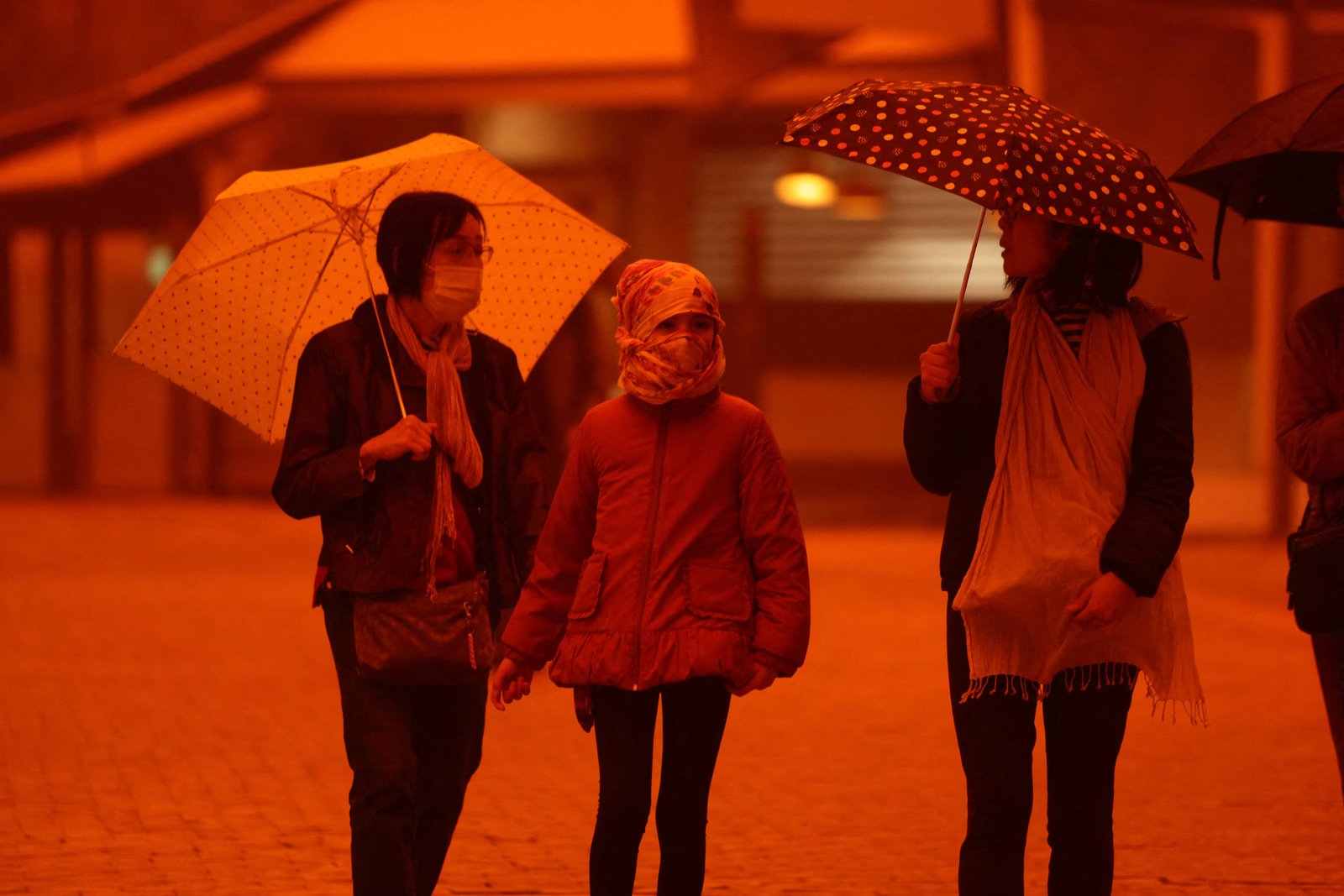
Early morning on Crete, Greece, brought an unusual spectacle as the sky over the island turned a deep orange. Dust from the Sahara Desert drifted across the Mediterranean, covering Heraklion and other towns in a dense, colorful haze.
According to Daljoog News analysis, this rare natural phenomenon is both visually striking and disruptive. While it creates a surreal landscape for residents and tourists, the dust has significantly reduced visibility and complicated local transportation and aviation.
The timing of the dust event coincides with strong winds and occasional rain, intensifying its impact on daily life. Scientists note that such Saharan dust intrusions are becoming more frequent due to shifting climate patterns.
What Happened?
As dawn broke over Crete, thick orange dust enveloped streets, buildings, and harbors. In Heraklion, the effect was most pronounced, with moored ships partially obscured and road traffic slowed. Residents paused to photograph the rare sight, while others hurried along, shielding themselves from the fine particles.
Meteorologists traced the dust to the Sahara Desert in North Africa. Powerful winds carried the particles across the Mediterranean, creating a dense atmospheric layer over Crete. The phenomenon, sometimes called a “blood rain” effect due to its intense color, can travel thousands of kilometers before settling.
Local news outlets reported that airport operations were affected. Some flights were diverted to alternate airports as visibility dropped, and maritime activity slowed amid rough winds and choppy seas.
Why This Matters
Saharan dust events have multiple consequences beyond their visual impact. High concentrations of dust can reduce air quality, aggravate respiratory issues, and disrupt transportation networks. In Crete, the combination of dust, wind, and rain created temporary safety concerns for drivers and pedestrians alike.
The event also highlights the broader effects of climate variability on the Mediterranean region. Strong winds capable of transporting desert dust over such distances are linked to changing weather patterns, potentially making such occurrences more common in the future.
For tourism-dependent areas like Crete, these events have economic implications. Flight delays, diversions, and slower road traffic can affect both local businesses and visitor experiences.
What Analysts or Officials Are Saying
Experts note that Saharan dust is a natural phenomenon, but larger environmental shifts can influence its frequency and intensity. Scientists studying atmospheric patterns emphasize that while visually spectacular, dust storms pose health and logistical challenges.
Aviation authorities in Crete are closely monitoring visibility conditions. Officials suggest travelers remain flexible, as delays or rerouting may continue until the dust settles. Local municipalities have advised residents to limit outdoor exposure, especially for children and people with respiratory conditions.
Daljoog News Analysis
This orange haze over Crete is a reminder of the interconnectedness of global weather systems. What begins as wind-blown sand in North Africa can travel across the Mediterranean, affecting life thousands of kilometers away.
The striking visual impact of the dust also offers a unique perspective on nature’s power. While it disrupts travel and daily routines, it creates images and experiences that are rare and memorable for residents and visitors.
Daljoog News analysis suggests that as climate change continues to alter wind patterns and weather extremes, similar events may become more frequent. Preparedness and awareness will be crucial for minimizing disruptions and health risks.
What Happens Next
The dust is expected to settle over the next several days, though isolated pockets may persist. Aviation authorities and local officials are coordinating to manage flight schedules and road safety during this period.
Tourists and residents alike are advised to take precautions, such as wearing masks outdoors and avoiding strenuous activity in heavily dusted areas. Scientists will continue to track the phenomenon to better understand its implications for the Mediterranean region.
While disruptive, the orange haze over Crete remains a vivid illustration of nature’s reach, reminding everyone of the vast and dynamic forces that shape our environment.