


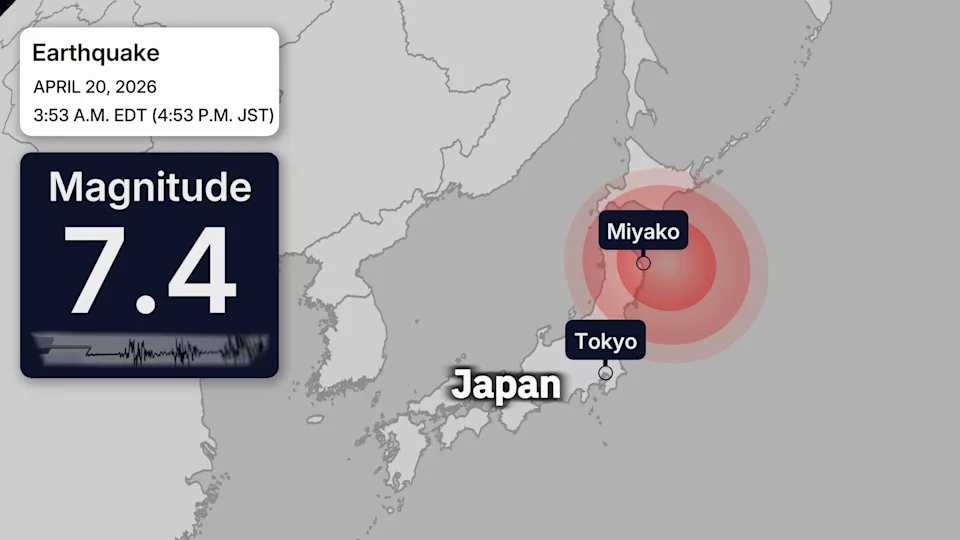
Japan earthquake tsunami alert was issued after a powerful 7.4 magnitude earthquake struck the country’s northeastern coastal region, triggering immediate evacuation warnings and emergency responses.
According to Daljoog News analysis, the Japan earthquake tsunami alert highlights the country’s constant exposure to seismic risks due to its location on the Pacific Ring of Fire, where tectonic activity is frequent and often unpredictable.
The Japan earthquake tsunami alert comes at a critical time, as coastal communities were already on heightened alert due to previous seismic activity in the region, forcing rapid government response and large-scale safety measures.
WHAT HAPPENED?
Japan earthquake tsunami alert was triggered after a strong undersea earthquake struck off the northeastern coast near the Iwate Prefecture region. The quake occurred in the late afternoon local time, catching residents during regular daily activity.
Seismological data confirmed the earthquake registered a magnitude of 7.4 on the Richter scale. The epicenter was located in the Pacific Ocean at a shallow depth of approximately 10 kilometers, which significantly increased the intensity of ground shaking felt on land.
Japan’s meteorological authorities reported that the quake reached an upper-five level on the national seismic intensity scale. At this level, standing upright becomes extremely difficult, and unsecured objects can fall, causing injuries and structural damage.
Following the Japan earthquake tsunami alert, tsunami warnings were issued along wide stretches of the Pacific coastline. Authorities warned that sudden sea level changes and powerful wave activity could follow the offshore quake.
Prime Minister Sanae Takaichi ordered immediate emergency protocols, instructing residents in affected coastal zones to evacuate to higher ground without delay. Local governments activated evacuation centers and emergency communication systems.
WHY THIS MATTERS
The Japan earthquake tsunami alert underscores the country’s extreme vulnerability to seismic and tsunami threats due to its geographical position along major tectonic plate boundaries.
Even moderate-to-strong undersea earthquakes in this region can generate tsunami risks, particularly when the epicenter is shallow. This makes rapid response systems essential for minimizing casualties and damage.
The alert also has broader implications for regional disaster preparedness. Coastal infrastructure, transportation networks, and energy facilities in Japan are highly exposed to seismic disruptions.
Globally, such events remind governments and industries of the importance of early warning systems and resilient infrastructure, especially in other earthquake-prone coastal zones around the Pacific.
WHAT ANALYSTS OR OFFICIALS ARE SAYING
Seismologists note that the Japan earthquake tsunami alert reflects a typical but dangerous seismic pattern in the region, where sudden undersea shifts can displace large volumes of water and trigger tsunami waves.
Japanese officials emphasized that rapid evacuation remains the most effective safety measure. Emergency agencies reiterated that residents should not return to coastal areas until all clear signals are issued.
Disaster response experts also point out that Japan’s advanced early warning systems significantly reduce potential casualties compared to similar magnitude quakes in less-prepared regions.
International monitoring agencies are closely tracking aftershocks, which are common following major seismic events and can further complicate recovery efforts.
DALJOOG NEWS ANALYSIS
The Japan earthquake tsunami alert once again highlights the fragile balance between technological preparedness and natural unpredictability. Despite Japan’s world-leading disaster response systems, seismic events of this magnitude still create immediate disruption and uncertainty.
Japan’s investment in earthquake-resistant infrastructure and early warning systems has reduced long-term fatalities in past disasters, but no system can fully eliminate the risks posed by deep ocean tectonic activity.
From a regional perspective, this event reinforces the importance of continuous investment in coastal evacuation planning, public education, and cross-border tsunami monitoring systems across the Pacific basin.
The Japan earthquake tsunami alert also carries economic implications. Temporary shutdowns of ports, transport systems, and coastal industries can disrupt supply chains, especially in sectors reliant on Japanese manufacturing and shipping.
WHAT HAPPENS NEXT?
Authorities will continue monitoring sea levels and aftershock activity in the hours and days following the Japan earthquake tsunami alert. Tsunami warnings will remain in place until ocean conditions stabilize.
Evacuated residents are expected to remain in designated shelters until emergency services confirm that coastal zones are safe for return. Damage assessments will begin once the immediate tsunami risk passes.
Experts warn that aftershocks could still pose risks, particularly to already weakened structures and infrastructure in the affected region.
The long-term focus will shift toward recovery, infrastructure inspection, and updating risk models to improve future response systems.
For now, the Japan earthquake tsunami alert remains a developing situation, with authorities maintaining maximum vigilance as Japan once again confronts one of nature’s most powerful forces.