
Close Menu
Daljoog News
    What's Hot
    French authorities are investigating after thieves steal Renoir paintings estimated at approximately nine million euros in total value from the Musee Renoir in Cagnes-sur-Mer, a coastal town in the Alpes-Maritimes region of southern France. The stolen works, created by renowned Impressionist painter Pierre-Auguste Renoir, represent a significant loss to the museum's collection, which is specifically dedicated to showcasing the artist's work and legacy at the historic property where he spent his final years. Investigators are working to determine how the thieves gained access to the museum and successfully removed the valuable artworks, with authorities examining security footage and physical evidence at the scene to establish a timeline and method used during the apparent theft. This incident adds to a concerning pattern of high profile art thefts affecting museums across Europe in recent years, with valuable artworks increasingly targeted by organized criminal networks that specialize in stealing and often attempting to sell stolen art through underground channels. Art theft experts note that stolen artworks of this caliber and recognition present significant challenges for criminals attempting to sell them, given their well documented provenance and distinctive appearance that makes legitimate resale through normal art market channels extremely difficult. Some stolen artworks eventually resurface years or even decades later, sometimes recovered through law enforcement investigations or occasionally offered back through intermediaries, though many high profile art thefts throughout history have never been fully resolved with recovered stolen items. French cultural heritage officials have expressed significant concern about this theft, given the museum's importance in preserving and showcasing Renoir's artistic legacy at a location with direct historical connection to the artist's life and creative work during his later years. International art crime databases will likely be updated with details about the stolen works, helping alert galleries, auction houses, and law enforcement agencies worldwide to watch for any attempts to sell or transport these specific paintings through legitimate or underground art market channels. Museum security experts note that this incident may prompt broader reviews of security measures at similar smaller, specialized museums that may have more limited security resources compared to major national institutions, despite housing artworks of comparable significant value and cultural importance. Insurance considerations will likely factor into the museum's response to this theft, with specialized art insurance policies typically covering significant losses, though such coverage does not replace the cultural and historical value lost when significant artworks are removed from public access and study. As this investigation continues, French authorities remain hopeful about eventually recovering the stolen paintings, though art theft cases of this nature often prove challenging to resolve quickly. The cultural loss extends beyond financial value, depriving the public of access to significant works from an influential artistic legacy.

    Thieves Steal Renoir Paintings Worth Millions

    September 9, 2026
    NATO And EU Chiefs Warn Russia Growing Reckless

    NATO And EU Chiefs Warn Russia Growing Reckless

    September 9, 2026
    Education Attack Day Highlights School Safety

    Education Attack Day Highlights School Safety

    September 9, 2026
    Facebook X (Twitter) Instagram
    Wednesday, September 9
    Daljoog News
    Facebook X (Twitter) YouTube Instagram
    • Home
    • General
    • World
    • Business
    • Technology
    • Politics
    • Finance
    • Health
    • Lifestyle
    • Sports
    • Travel
    Daljoog News
    Home»World»Iran Expands Regional Influence as US-Israel Strategy Faces Setback
    World

    Iran Expands Regional Influence as US-Israel Strategy Faces Setback

    Andrew RogersBy Andrew RogersApril 6, 2026No Comments3 Mins Read
    Facebook Twitter Pinterest LinkedIn Tumblr Email
    Follow Us
    Google News
    Iran Expands Regional Influence as US-Israel Strategy Faces Setback
    Iran Expands Regional Influence as US-Israel Strategy Faces Setback
    Share
    Facebook Twitter LinkedIn Pinterest Email

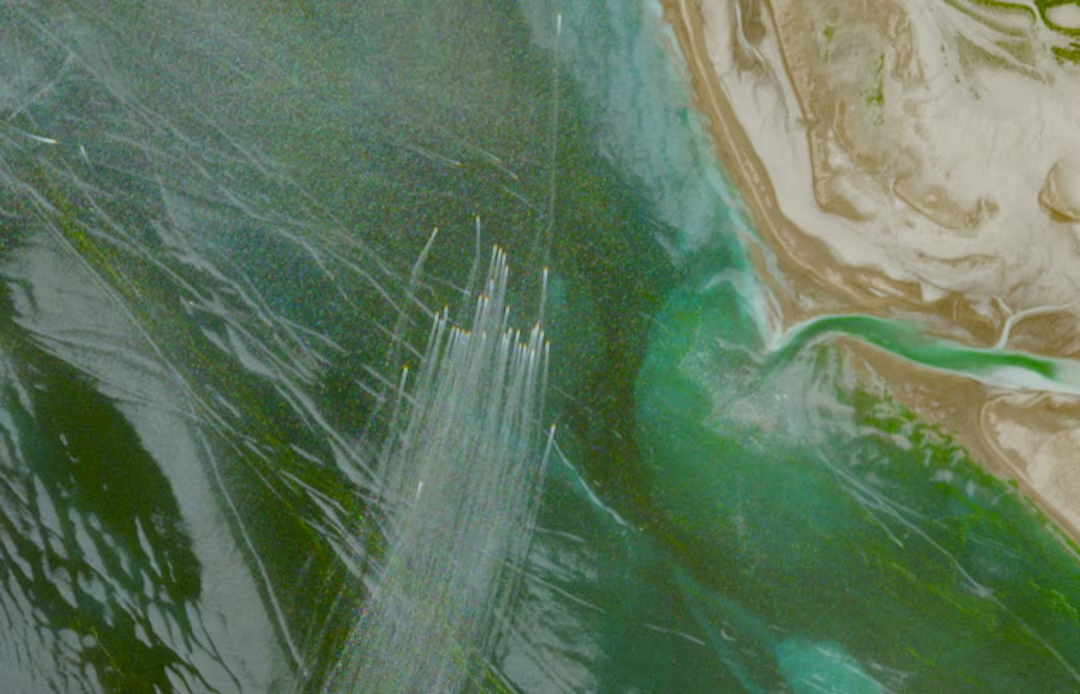
    Efforts by the United States and Israel to contain Iran are encountering unanticipated challenges. Iran has successfully rallied allies across Lebanon, Iraq, and Yemen, transforming what was intended as a localized confrontation into a multi-front conflict.

    According to Daljoog News analysis, the strategy that Washington and Tel Aviv envisioned—a swift, controlled operation to isolate Iran—has backfired. Instead of pressure, the US-Israel coalition now faces sustained resistance and escalating risks, with key trade routes and military theaters under threat.

    This unfolding situation highlights how regional alliances and proxy networks are reshaping Middle Eastern dynamics. The stakes extend beyond immediate combat, potentially affecting global shipping, energy supplies, and international markets.

    What Happened?

    The conflict initially centered on US-Israel efforts to neutralize Iran’s influence. Lebanon became the first flashpoint, with Israel launching repeated airstrikes and limited ground operations aimed at curbing Hezbollah. Despite significant destruction, Hezbollah has successfully resisted, prolonging engagements and frustrating Israeli objectives.

    Iraq has emerged as the second major theater. Iran-aligned militias are now actively targeting American interests, effectively turning Iraqi territory into an extension of Iran’s strategic operations. Any direct US strike risks escalation beyond a contained conflict, as Iran has integrated Iraq into its defense and response network.

    Meanwhile, Yemen’s Ansar Allah / Houthis has joined Iran’s campaign. Analysts warn that this could threaten the Bab el-Mandeb Strait, a critical chokepoint for global maritime trade. Disruption in this corridor would ripple worldwide, raising shipping costs, extending transit times, and inflating fuel and goods prices.

    Why This Matters

    Iran’s multi-front approach undermines US and Israeli plans for a controlled confrontation. The conflict’s expansion threatens regional stability and economic security far beyond the Middle East.

    For the US and Israel, prolonged engagements drain resources and morale. For global markets, potential disruptions in key shipping lanes could increase commodity prices and create logistical bottlenecks. Iran’s strategy demonstrates how asymmetric alliances can challenge even the most technologically advanced militaries.

    What Analysts or Officials Are Saying

    Experts highlight that Iran’s approach is deliberate: by dispersing the conflict across multiple fronts, it maximizes pressure on its adversaries while minimizing direct exposure to superior airpower. Analysts agree that neither side is likely to achieve a decisive victory quickly, and the pattern suggests a drawn-out conflict with widespread consequences.

    Officials caution that continued escalation in Lebanon, Iraq, and Yemen could spark broader regional instability. While Israel maintains localized operational goals, Iran’s coordinated alliances complicate containment strategies.

    Daljoog News Analysis

    Daljoog News observes that Iran is leveraging strategic patience and proxy networks to offset conventional military disadvantages. The US and Israel initially underestimated the cohesion and resilience of Iran-aligned groups.

    This pattern reflects a larger lesson in modern warfare: conflicts are no longer confined to national borders. Strategic influence, proxy coordination, and control of economic choke points now shape outcomes as much as direct military power.

    The ongoing escalation also signals to the international community that interventions aimed at quick victories may backfire, creating prolonged uncertainty and compounding risks for civilians and regional partners.

    What Happens Next

    The coming weeks will test the limits of containment. Iran’s allies in Iraq and Yemen may continue offensive operations, while Lebanon remains a stubborn battleground. Any escalation targeting critical maritime routes could trigger global economic reverberations.

    Observers expect heightened diplomatic efforts from regional and international powers seeking to mediate or de-escalate tensions. However, with both sides entrenched and proxy networks active, the outlook points toward sustained instability rather than swift resolution.
    Share. Facebook Twitter Pinterest LinkedIn Tumblr Email
    Andrew Rogers
    Andrew Rogers
    • Website
    • Facebook

    Andrew Rogers is a seasoned journalist and news analyst specializing in global affairs, politics, and finance. With a passion for investigative reporting, he delivers accurate, insightful stories that inform and engage readers worldwide.

    Related Posts

    Iran Fast Boats Raise Security Risks in Hormuz Strait

    Iran Fast Boats Raise Security Risks in Hormuz Strait

    April 25, 2026
    Reza Pahlavi Germany Attack Sparks Security Concern

    Reza Pahlavi Germany Attack Sparks Security Concern

    April 25, 2026
    US Iran Truce Tensions Rise as Talks Collapse Fast

    US Iran Truce Tensions Rise as Talks Collapse Fast

    April 25, 2026

    Comments are closed.

    Our Picks
    Iran Fast Boats Raise Security Risks in Hormuz Strait

    Iran Fast Boats Raise Security Risks in Hormuz Strait

    April 25, 2026
    Reza Pahlavi Germany Attack Sparks Security Concern

    Reza Pahlavi Germany Attack Sparks Security Concern

    April 25, 2026
    US Iran Truce Tensions Rise as Talks Collapse Fast

    US Iran Truce Tensions Rise as Talks Collapse Fast

    April 25, 2026
    Iran Internet Blackout Hits 50 Days Crisis

    Iran Internet Blackout Hits 50 Days Crisis

    April 23, 2026
    Stay In Touch
    • Facebook
    • Twitter
    • Instagram
    • YouTube
    Don't Miss
    Russia North Korea Flights

    Russia North Korea Flights

    Politics July 28, 2025

    Russia began direct commercial flights between Moscow and Pyongyang on Sunday, highlighting closer ties between…

    Aircraft Carrier Shandong

    Aircraft Carrier Shandong: China’s First Domestic Carrier

    June 12, 2025
    Australian PM Condemns Violence at Anti-Israel Protest During Herzog Visit

    Australian PM Condemns Violence at Anti-Israel Protest During Herzog Visit

    February 10, 2026
    Chinese Kill Switch Found in US Solar Panels

    Chinese Kill Switch Found in US Solar Panels

    May 20, 2025
    About Us

    Daljoog News is a trusted news platform that brings you the latest global and local updates with accuracy and fairness. We are committed to clear and unbiased reporting, covering topics like politics, business, technology, science, and culture and more. Using the latest technology and expert journalism, we provide reliable coverage of important stories. Stay informed, inspired, and empowered with Daljoog News—your source for breaking news, the latest updates, and videos that matter.

    Email Us: info@daljoognews.com

    Our Picks
    Canada Tariffs Raise Costs For Cross Border Firms

    Canada Tariffs Raise Costs For Cross Border Firms

    September 9, 2026
    Global Markets Steady Ahead Of Inflation Data

    Global Markets Steady Ahead Of Inflation Data

    September 8, 2026
    Diesel And Gasoline Futures Ease Slightly Today

    Diesel And Gasoline Futures Ease Slightly Today

    September 7, 2026
    Latest News
    French authorities are investigating after thieves steal Renoir paintings estimated at approximately nine million euros in total value from the Musee Renoir in Cagnes-sur-Mer, a coastal town in the Alpes-Maritimes region of southern France. The stolen works, created by renowned Impressionist painter Pierre-Auguste Renoir, represent a significant loss to the museum's collection, which is specifically dedicated to showcasing the artist's work and legacy at the historic property where he spent his final years. Investigators are working to determine how the thieves gained access to the museum and successfully removed the valuable artworks, with authorities examining security footage and physical evidence at the scene to establish a timeline and method used during the apparent theft. This incident adds to a concerning pattern of high profile art thefts affecting museums across Europe in recent years, with valuable artworks increasingly targeted by organized criminal networks that specialize in stealing and often attempting to sell stolen art through underground channels. Art theft experts note that stolen artworks of this caliber and recognition present significant challenges for criminals attempting to sell them, given their well documented provenance and distinctive appearance that makes legitimate resale through normal art market channels extremely difficult. Some stolen artworks eventually resurface years or even decades later, sometimes recovered through law enforcement investigations or occasionally offered back through intermediaries, though many high profile art thefts throughout history have never been fully resolved with recovered stolen items. French cultural heritage officials have expressed significant concern about this theft, given the museum's importance in preserving and showcasing Renoir's artistic legacy at a location with direct historical connection to the artist's life and creative work during his later years. International art crime databases will likely be updated with details about the stolen works, helping alert galleries, auction houses, and law enforcement agencies worldwide to watch for any attempts to sell or transport these specific paintings through legitimate or underground art market channels. Museum security experts note that this incident may prompt broader reviews of security measures at similar smaller, specialized museums that may have more limited security resources compared to major national institutions, despite housing artworks of comparable significant value and cultural importance. Insurance considerations will likely factor into the museum's response to this theft, with specialized art insurance policies typically covering significant losses, though such coverage does not replace the cultural and historical value lost when significant artworks are removed from public access and study. As this investigation continues, French authorities remain hopeful about eventually recovering the stolen paintings, though art theft cases of this nature often prove challenging to resolve quickly. The cultural loss extends beyond financial value, depriving the public of access to significant works from an influential artistic legacy.

    Thieves Steal Renoir Paintings Worth Millions

    September 9, 2026
    NATO And EU Chiefs Warn Russia Growing Reckless

    NATO And EU Chiefs Warn Russia Growing Reckless

    September 9, 2026
    Education Attack Day Highlights School Safety

    Education Attack Day Highlights School Safety

    September 9, 2026
    Facebook X (Twitter) RSS YouTube Instagram
    • Home
    • About Us
    • Contact Us
    • Our Authors
    • Privacy Policy
    • Terms & Conditions
    • Sitemap
    © 2026 DaljoogNews.com

    Type above and press Enter to search. Press Esc to cancel.