



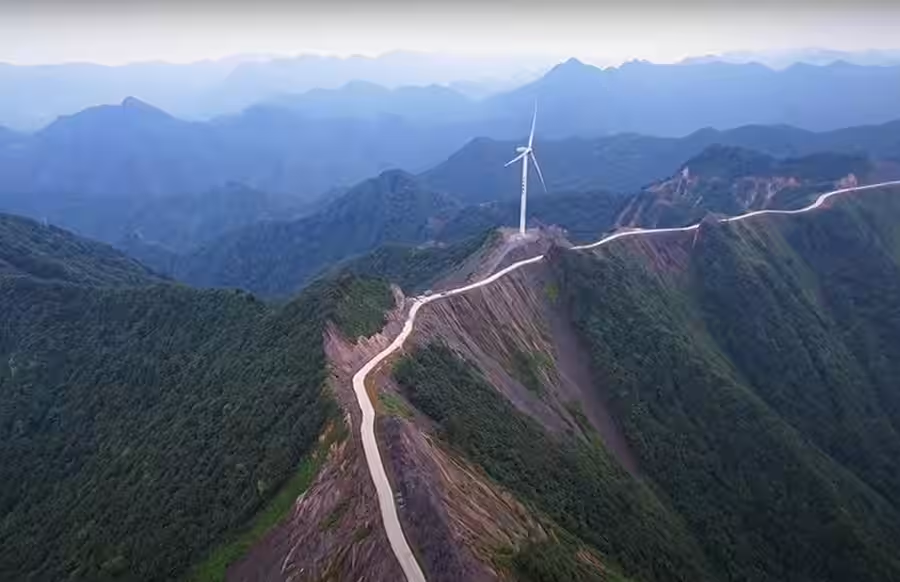
Daobeliang Blade Road, Chongqing, has drawn global attention as one of China’s most extreme mountain routes, cutting sharply through cliffs in the Chongqing region. The narrow road, exposed high above deep valleys, has become both a feared passage and a viral tourism attraction.
According to Daljoog News analysis, the Daobeliang Blade Road, Chongqing highlights how infrastructure built for industrial purposes can unexpectedly transform into a global spectacle when extreme geography meets modern social media visibility.
The route’s dramatic landscape, combined with strong winds and minimal protective barriers in sections, continues to attract both local users and international thrill-seeking visitors.
What Happened?
Daobeliang Blade Road Chongqing, refers to a narrow cliffside mountain road in China’s Chongqing region, where the terrain drops nearly 600 meters on both sides in some areas, creating a visually intense and physically challenging driving environment.
The road stretches across approximately 18 to 20 kilometers and maintains an average width of around 6.5 meters, making it particularly demanding for drivers, especially those unfamiliar with mountainous terrain.
Originally developed between 2014 and 2016 to support wind turbine installations in the region, the road was later paved and upgraded in 2020 by local authorities to ensure operational access and maintenance support.
Drone footage and aerial visuals show vehicles moving cautiously along what appears to be a thin line carved into the mountainside, often surrounded by fog that obscures the depth of the cliffs below.
Why This Matters
The Daobeliang Blade Road in Chongqing matters because it represents a rare intersection of energy infrastructure development and extreme natural geography.
While the road was built for practical industrial purposes, its dramatic appearance has turned it into a widely shared visual landmark across global social media platforms.
Its increasing popularity also raises questions about safety management in high-altitude infrastructure zones, where strong winds, narrow lanes, and steep drops create continuous operational risks.
At the same time, the site has become a magnet for adventure tourism, drawing visitors who seek the emotional intensity of driving or viewing one of the world’s most visually extreme roads.
What Analysts or Officials Are Saying
Local residents and workers familiar with Daobeliang Blade Road Chongqing, describe it as a routine route that becomes manageable over time through experience and familiarity with the terrain.
However, first-time visitors often report heightened tension due to the combination of narrow pathways, sudden wind shifts, and the psychological impact of cliffs without extensive protective barriers in certain sections.
Infrastructure and transport observers note that the road reflects China’s broader efforts to expand energy-related access into remote mountainous regions, where engineering solutions must adapt to complex environmental conditions.
Tourism experts also emphasize that viral drone content has significantly contributed to the road’s global recognition, transforming it from a utility route into a destination of curiosity.
Daljoog News Analysis
The Daobeliang Blade Road in Chongqing illustrates how modern infrastructure projects can evolve beyond their original purpose when exposed to global digital visibility.
What began as a functional route for wind energy development has now become a symbolic example of extreme engineering, blending utility with unintended tourism appeal.
However, the growing popularity of such locations also introduces new risks, particularly when visitors engage with dangerous environments without a proper understanding of the terrain or safety conditions.
Daljoog News analysis suggests that authorities may eventually need to strike a balance between maintaining the road’s operational function and managing its increasing status as a high-risk tourist attraction.
What Happens Next
Following rising international attention on Daobeliang Blade Road Chongqing, local authorities may consider enhanced safety measures, including improved barriers, regulated access points, or controlled viewing zones.
The site is likely to continue gaining visibility as drone footage and social media sharing expand its global reach.
Future policy decisions will likely focus on balancing infrastructure utility, tourism interest, and safety management in an environment defined by extreme geography and weather conditions.
The key challenge ahead will be ensuring that growing popularity does not increase risk for drivers and visitors on one of the world’s most visually extreme mountain roads.