

Middle East conflict global economy impact is worsening as the war that began with sudden US and Israeli strikes in Iran spreads instability across the wider Middle East, creating serious pressure on global markets and energy systems.
According to Daljoog News analysis, the Middle East conflict global economy impact is evolving into a sustained global economic shock, influencing inflation trends, supply chains, and long-term growth expectations across both developed and developing economies.
Despite temporary ceasefire efforts, leading financial institutions now warn that recovery will be slow and uneven, with risks extending far beyond the immediate conflict zone.
What Happened?
Middle East conflict global economy impact intensified after the conflict in Iran escalated and quickly expanded into wider regional tensions, affecting energy infrastructure, shipping routes, and commodity flows.
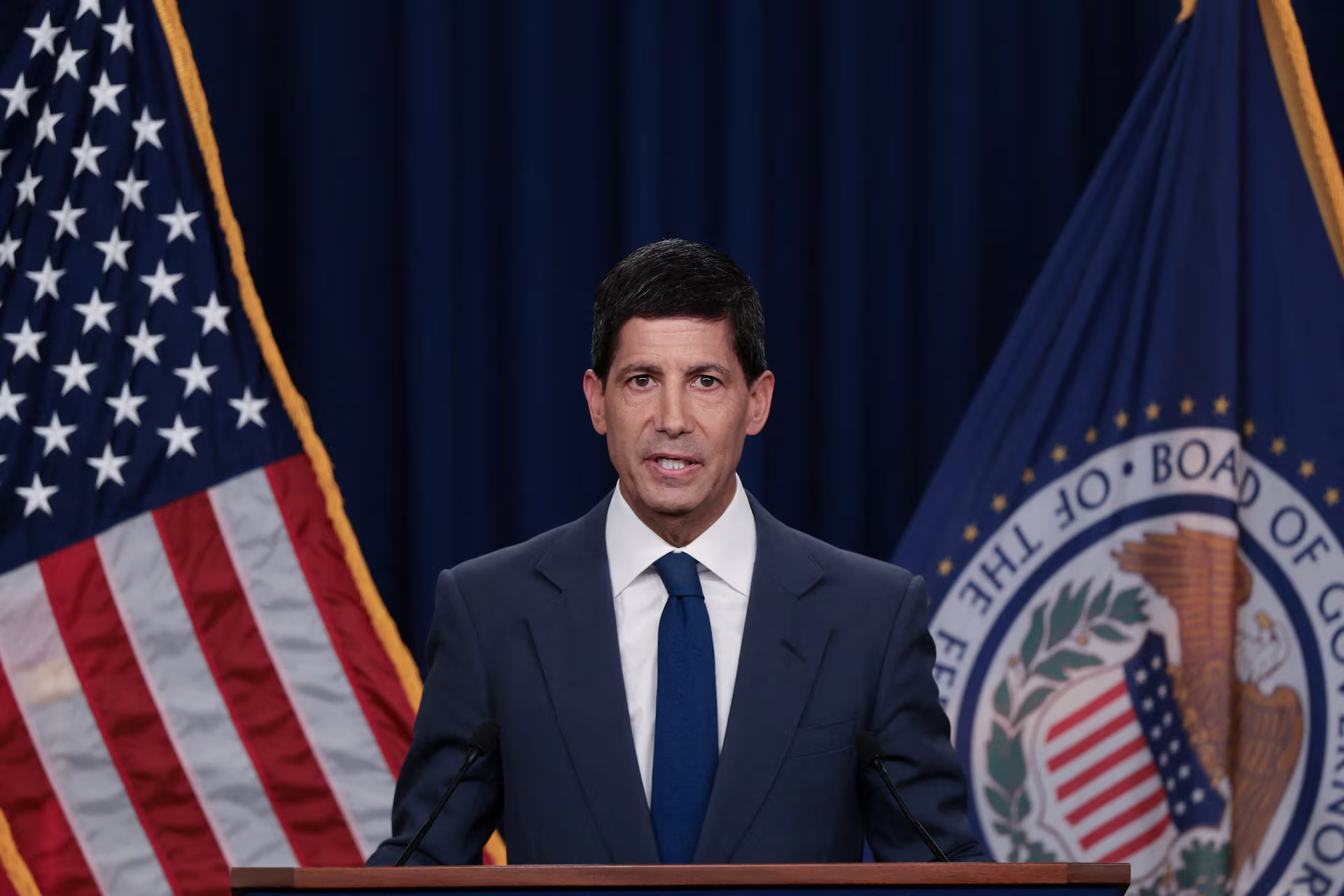
World Bank President Ajay Banga stated that global recovery from the shock will take considerable time even under stabilization scenarios. He highlighted disruptions in oil, gas, transport, and industrial production as key pressure points already affecting global systems.
Reports suggest that damage to Qatar’s gas sector alone may take years to repair, underscoring the scale of infrastructure vulnerability in the region.
The International Monetary Fund and World Bank estimate that global growth could fall by 0.3 to 0.4 percentage points, while inflation may rise by 200 to 300 basis points if the conflict continues at current intensity.
Why This Matters
Middle East conflict’s global economy impact matters because it directly influences global energy prices, which affect everything from transportation costs to manufacturing output worldwide.
Higher fuel prices and disrupted supply chains are already increasing costs for businesses and consumers, placing additional strain on inflation-sensitive economies.
Developing countries face the highest risk, as rising import bills and reduced energy access weaken financial stability and increase pressure on government budgets.
The IMF has warned that prolonged instability could push tens of millions of people into food insecurity, worsening existing humanitarian and economic vulnerabilities in fragile regions.
What Analysts or Officials Are Saying
Experts say the Middle East conflict global economy impact is becoming a multi-dimensional crisis that affects growth, inflation, and fiscal stability at the same time.
World Bank leadership has emphasized that emergency responses should focus on targeted assistance rather than broad subsidy programs that could worsen inflation and budget deficits.
Economists argue that governments must balance short-term stabilization measures with long-term economic resilience planning to avoid deeper financial stress.
International institutions including the IMF are preparing support mechanisms, but officials acknowledge that risks will persist even if the conflict is contained in the near term.
Daljoog News Analysis
The Middle East conflict global economy impact shows how quickly regional warfare can evolve into a global economic disruption in today’s interconnected system.
Energy dependency, fragile supply chains, and inflation-linked markets mean that even localized conflicts can generate worldwide financial consequences within days.
While temporary ceasefires may reduce immediate pressure, structural vulnerabilities in global energy systems remain unresolved.
Daljoog News analysis suggests that the most serious long-term threat is sustained inflation combined with weakened growth, particularly in developing economies already facing debt and food security challenges.
What Happens Next
Following the escalation of the Middle East conflict global economy impact, international financial institutions are expected to expand monitoring and emergency support frameworks.
The World Bank and IMF are likely to coordinate targeted assistance to countries most exposed to energy price shocks and supply disruptions.
Markets will remain highly sensitive to geopolitical developments, especially any escalation affecting oil and gas routes.
Future outcomes will depend on whether diplomatic efforts succeed in stabilizing the region or whether continued conflict further intensifies global economic pressure.