

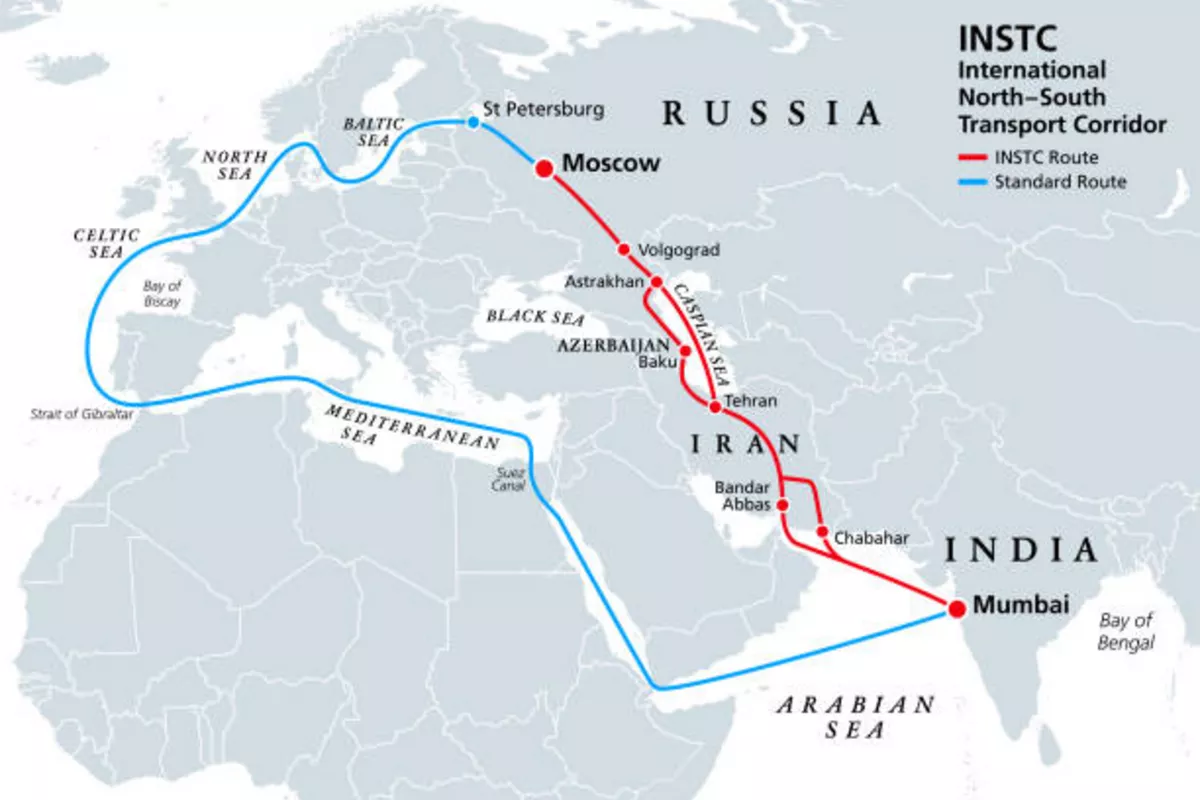
Caspian Sea route is rapidly strengthening the strategic axis between Russia and Iran, turning a closed inland sea into a high-value geopolitical corridor with growing global implications.
According to Daljoog News analysis, the Caspian Sea route is becoming a critical backbone for trade and strategic coordination, especially as both countries face sustained Western pressure.
The development highlights how geography is being used to reshape power balances, with a quiet waterway now playing a loud role in global strategy.
What Happened?
Caspian Sea route has emerged as a key channel for trade, logistics, and strategic movement between Russia and Iran. The route operates through the Caspian Sea, a landlocked sea bordered by five nations: Russia, Kazakhstan, Turkmenistan, Azerbaijan, and Iran.
Unlike open oceans, this water body has no direct connection to global seas. However, it links indirectly to international waters through Russian river systems, including the Volga River and the Volga-Don Canal, eventually reaching the Black Sea.
This structure places the entire Caspian Sea route under significant Russian regulatory control, meaning shipping movements depend heavily on Moscow’s approval.
Reports and regional assessments suggest the route is used for cargo transport, oil shipments, and potentially sensitive goods linked to defense cooperation between Russia and Iran.
Why This Matters
The Caspian Sea route is not just a trade pathway. It is a controlled strategic environment where external military powers have limited access due to geography and political restrictions.
This makes the route especially valuable for Russia and Iran, allowing them to operate with reduced international oversight compared to global maritime lanes.
It also strengthens regional self-reliance. The Caspian Sea route reduces dependency on traditional shipping corridors that are more exposed to sanctions, surveillance, and geopolitical pressure.
As part of the broader International North-South Transport Corridor, it connects South Asia, the Middle East, and Europe, creating a faster and potentially cheaper trade alternative.
What Analysts or Officials Are Saying
Security and geopolitical analysts view the Caspian Sea route as a growing pillar of Russia-Iran cooperation. They argue that sanctions pressure has pushed both countries to deepen alternative logistics systems.
Some experts highlight concerns over reduced transparency in the region. Limited international monitoring and occasional use of disabled tracking systems can make shipping activity harder to verify.
Officials in the region, however, describe the route as a legitimate infrastructure and trade development project aimed at improving connectivity and regional commerce.
Observers also note that increased activity could draw more satellite surveillance and intelligence monitoring from Western powers.
Daljoog News Analysis
The Caspian Sea route illustrates how closed geography can become a tool of modern geopolitics. What appears to be a quiet inland sea is increasingly functioning as a controlled strategic corridor.
This shift gives Russia and Iran more flexibility in managing trade and logistics under pressure, but it also raises long-term risks tied to transparency and escalation dynamics.
While the route improves efficiency and reduces exposure to external interference, it also concentrates control in the hands of a few regional actors.
Daljoog News analysis suggests that the Caspian Sea route will continue gaining importance, especially if global sanctions and geopolitical fragmentation deepen further.
What Happens Next
The Caspian Sea route is expected to expand as infrastructure improves and trade volumes increase under the International North-South Transport Corridor framework.
Future developments may include stronger integration with European and South Asian markets, further increasing its economic value.
At the same time, international monitoring efforts are likely to intensify, particularly through satellite tracking and maritime intelligence systems.
The next phase will depend on whether the route remains a regional trade channel or evolves into a major global strategic chokepoint.