

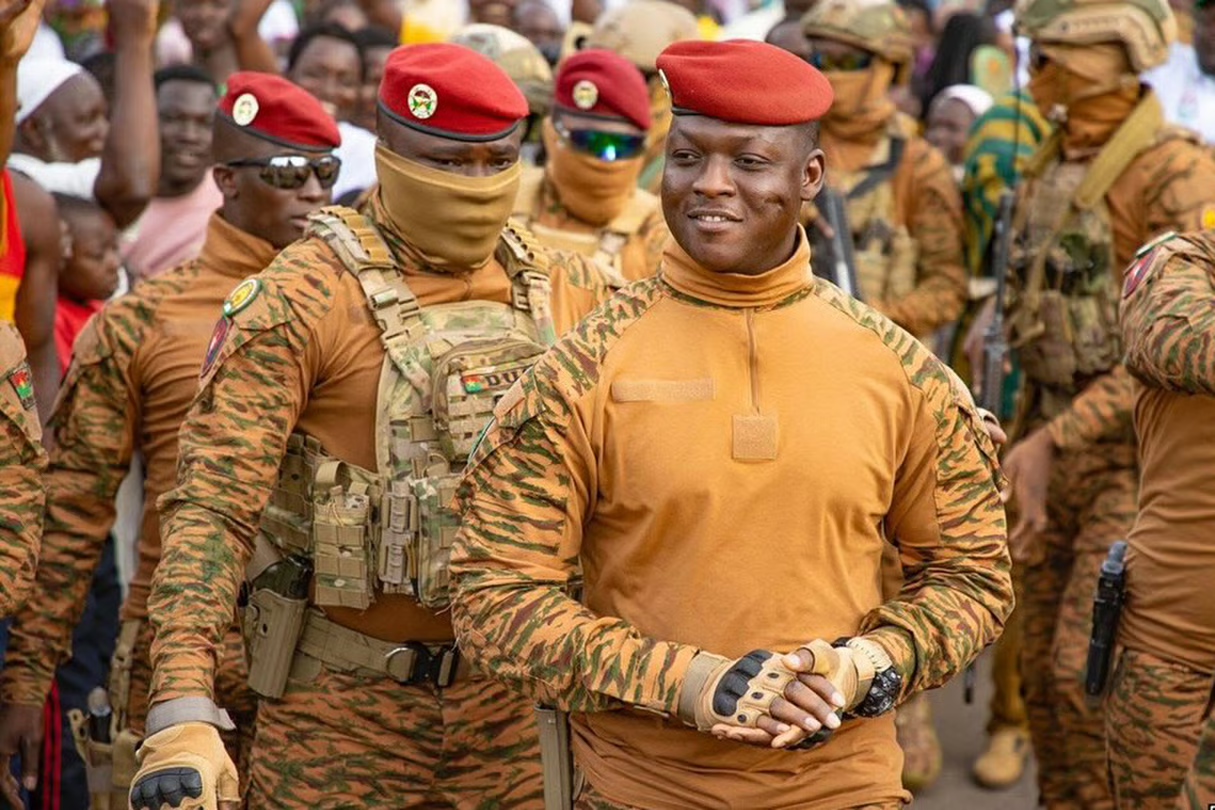
Burkina Faso coup plot claims have triggered renewed attention on the political stability of Burkina Faso, following allegations of multiple assassination attempts targeting military leader Ibrahim Traoré since his rise to power in 2022.
According to Daljoog News analysis, the Burkina Faso coup plot claims reflect deeper structural tensions within the country’s security and political system, where competing interests and regional instability continue to shape governance risks.
The developments come at a time when the wider Sahel region is experiencing persistent security crises, making political transitions increasingly vulnerable to internal and external pressure.
What Happened?
Burkina Faso coup plot reports suggest that several alleged assassination attempts against Ibrahim Traoré have been disrupted by security forces over the past years. Officials claim these plots span different timeframes, including recent years.
One widely circulated allegation involves an attempt to recruit a member of his close protection unit with a significant financial offer in exchange for carrying out an attack. The individual reportedly refused and informed authorities, leading to the exposure of the plan.
Some claims also suggest that an attack was intended to occur during a moment of prayer when the leader would be least protected. However, these specific details have not been independently confirmed by international investigative bodies.
Government-linked sources instead describe a broader network of threats involving political rivalries, exile-based opposition figures, and regional geopolitical competition.
Why This Matters
Burkina Faso coup plot claims highlight the fragile nature of political authority in transitional military governments, where legitimacy and security often face simultaneous pressure.
The situation is particularly significant in the Sahel region, where multiple countries have experienced coups, insurgencies, and shifting alliances in recent years.
Such instability can impact governance, economic recovery, and regional cooperation efforts, especially in areas already affected by security challenges and armed conflict.
What Analysts or Officials Are Saying
Security officials in Burkina Faso argue that some of the alleged plots may involve networks linked to former political elites and external actors. They view these threats as part of ongoing efforts to destabilize the current administration.
Other reports suggest possible connections to exiled political figures, though these claims remain politically sensitive and lack independent verification.
Regional observers caution that accusations involving neighboring countries or foreign influence should be interpreted carefully, given the potential diplomatic consequences.
Despite the allegations, Ibrahim Traoré is still believed to retain significant domestic support, particularly among groups aligned with the current military leadership.
Daljoog News Analysis
Burkina Faso coup plot claims illustrate how quickly political transitions can become surrounded by narratives of conspiracy, insecurity, and external interference. Even when details remain unverified, such claims can influence both domestic sentiment and international perception.
The repeated emergence of assassination-related allegations points to deeper struggles over control and legitimacy within the country’s political framework. This creates an environment where trust in institutions remains under pressure.
At the same time, the lack of independently verified evidence for some of the most dramatic claims highlights the difficulty of separating intelligence-based reporting from political messaging in high-risk regions.
What Happens Next
Burkina Faso coup plot claims are expected to remain under scrutiny as authorities continue internal security investigations and monitor potential threats.
Further official statements may clarify the extent of confirmed plots versus unverified allegations, which will be important for political transparency.
Regional cooperation and diplomatic engagement are likely to play a key role in managing tensions and preventing further destabilization.
The coming period will be decisive in determining whether Burkina Faso consolidates its current leadership structure or continues to face recurring security and political challenges.