


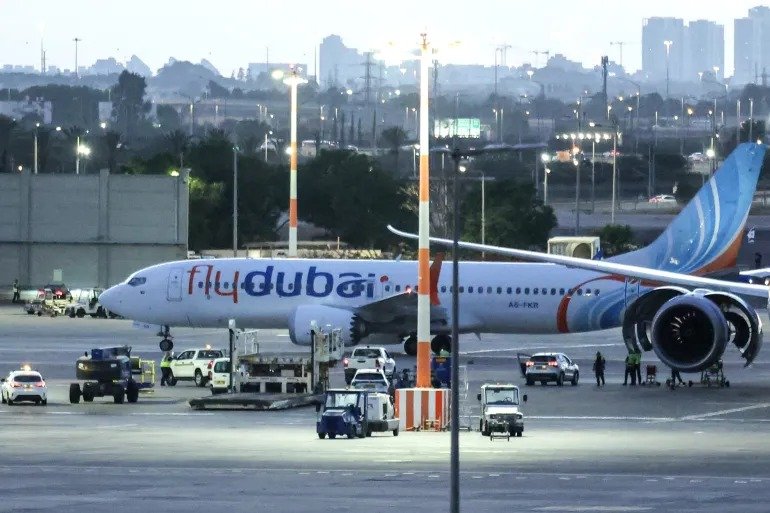
New details emerged this week describing a violent struggle inside the cockpit of a FlyDubai flight traveling from Dubai to Tel Aviv, with officials now believing the incident involved an attempt by one pilot to deliberately crash the aircraft before being physically subdued by off-duty crew members traveling as passengers. The dramatic episode, which began with the aircraft transmitting emergency distress signals before diverting to Saudi Arabia, has since been characterized by Israeli officials as a serious security incident that was successfully prevented through quick intervention.
According to accounts emerging from the investigation, the aircraft experienced sudden and severe altitude fluctuations shortly after an apparent altercation began inside the cockpit, with the plane reportedly dropping more than fourteen thousand feet in under thirty seconds during the most critical moment of the incident. Flight tracking data showed the transponder signal subsequently changed to codes indicating first a general emergency and then specifically unlawful interference, the formal designation used to indicate a suspected hijacking situation.
Reports indicate that one pilot, reportedly of Omani nationality, is suspected of having stabbed the other pilot before attempting to seize control of the aircraft with intent to crash it. The situation was ultimately brought under control after additional off-duty flight crew members, reportedly including pilots of Russian and Ukrainian nationality who happened to be traveling as passengers on the same flight, intervened and helped regain control of the aircraft before safely guiding it toward an emergency landing.
Passenger accounts from aboard the flight described chaotic and frightening scenes as the crisis unfolded, with one passenger recalling that the plane felt completely out of control for several tense minutes during the altercation. Other passengers described seeing blood-stained clothing among those involved in the physical struggle, underscoring the genuinely violent nature of the confrontation that took place within the confined space of the aircraft’s cockpit.
The aircraft ultimately landed safely at an airport in Tabuk, located in northwestern Saudi Arabia, after Saudi aviation authorities received and responded to the distress call despite the absence of formal diplomatic relations between Saudi Arabia and Israel. Passengers were subsequently transferred to a replacement aircraft and flown onward to their original destination in Israel, arriving safely despite the harrowing nature of their original flight experience.
FlyDubai confirmed that an altercation had occurred on the flight deck, emphasizing that all passengers were accounted for and safe, while indicating that a thorough investigation into the specific motives behind the incident remains ongoing. The airline subsequently announced it would temporarily suspend its flight operations between Dubai and Israel while this investigation continues, and indicated that all FlyDubai flight crews would undergo thorough background inspections as an additional precautionary measure.
Israeli officials, including Prime Minister Netanyahu, have publicly credited the quick actions of the off-duty crew members who intervened during the struggle with preventing what could have been a catastrophic outcome. As investigators continue working to establish a complete and verified account of exactly what transpired and why, this incident has already prompted broader industry conversation about cockpit security protocols and crew vetting procedures across international commercial aviation.