

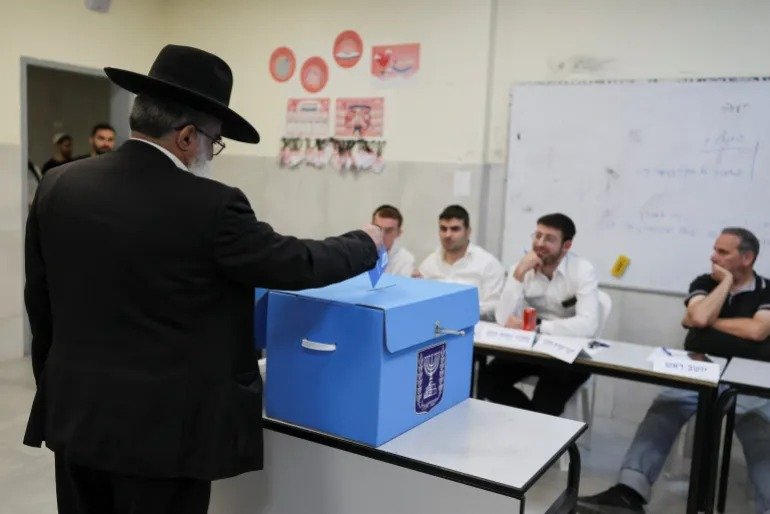
Israel’s election on October 27 is expected to play a major role in deciding whether Prime Minister Benjamin Netanyahu remains in power. The vote comes at a time when security, the conflict with Iran and the future of regional relations are central concerns for voters. The result could shape Israel’s domestic policies and influence its relations with neighbouring countries and international partners.
Netanyahu has been one of the most influential figures in Israeli politics for many years. Supporters have often presented him as an experienced leader who can manage security threats and defend the country’s interests. Critics have questioned his leadership and argued that the country needs a different political direction. The election has therefore become a contest over both policy and public confidence in the person leading the government.
Israel’s electoral system is based on proportional representation. Voters choose party lists, and seats in the Knesset are allocated according to each party’s share of the vote, subject to the system’s threshold. This means that no single party necessarily wins enough seats to govern alone. After an election, political leaders often need to negotiate with other parties to build a coalition that can command a parliamentary majority.
Coalition talks can be decisive even after votes have been counted. A party may win the largest share of seats but still struggle to form a stable government if potential partners disagree over policy or leadership. Smaller parties can gain influence when their support is needed to reach a majority. This structure makes the political process more complex than a direct contest in which the candidate with the most votes automatically becomes the leader.
Security concerns are likely to remain central to the debate. Israel has faced serious regional threats and continuing uncertainty over relations with Iran and other actors. Voters may judge the government on how it has handled these challenges, whether it can prevent further attacks and what diplomatic path it offers for the future. The balance between military action and negotiations is likely to remain a major question for any incoming government.
Economic issues also matter to voters. The cost of living, housing, public services and employment can shape how people view a government, even during a period of heightened security concerns. Political leaders must respond to these everyday needs while managing national defence and foreign relations. A new coalition could face pressure to show that it can improve living standards as well as address security risks.
The election may also affect Israel’s relations with the United States and other international partners. Governments abroad will watch the result for signs of how Israeli policy may change. However, foreign policy often reflects long-term security and economic interests as well as the preferences of a particular leader. Any change in direction will depend on the composition of the next government and the political agreements that support it.
For voters, the immediate task is to choose representatives who will determine the next parliamentary balance. The result may not settle every dispute, but it will establish the political conditions under which the next government must operate. Netanyahu’s future will depend not only on his party’s performance but also on the ability to secure support from other parties. The election is therefore a test of leadership, coalition politics and the country’s direction during a difficult period.