



Author: Andrew Rogers

Andrew Rogers
Andrew Rogers is a seasoned journalist and news analyst specializing in global affairs, politics, and finance. With a passion for investigative reporting, he delivers accurate, insightful stories that inform and engage readers worldwide.
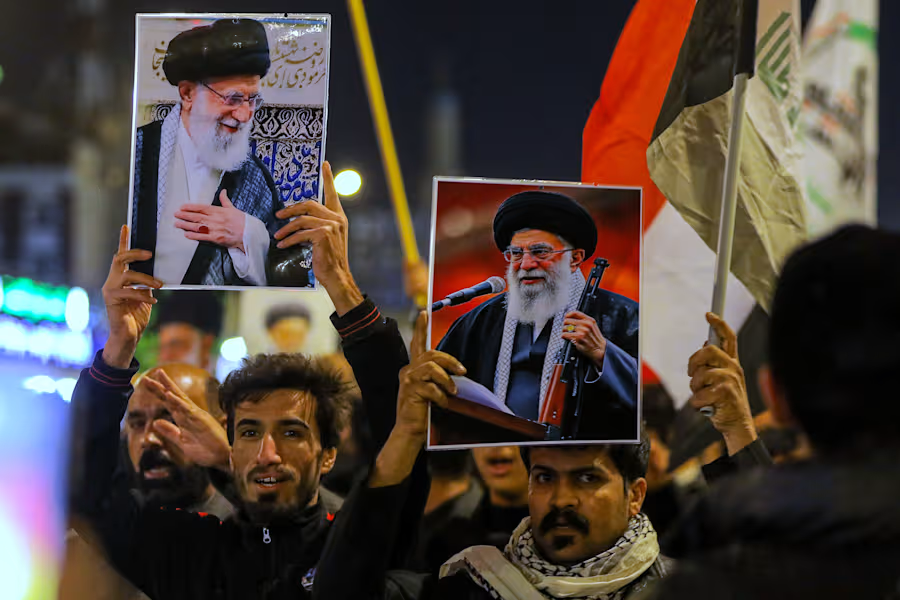
Unverified claims surrounding the death of Iran’s Supreme Leader have sent shockwaves across the Middle East. A senior Iranian representative in India alleged that Ayatollah Ali Khamenei died in a hospital hours after a joint US-Israeli airstrike targeted a high-level meeting in Tehran. According to Daljoog News analysis, the absence of immediate official confirmation from Tehran has deepened uncertainty, fueling speculation about leadership stability in one of the region’s most influential states. The allegations, if confirmed, would mark the most dramatic turning point in Iranian politics in decades. The reported development comes at a moment of intense regional escalation, with…
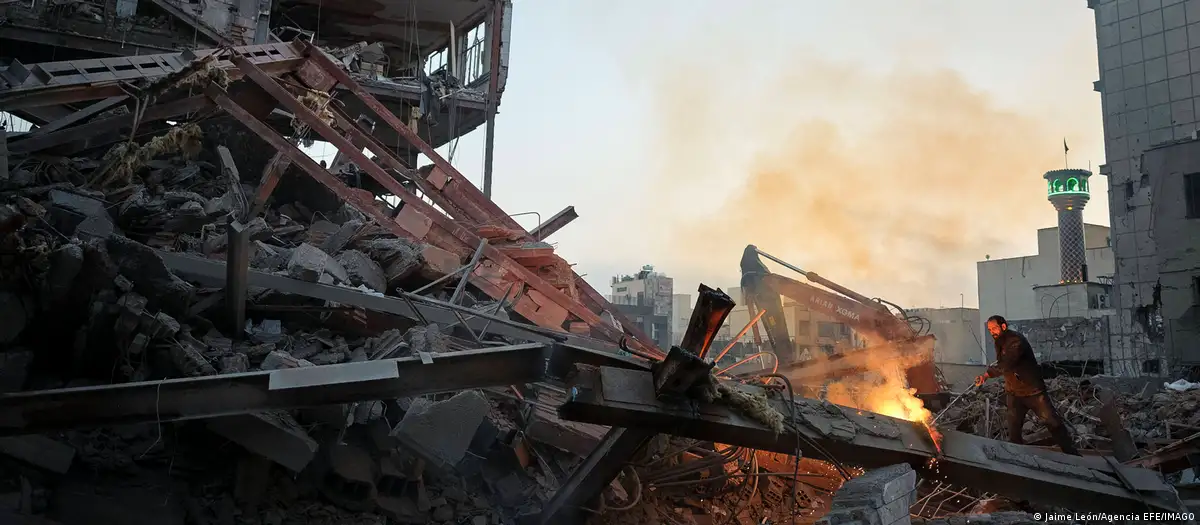
The death toll in Iran is rising sharply as US and Israeli airstrikes continue to hit both military and civilian targets. Scenes of destruction and long lines of casualties have intensified international concern over the safety of ordinary citizens. According to Daljoog News analysis, preliminary reports from human rights organizations indicate that the civilian impact is severe, with hospitals, residential areas, and infrastructure heavily affected. The conflict’s escalation is pushing Iran into what some observers are calling a “city of death,” as emergency services struggle to respond. This growing humanitarian crisis underscores the risks of urban warfare and the urgent…
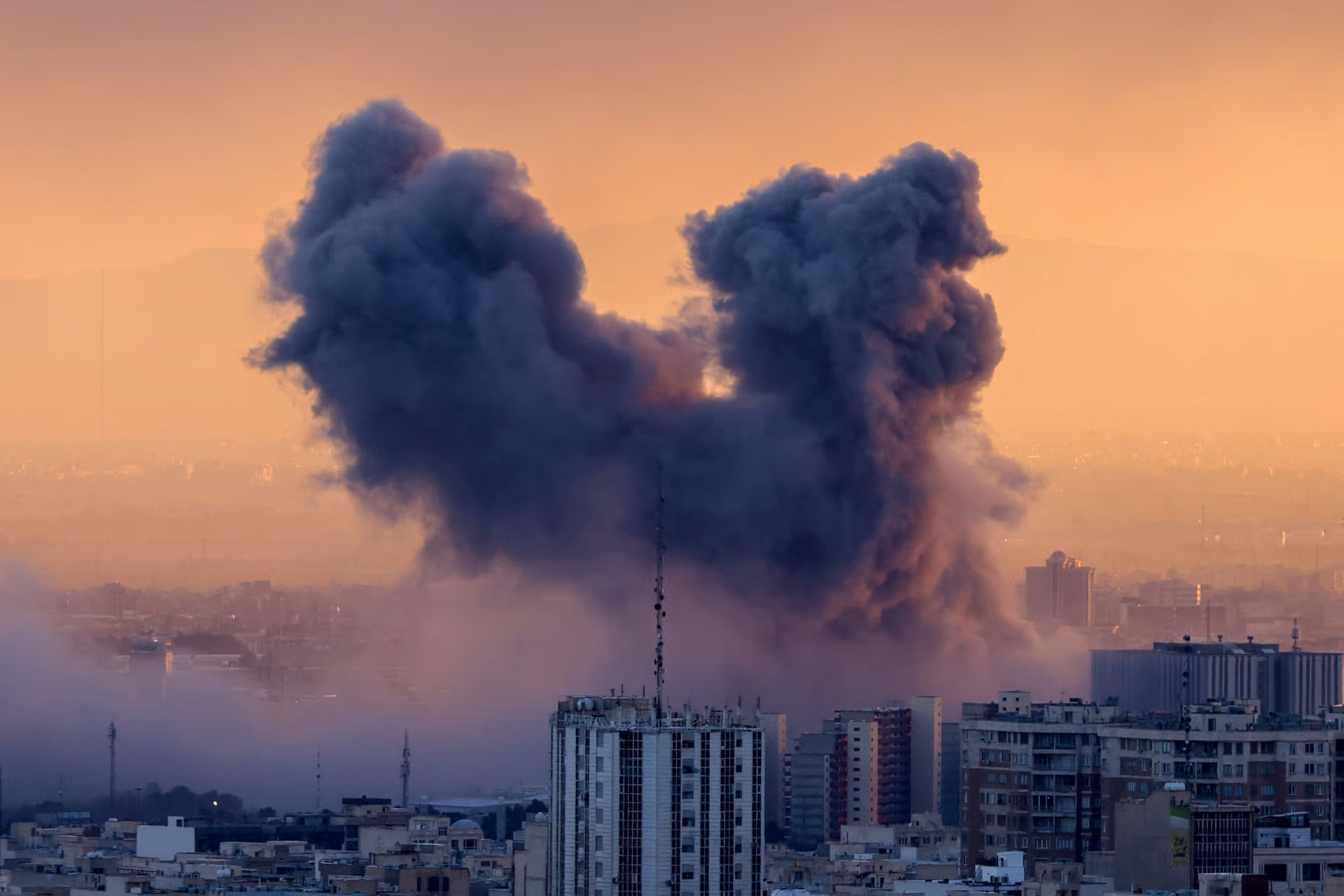
European powers are stepping into the escalating conflict with Iran following recent attacks on Cypriot air bases linked to US and Israeli operations. France and the United Kingdom have deployed warships and aircraft to the Mediterranean, signaling a growing European military presence. According to Daljoog News analysis, these moves mark a notable shift: Europe is not just observing regional tensions but actively preparing for potential direct engagement, while balancing political, economic, and legal considerations. The expansion of European involvement comes at a critical moment, with energy markets already under pressure and diplomatic channels scrambling to prevent further escalation. What Happened?…

Global markets jolted this week after US and Israeli strikes on Iran sent oil, gold, and stocks swinging sharply. The S&P 500 saw steep early losses, while Brent crude and gold jumped in initial trading. According to Daljoog News analysis, past geopolitical shocks show a familiar pattern: sharp first-day price moves often give way to normalization within weeks, even during prolonged conflicts. Historical episodes from Iraq’s invasion of Kuwait to the Russia-Ukraine war reveal that markets tend to digest news quickly, with longer-term trends less extreme than initial reactions suggest. The timing and scale of the current conflict are unprecedented,…
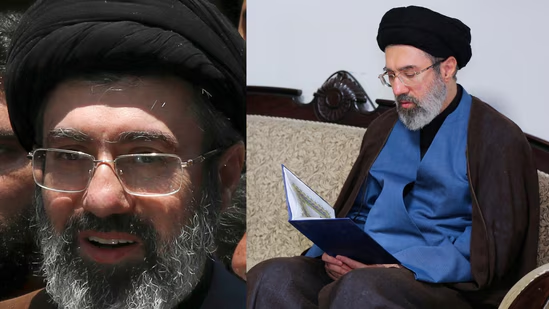
Iran has announced that Mojtaba Khamenei, the second son of Supreme Leader Ali Khamenei, will assume the country’s highest religious and political authority following his father’s death. The decision ends weeks of speculation over succession at a time of intense regional conflict. According to Daljoog News analysis, the appointment signals continuity rather than reform. Mojtaba Khamenei has long been viewed by political observers as a key behind-the-scenes figure with strong ties to Iran’s most powerful security institutions. The leadership transition comes as Iran faces expanding military confrontation with Israel and rising tensions with the United States, making the stability of…
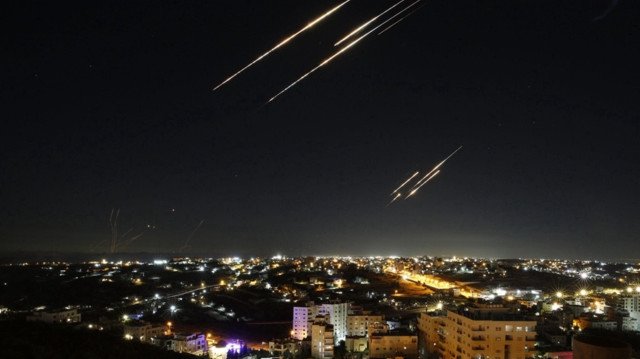
The United States is deploying a wide range of advanced military weapons in its ongoing war against Iran, operating across air, sea, and land. Since the campaign began on February 28, American forces have carried out sustained strikes on hundreds of locations, targeting military, nuclear, and strategic facilities. According to Daljoog News analysis, the scale and diversity of weapons systems being used reflect a strategy designed to overwhelm Iran’s defensive network quickly and decisively. The operation combines stealth bombers, fifth-generation fighter jets, drones, and long-range missile platforms. With more than 500 reported strike locations across Iran, the conflict has evolved…
The war between Iran, the United States and Israel has entered its fifth consecutive day, with airstrikes and missile attacks expanding across multiple fronts. Hundreds of locations across Iran have reportedly been hit, while Tehran continues retaliatory strikes against Israeli cities and U.S. positions in the region. According to Daljoog News analysis, the conflict is shifting from targeted military exchanges to a broader regional confrontation. Civilian areas, energy facilities and strategic infrastructure are increasingly at risk, raising fears that the war could spiral beyond its initial scope. With casualties mounting and threats of possible ground operations emerging, the trajectory of…
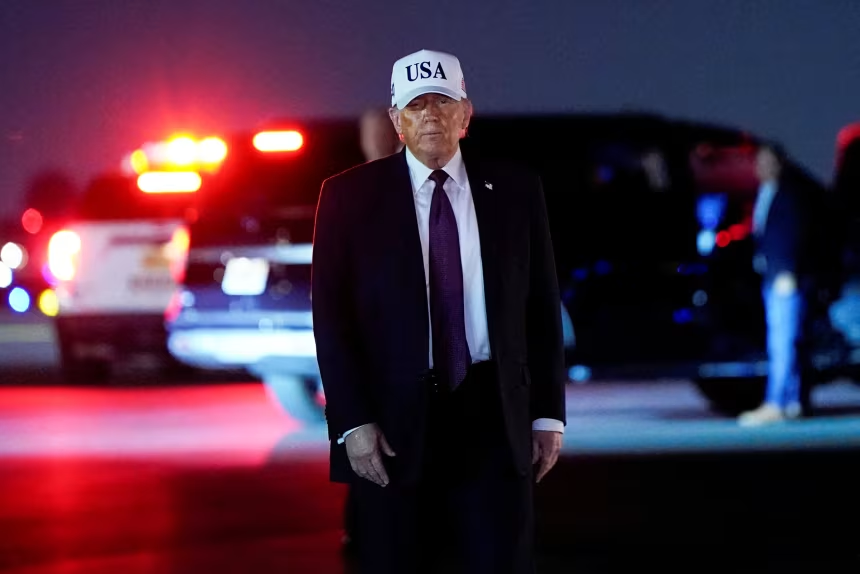
U.S. President Donald Trump has publicly claimed full responsibility for the war against Iran, distancing his administration from earlier remarks suggesting the conflict was driven by Israel. Speaking at the White House, Trump said he personally pushed Israeli Prime Minister Benjamin Netanyahu into the confrontation and denied that Tel Aviv had provoked Tehran. According to Daljoog News analysis, Trump’s statement reveals internal differences within Washington over how the war narrative is being presented. It also signals a deliberate attempt by the president to assert direct control over both military strategy and political messaging. The comments come as tensions between the…
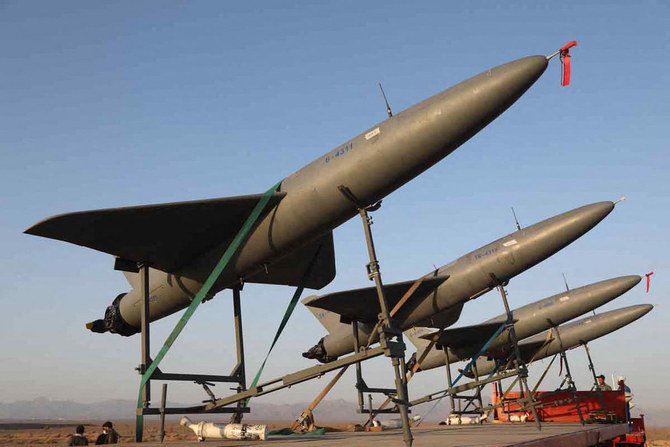
Late Monday night, the U.S. embassy in Riyadh, Saudi Arabia, came under attack from multiple Iranian drones. Explosions shook the diplomatic quarter, sending smoke into the sky and sparking heightened alarm among residents and foreign missions. According to Daljoog News analysis, the strikes reveal vulnerabilities in Gulf air defenses and mark a sharp escalation in U.S.-Iran tensions, signaling the potential for broader regional conflict. The attack comes amid a series of Iranian missile and drone operations targeting U.S. facilities across the Gulf, including recent incidents in Kuwait, Doha, and Dubai, heightening concerns for civilian and diplomatic safety. What Happened? Saudi…
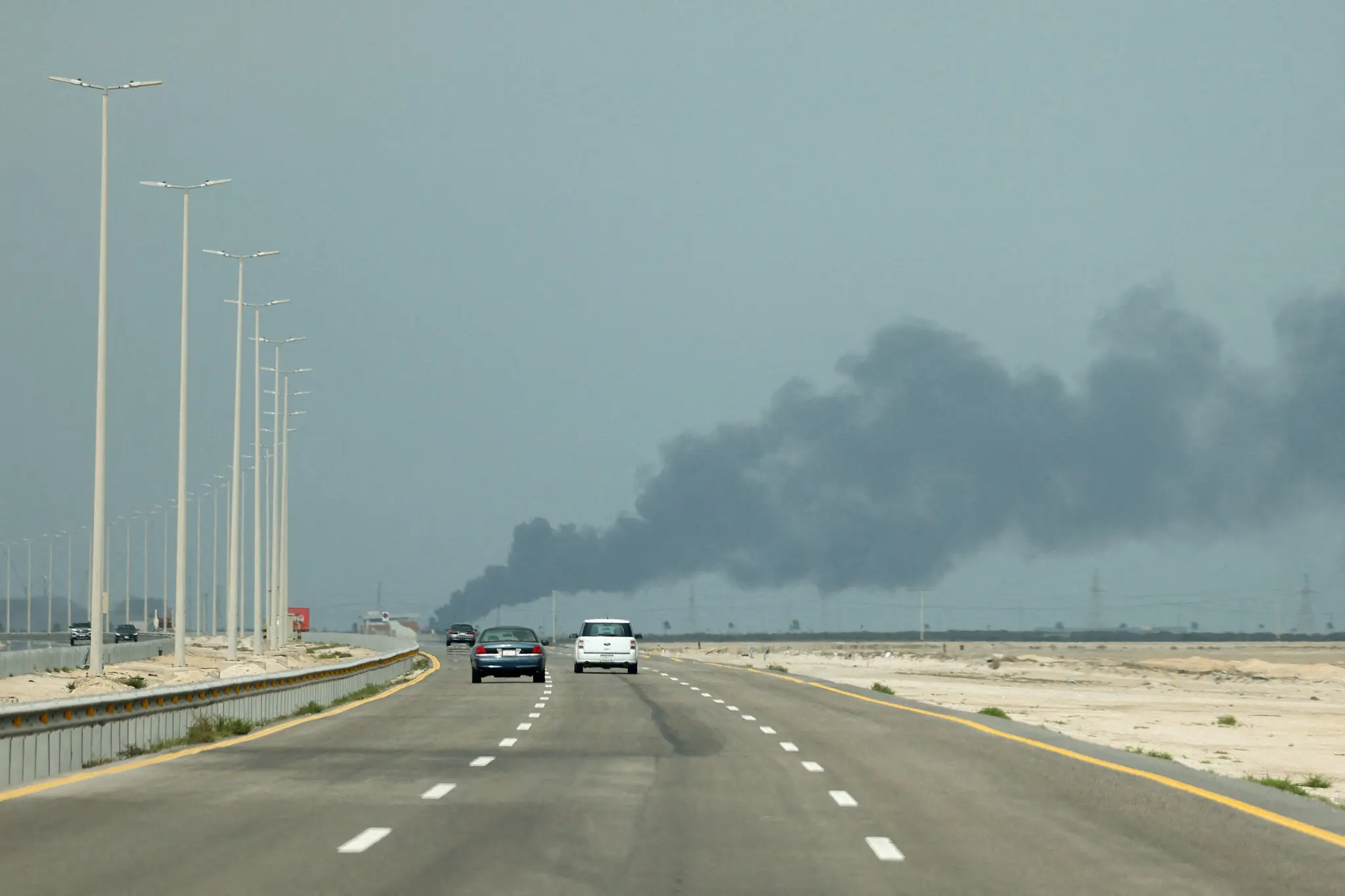
Iran’s recent missile and drone strikes on energy facilities in Saudi Arabia and Qatar have triggered sharp increases in global oil and gas prices. Markets are reacting to fears of supply disruptions from the Strait of Hormuz, a key transit route for roughly 20% of global energy shipments. According to Daljoog News analysis, the attacks demonstrate Iran’s ability to affect both physical energy infrastructure and market sentiment, signaling potential prolonged volatility for global oil and liquefied natural gas (LNG) markets. The strikes follow escalating U.S. and Israeli military action in Iran, marking a new phase of conflict that threatens energy…