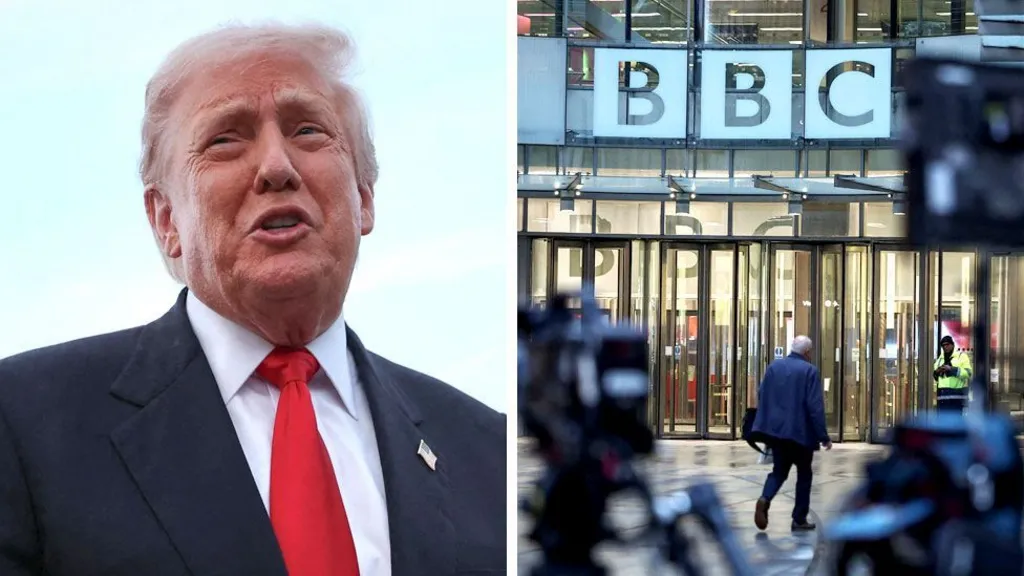
The BBC has formally apologized to President Donald Trump over the editing of a Jan. 6, 2021, speech in its documentary “Trump: A Second Chance.” The apology follows threats from Trump to sue the British broadcaster for $1 billion, claiming the edits misled viewers about the events at the U.S. Capitol.
The network stated Thursday that it “strongly disagrees” with Trump’s claim that the documentary was defamatory. BBC lawyers sent a letter to Trump’s legal team, explaining why they believe there is no valid legal basis for a lawsuit.
According to the BBC Press Office, Chair Samir Shah also sent a personal letter to Trump at the White House, acknowledging the apology. The BBC confirmed it has no plans to rebroadcast the documentary.
“While the BBC sincerely regrets the manner in which the video clip was edited, we strongly disagree there is a basis for a defamation claim,” the press office said.
Trump responded Friday, saying he still plans to pursue legal action, aiming for damages between $1 billion and $5 billion. The White House did not immediately comment on the apology.
The BBC’s letter outlined five key reasons why the broadcaster believes a lawsuit would not succeed. These include the fact that the documentary did not air in the United States, that the edits were intended to shorten a long speech rather than mislead, and that matters of public concern and political speech are generally protected under U.S. law. The letter also noted that the edits were not meant to be viewed in isolation and that Trump won the 2020 election a week after the speech, limiting any claim of reputational harm.
International media law expert Mark Stephens described the BBC’s response as “careful and considered.” He said the apology was appropriate, but the case would face “legal impediments and tripwires” in the U.S.
“You can’t be lowered in the estimation of right-thinking people by a program that wasn’t seen by an American audience,” Stephens explained. “President Trump was clearly owed a fulsome apology, but he was not entitled to damages. The BBC has rightly held firm on that point.”
Trump’s lawyers had claimed that the program caused him “overwhelming financial and reputational harm” and demanded a retraction, apology, and compensation. They warned that failure to comply would result in legal action seeking at least $1 billion in damages.
Even if a U.S. lawsuit were pursued, Stephens noted, the First Amendment protects criticism of public figures like Trump. Courts would also examine whether the edits materially changed the context of Trump’s speech.
The controversy has led to resignations at the BBC. Director-General Tim Davie announced his decision to step down after five years, citing ultimate responsibility for errors. Deborah Turness, CEO of BBC News and Current Affairs, also resigned, stating the controversy was causing damage to the institution she loves.
In letters to staff, both emphasized that while mistakes were made, allegations of institutional bias at BBC News were unfounded. Davie said he would work with the Board to ensure a smooth transition to a successor, while Turness said the situation had reached a stage where leadership change was necessary.
The documentary in question was produced by an external production company and aired on BBC’s “Panorama” program on October 28, 2024. It included three separate sections of Trump’s Jan. 6 speech, which Trump’s legal team claimed were misleadingly edited together.
Despite the apology, the dispute highlights ongoing tensions between Trump and international media outlets. The president has repeatedly labeled news organizations “fake news” while asserting his right to seek legal remedies when he believes reporting misrepresents him.