


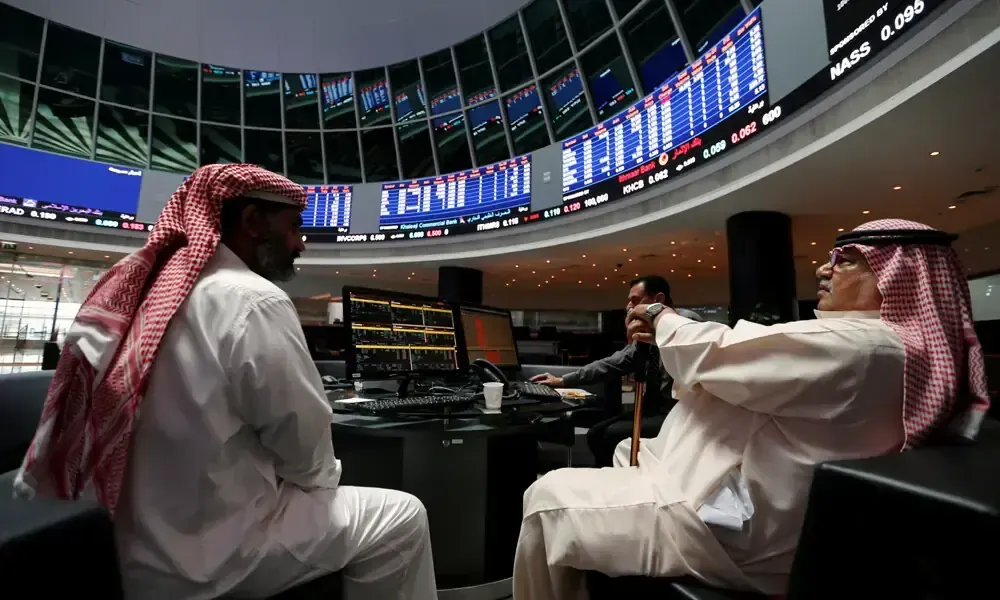
Most major Gulf stock markets closed lower as investors reacted to renewed military tensions between Iran and the United States. The latest developments included an Iranian strike targeting American drone and missile installations at Kuwait’s Ali Al Salem air base. The incident raised fears that the conflict could spread further across the region and create new risks for businesses, energy infrastructure and international shipping. Investors responded cautiously, with several regional stock indexes recording declines during Wednesday’s trading session.
Saudi Arabia’s benchmark index fell 0.5 percent, while shares in Saudi National Bank, the country’s largest lender by assets, dropped 1.1 percent. Dubai’s main index declined 0.2 percent, with toll operator Salik also moving lower. Kuwait’s premier index slipped 0.1 percent, while Qatar’s market ended broadly unchanged. The figures showed that concerns about regional security were affecting investor confidence across several markets, although the scale of the declines varied between countries.
Energy prices were also influenced by the latest developments. Brent crude fell to around $91.69 a barrel, while US West Texas Intermediate dropped to approximately $84.06. Higher American crude and fuel inventories placed downward pressure on prices, but attacks and shipping disruptions through the Strait of Hormuz limited the decline. The waterway is a major route for global energy shipments, making any threat to commercial vessels a concern for oil producers, importers and financial markets.
Abu Dhabi’s benchmark index moved in the opposite direction, rising 0.3 percent after a strong performance by Orascom Construction. The company’s third-quarter net profit increased by 103 percent to $102.7 million, supported by growth in its US business. Egypt’s main blue-chip index, meanwhile, declined by 0.3 percent. The mixed performance demonstrated that company-specific results can influence markets even during periods of regional instability. Investors will continue watching military developments, oil shipments and corporate earnings to assess whether the recent market weakness will continue.