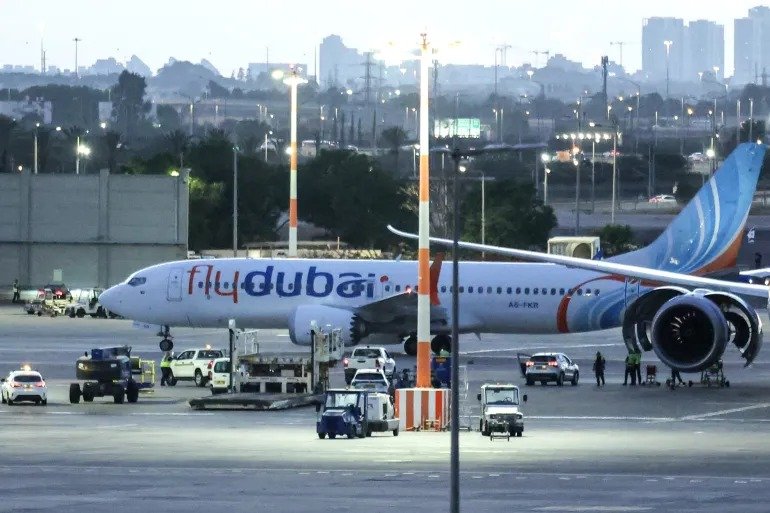




Authorities in the United Arab Emirates are investigating an attempted attack on a Flydubai flight after the co pilot allegedly attacked the captain with an axe. The case was reported on October 4 as investigators examined what happened aboard the Israel bound aircraft.
The flight was carrying 182 people when the incident happened. According to UAE authorities, the co pilot attacked the captain inside the cockpit and tried to take control of the aircraft. Passengers and others on board managed to stop the attacker. The aircraft did not crash and the flight was brought under control.
The co pilot was identified as Hammam al Hammami, an Omani national. Sources familiar with the investigation said his background was being examined as officials tried to understand why he allegedly attacked the captain.
The incident has been described by UAE authorities as a terrorist attack. Investigators are expected to examine the man’s personal history, travel records, communications and possible links to extremist groups.
Reports said Oman had previously prevented him from flying because of concerns about extremist views. That information is now part of the wider investigation.
The case raises questions about aviation security. Airline crews are subject to strict rules, but the incident shows the difficulty of protecting a cockpit when a threat comes from someone already inside the aircraft.
Modern aircraft have reinforced cockpit doors designed to stop unauthorized entry. However, an attacker who is already inside the cockpit presents a different challenge.
The passengers and crew who stopped the attack played an important role in preventing a possible disaster. The aircraft carried a large number of people and was traveling toward Israel, a country already facing serious security concerns.
The flight route also matters. The incident occurred during a period of high tension in the Middle East. Israel remains involved in a wider regional conflict, while several armed groups and governments have been involved in violence across the region.
Investigators will need to determine whether the attack was planned alone or whether other people were involved. UAE officials have said that this question remains part of the investigation.
Authorities will also examine how the co pilot was able to serve on the flight despite earlier concerns. Aviation systems normally include medical, security and employment checks. Any failure in those checks could lead to changes in airline procedures.
The case may also increase pressure on airlines to examine the mental and political background of staff who have access to aircraft controls. At the same time, officials must balance security with fair treatment of employees.
The suspect’s alleged actions have not been fully tested in court. Investigators must establish the facts before legal conclusions can be reached.
The aircraft’s passengers were placed in a frightening situation. A cockpit attack can become dangerous within seconds because pilots must maintain control while also dealing with a threat.
The successful intervention prevented the incident from becoming a mass casualty event. For aviation authorities, the case is now a warning about an unusual but serious form of security risk. The October 4 investigation will likely continue for some time. Officials will examine the suspect’s background and the events inside the cockpit. The main questions are why the attack happened, whether anyone helped plan it and whether warning signs were missed. The answers could affect aviation security in the UAE and beyond, especially on routes linked to countries facing high security risks.