


Close Menu
Daljoog News
    What's Hot
    Iran Fast Boats Raise Security Risks in Hormuz Strait

    Iran Fast Boats Raise Security Risks in Hormuz Strait

    April 25, 2026
    2PM Ok Taecyeon Marries After 10 Years of Love

    2PM Ok Taecyeon Marries After 10 Years of Love

    April 25, 2026
    Russia Gold Reserves Drop After Massive 22 Ton Sale.jpg The server cannot process the image. This can happen if the server is busy or does not have enough resources to complete the task. Uploading a smaller image may help. Suggested maximum size is 2560 pixels.

    Russia Gold Reserves Drop After Massive 22 Ton Sale

    April 25, 2026
    Facebook X (Twitter) Instagram
    Thursday, May 21
    Daljoog News
    Facebook X (Twitter) YouTube Instagram
    • Home
    • General
    • World
    • Business
    • Technology
    • Politics
    • Finance
    • Health
    • Lifestyle
    • Sports
    • Travel
    Daljoog News
    Home»Finance»Is China Indonesia Clean Energy Funding Enough?
    Finance

    Is China Indonesia Clean Energy Funding Enough?

    Andrew RogersBy Andrew RogersAugust 13, 2025No Comments4 Mins Read
    Facebook Twitter Pinterest LinkedIn Tumblr Email
    Follow Us
    Google News
    Is China Indonesia Clean Energy Funding Enough?
    Is China Indonesia Clean Energy Funding Enough?
    Share
    Facebook Twitter LinkedIn Pinterest Email

    Indonesia is accelerating its transition to renewable energy, aiming for 35% of its energy mix from clean sources by 2034. After the United States withdrew from the Just Energy Transition Partnerships (JETP) in March, China is emerging as the country’s main financing partner. However, experts warn that China’s domestic and international priorities may limit its full involvement in global climate financing. Putra Adhiguna, managing director of the Energy Shift Institute, says China and Germany could show leadership in renewable energy finance. Yet he notes challenges, including China’s resistance to being labeled a developed country. This classification would require it to contribute to the COP’s USD 100 billion annual climate fund for developing nations, set in 2009 at COP15. JETPs are designed to support developing nations in shifting to cleaner energy. They are funded by an International Partners Group, originally including Canada, Denmark, France, Germany, Italy, Japan, Norway, the Netherlands, the United Kingdom, and the US. Since the first JETP in 2021 for South Africa, Indonesia, Vietnam, and Senegal have joined the initiative.

    Adhiguna points out that China occupies a delicate position. Its influence in the renewables sector is growing through technology exports, but it is hesitant to commit large-scale public financing. China has a domestic surplus of clean technology like solar panels and batteries. Expanding exports to Southeast Asia is cautious because local markets cannot fully absorb its production. Nevertheless, commercial financing from China is expected to continue. Indonesia’s Electricity Supply Business Plan (RUPTL), released in May, reinforces its renewable goals. The country aims to add 71 gigawatts of solar, hydro, and geothermal capacity over the next decade. Meeting these targets requires around USD 80 billion from 2024 to 2033, with an additional USD 30 billion for electricity transmission and distribution.

    China has become a significant investor in Indonesia’s clean energy and technology sector. In 2023, 11 deals totaling USD 12.6 billion were signed at the Indonesia-China Business Forum. Another USD 10 billion deal followed in 2024. Investments include electric vehicles, lithium batteries, photovoltaic products, and renewable energy infrastructure. The partnership also extends to green mineral cooperation under memoranda of understanding signed by Indonesia’s government. Putra Maswan, an analyst at the Institute for Essential Services Reform, says Indonesia relies on China’s technology for solar, wind, and electric vehicles. “Indonesia is a potential strategic market for EVs and energy transition. China owns the technology that works for us,” he explains.

    Since 2013, China has provided nearly USD 4 billion annually for climate projects in developing countries, reaching over USD 34 billion by 2021 through policy banks. In Southeast Asia, China supplied just over USD 2.7 billion in public clean energy investments from 2013 to 2023, with Indonesia receiving the largest share. In 2024, the Belt and Road Initiative contributed USD 404.6 million in clean energy funding to Indonesia. Despite this, Adhiguna notes a decline in China’s overseas financing since 2016. Public bank involvement in Indonesia’s renewable sector remains limited, with most financing coming from private investors.

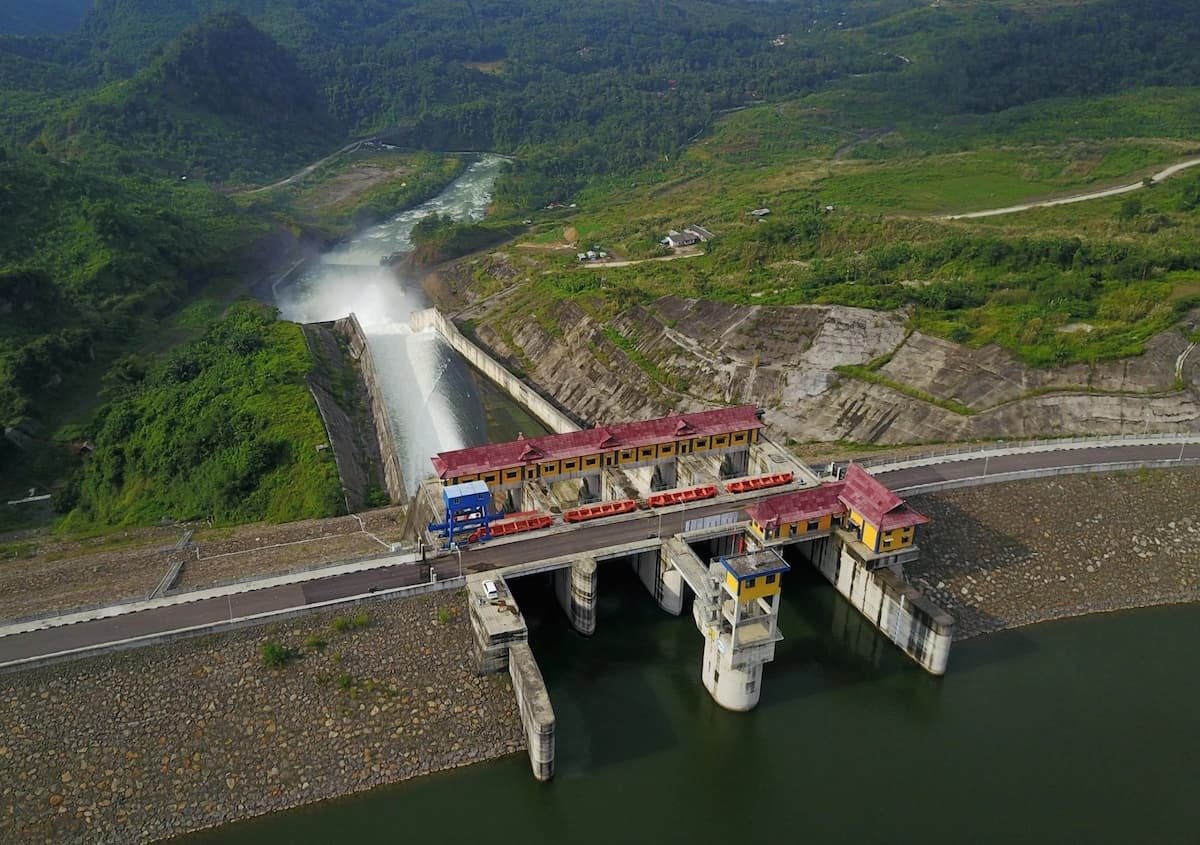
    China’s transition from coal financing to green projects presents an opportunity for Indonesia. Smaller, targeted projects under the Belt and Road Initiative reflect this shift, though China’s investments in fossil fuels continue to dominate. Large hydropower projects, such as the 110-megawatt Jatigede plant in West Java, show China’s selective engagement. Meanwhile, the USD 27 billion Kayan hydropower project in North Kalimantan saw Chinese withdrawal, leaving Japan as a key backer. Experts stress that Indonesia cannot rely solely on Chinese investment. Tiza Mafira, associate director at the Climate Policy Initiative Indonesia, says the country needs a mix of funding sources. Many projects are not commercially viable yet due to slow regulatory support. Public funds, concessional loans, and blended financing mechanisms are essential to attract private investors. China remains critical due to its technological leadership and large-scale production of renewable energy products. However, Indonesia also seeks to balance foreign investment with domestic industry development and affordable energy costs.

    China’s role in Indonesia’s renewable energy transition is pivotal but not all-encompassing. While private financing and technological support are likely to continue, public funding remains limited. Indonesia’s success depends on a combination of Chinese investment, domestic regulation, and other international funding sources to achieve its clean energy targets by 2034.

    Share. Facebook Twitter Pinterest LinkedIn Tumblr Email
    Andrew Rogers
    Andrew Rogers
    • Website
    • Facebook

    Andrew Rogers is a seasoned journalist and news analyst specializing in global affairs, politics, and finance. With a passion for investigative reporting, he delivers accurate, insightful stories that inform and engage readers worldwide.

    Related Posts

    Why can't the US dollar's depreciation be stopped?

    Why can’t the US dollar’s depreciation be stopped?

    February 1, 2026
    Gold Near Record High as Greenland Crisis Builds

    Gold Near Record High as Greenland Crisis Builds

    January 20, 2026
    Guangxi Rural Forestry Loan Support Grows

    Guangxi Rural Forestry Loan Support Grows

    December 29, 2025

    Comments are closed.

    Our Picks
    Why can't the US dollar's depreciation be stopped?

    Why can’t the US dollar’s depreciation be stopped?

    February 1, 2026
    Gold Near Record High as Greenland Crisis Builds

    Gold Near Record High as Greenland Crisis Builds

    January 20, 2026
    Guangxi Rural Forestry Loan Support Grows

    Guangxi Rural Forestry Loan Support Grows

    December 29, 2025
    Wall Street AI Stock Trade Remains Strong

    Wall Street AI Stock Trade Remains Strong

    December 22, 2025
    Stay In Touch
    • Facebook
    • Twitter
    • Instagram
    • YouTube
    Don't Miss
    Sami Whitcomb

    Sami Whitcomb: Top Sharpshooter and Key WNBA Guard

    General June 28, 2025

    Sami Whitcomb has become a well-known name in professional basketball, admired for her sharpshooting and…

    Experts Urge Stamp Duty Abolition

    Experts Urge Stamp Duty Abolition

    November 13, 2025
    Polish Voters Decide Nation’s Future in Key Presidential Runoff

    Polish Voters Decide Nation’s Future in Key Presidential Runoff

    June 1, 2025
    Cape Verde Seeks Stronger Chinese Investment Ties

    Cape Verde Seeks Stronger Chinese Investment Ties

    July 6, 2025
    About Us

    Daljoog News is a trusted news platform that brings you the latest global and local updates with accuracy and fairness. We are committed to clear and unbiased reporting, covering topics like politics, business, technology, science, and culture and more. Using the latest technology and expert journalism, we provide reliable coverage of important stories. Stay informed, inspired, and empowered with Daljoog News—your source for breaking news, the latest updates, and videos that matter.

    Email Us: info@daljoognews.com

    Our Picks
    California Threatens Paramount’s $110B Warner Deal

    California Threatens Paramount’s $110B Warner Deal

    February 28, 2026
    US Judge Dismisses Buffalo Wild Wings Lawsuit

    US Judge Dismisses Buffalo Wild Wings Lawsuit

    February 18, 2026
    Casey Wasserman to Sell Agency Amid Epstein File Fallout

    Casey Wasserman to Sell Agency Amid Epstein File Fallout

    February 15, 2026
    Latest News
    Iran Fast Boats Raise Security Risks in Hormuz Strait

    Iran Fast Boats Raise Security Risks in Hormuz Strait

    April 25, 2026
    2PM Ok Taecyeon Marries After 10 Years of Love

    2PM Ok Taecyeon Marries After 10 Years of Love

    April 25, 2026
    Russia Gold Reserves Drop After Massive 22 Ton Sale.jpg The server cannot process the image. This can happen if the server is busy or does not have enough resources to complete the task. Uploading a smaller image may help. Suggested maximum size is 2560 pixels.

    Russia Gold Reserves Drop After Massive 22 Ton Sale

    April 25, 2026
    Facebook X (Twitter) RSS YouTube Instagram
    • Home
    • About Us
    • Contact Us
    • Our Authors
    • Privacy Policy
    • Terms & Conditions
    • Sitemap
    © 2026 DaljoogNews.com

    Type above and press Enter to search. Press Esc to cancel.