


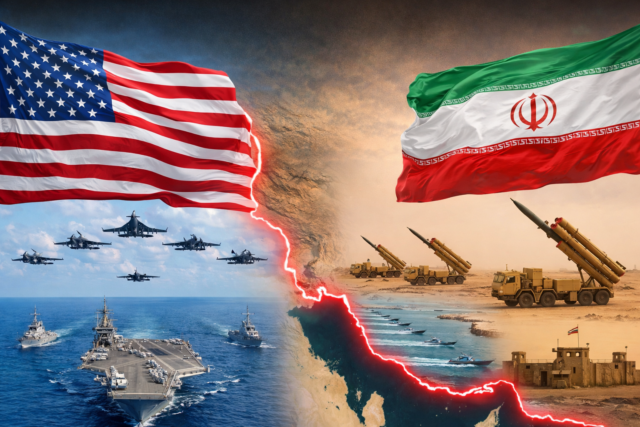
Although the U.S. has debated a direct military strike on Iran, Washington has so far hesitated to take that step.
According to Daljoog News analysis, the hesitation is driven by the high risk of unexpected consequences that could destabilize not only the Middle East but also global security and the economy.
In this context, the influential European think tank, the European Council on Foreign Relations (ECFR), has explicitly warned the U.S. that an attack on Iran could trigger far-reaching crises.
What Happened?
The ECFR recently published an analysis highlighting that a U.S. military intervention in Iran carries extremely high risks and unpredictable outcomes.
The think tank notes that history shows foreign military interventions rarely create stability. Instead, they often lead to long-term violence, state breakdown, and regional instability.
According to the ECFR, if the U.S. directly attacks Iran, Tehran could respond in three distinct—but equally dangerous—ways.
These potential responses are a major reason why Washington has hesitated to pursue a military strike.
Why This Matters
Iran is not just a single country; it is a strategic pivot in the balance of power across the Middle East.
A military operation against Iran would not only be a bilateral conflict but could also ignite instability throughout the region.
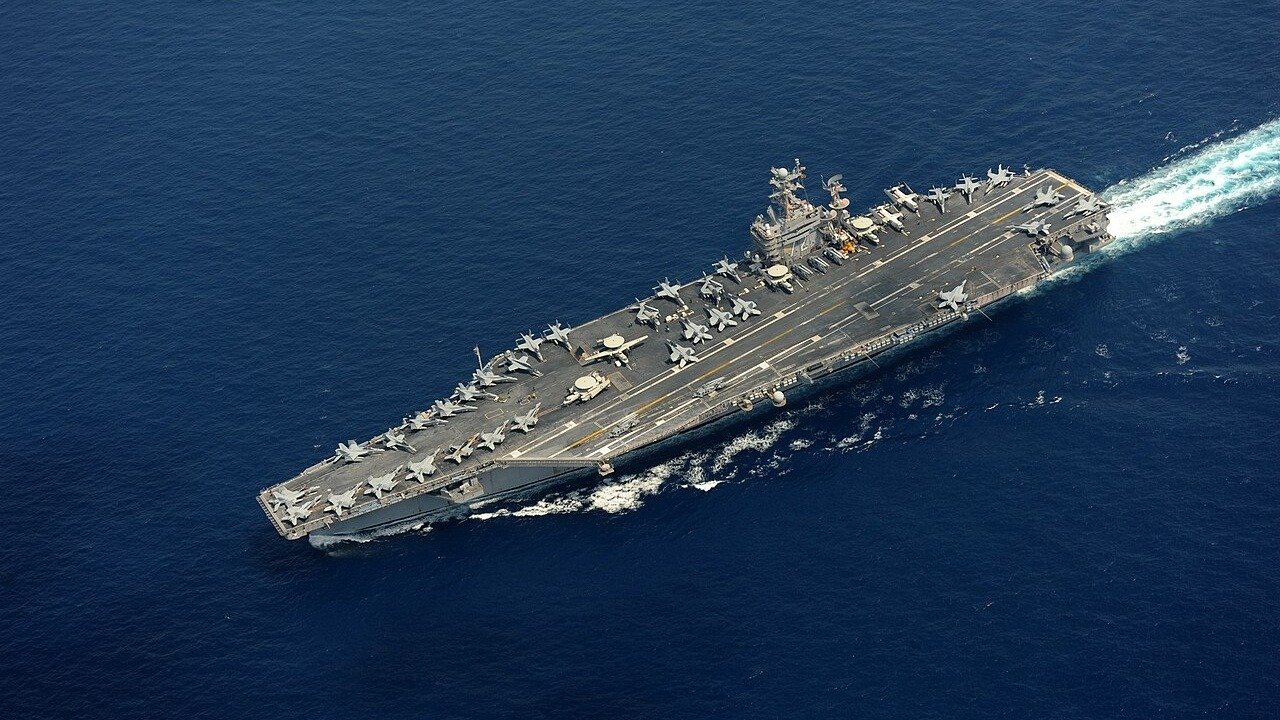
Experts warn that any U.S. action could directly endanger American bases, supply lines, and allied nations in the Middle East.
At the same time, the consequences would spill into global markets, especially affecting energy prices and commodities.
This is why every U.S. decision regarding Iran involves careful calculation—not just militarily, but also strategically and economically.
What Analysts or Officials Are Saying
The ECFR analysis identifies three major potential Iranian responses:
First, Iran could target U.S. military bases and personnel stationed across the Middle East. American facilities in Iraq, Syria, and the Gulf could face missile or drone attacks, increasing political and military costs for Washington.
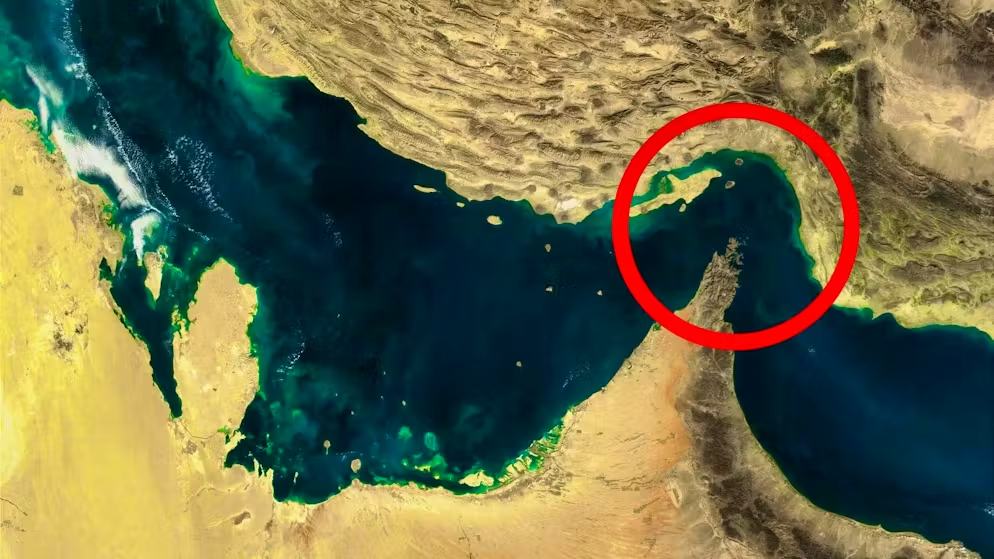
Second, Iran could disrupt global oil flows by targeting regional energy infrastructure, particularly in the Strait of Hormuz. A partial blockade could cause sudden spikes in oil prices, sending shockwaves through global inflation and markets.
Third, Iran might mobilize its regional allies, including Hezbollah in Lebanon, the Houthis in Yemen, and other armed groups. These networks could coordinate attacks against U.S. allied nations, with Israel likely being a primary target.
Daljoog News Analysis
The U.S. hesitation on Iran is not a sign of weakness, but rather recognition of a stark reality.
Washington understands that a war with Iran would not be confined to a controlled battlefield. Once triggered, it could quickly escalate beyond American control.
While the U.S. military remains formidable, Iran’s strategic positioning and regional networks create a unique type of adversary.
Instead of a direct conflict, Iran could adopt strategies that inflict long-term damage. That possibility represents the greatest headache for Washington.
This is why the U.S. currently relies on diplomacy, sanctions, and indirect pressure rather than immediate military action.
The ECFR warning delivers a clear message to Western nations: decisions must be guided by consequences, not emotion.
What Happens Next
In the short term, a direct U.S. strike on Iran remains unlikely.
Washington is expected to continue strengthening sanctions, reinforcing regional allies, and increasing diplomatic pressure.
Iran will likely bolster its defenses and regional networks to ensure rapid countermeasures if attacked.
Analysts predict that tensions in the Middle East will rise, but are likely to remain confined to limited conflicts for now.
The trajectory of this crisis will largely depend on how calculated and cautious both the U.S. and Iran are in their next moves.