

President Donald Trump is reviewing military options against Iran, but has not authorized action, according to U.S. officials familiar with internal discussions.
According to Daljoog News analysis, the administration is balancing military readiness with diplomatic calculations, aware that any strike could reshape regional stability and U.S. foreign policy ahead of a sensitive political period.
The debate unfolds as U.S. forces reposition assets in the Middle East, nuclear talks with Tehran continue, and public threats from both sides intensify.
What Happened?
Senior national security officials have informed Donald Trump that U.S. forces could be prepared for strikes on Iran as early as Saturday. However, officials stress that no final order has been issued and the timeline remains fluid.
Defense officials are temporarily relocating some U.S. personnel from parts of the Middle East to Europe or back to the United States. Sources describe the move as precautionary, aimed at reducing vulnerability in case of retaliation. Such repositioning is standard procedure before potential operations and does not automatically signal imminent military action.
The matter was discussed in the White House Situation Room this week. A U.S. official said all military assets expected to deploy to the region should be in place by mid-March.
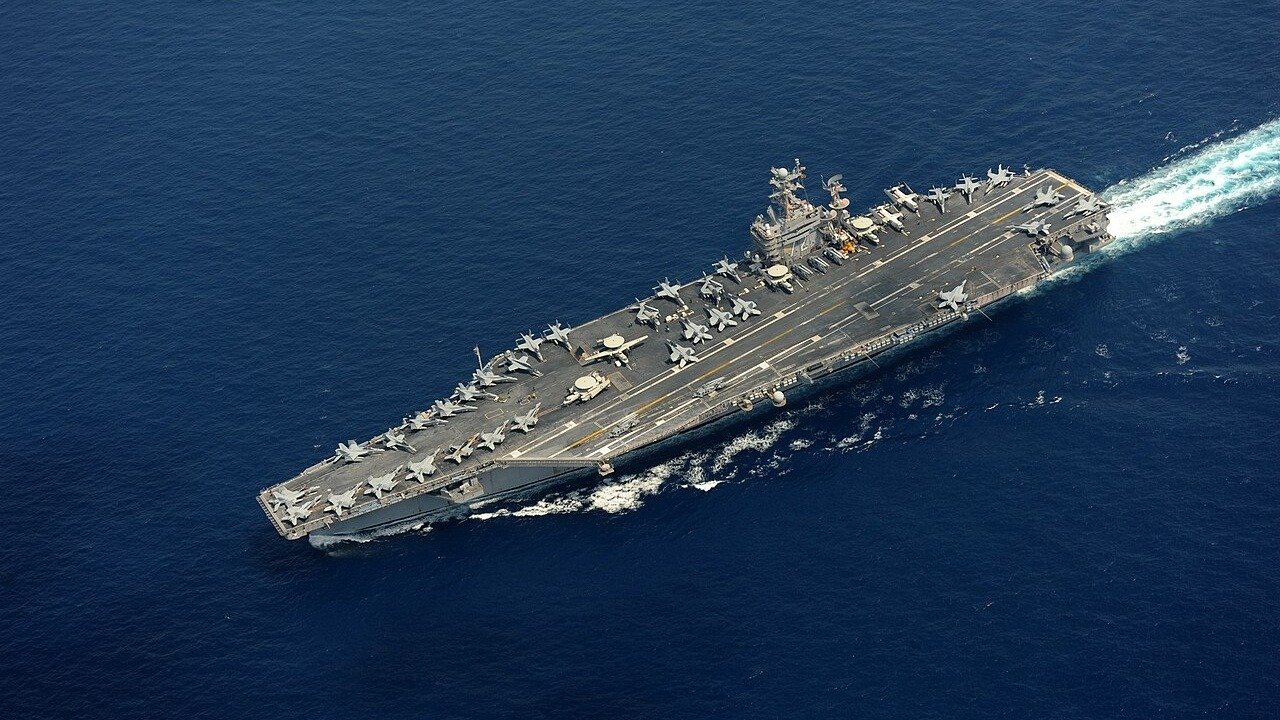
The USS Abraham Lincoln carrier strike group is already operating in the region. Meanwhile, the USS Gerald R. Ford is en route to the Middle East. As of Wednesday, maritime tracking data showed the Ford off the coast of West Africa.
At the diplomatic level, Secretary of State Marco Rubio is expected to meet Israeli Prime Minister Benjamin Netanyahu in the coming weeks. The discussions are likely to address Iran’s ballistic missile capabilities and nuclear ambitions.
White House Press Secretary Karoline Leavitt acknowledged that arguments exist in favor of military action but emphasized that diplomacy remains the president’s preferred route. She declined to clarify whether any strike would involve coordination with Israel.
Why This Matters
The U.S.-Iran standoff is entering a critical phase.
Iran has expanded uranium enrichment to 60% purity in recent years, narrowing the technical gap toward weapons-grade material. International inspectors have flagged the move as highly concerning.
The Trump administration views Iran’s ballistic missile program and nuclear activities as central security threats. Yet any direct strike carries risks of retaliation across the region, including against U.S. forces, Gulf allies, or maritime routes.
Iran’s Supreme Leader, Ali Khamenei, escalated rhetoric this week. He shared a digitally generated image depicting a U.S. aircraft carrier underwater, accompanied by warnings about Iran’s military capabilities.
Tehran also issued aviation advisories urging pilots to avoid parts of southern Iran due to planned rocket launches, signaling potential military demonstrations.
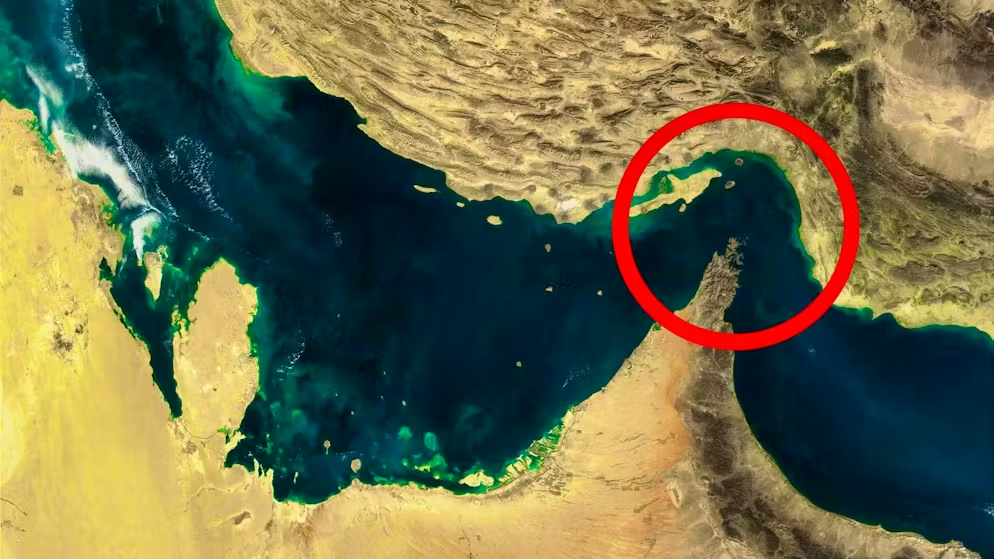
The strategic stakes extend beyond Washington and Tehran. Regional actors, including Israel and Gulf states, would likely be drawn into any confrontation. Global energy markets would also react sharply to disruption in the Strait of Hormuz.
What Analysts or Officials Are Saying
Administration officials describe the internal deliberations as ongoing and dynamic. They stress that the president has not made a final determination.
Diplomatic contacts between Iranian and American negotiators recently resumed in Geneva. Talks reportedly lasted several hours and yielded limited progress. Officials suggest significant gaps remain, particularly around enrichment limits and verification mechanisms.
White House officials expect Tehran to present further proposals in the coming weeks. No follow-up meeting has been formally scheduled.
Security analysts note that deploying two carrier strike groups increases deterrence but also raises expectations. The presence of significant naval firepower can serve both as leverage in negotiations and as preparation for escalation.
Some former defense officials caution that limited strikes may not achieve lasting strategic impact unless paired with a broader diplomatic or containment strategy.
Daljoog News Analysis
The administration appears to be signaling strength while preserving flexibility.
Positioning aircraft carriers and relocating personnel enhances readiness and sends a clear message. At the same time, the White House is leaving diplomatic channels open. This dual-track approach reflects lessons from previous confrontations in the region.
The memory of last year’s 12-day conflict between Israel and Iran remains fresh. U.S. forces joined Israeli strikes on Iranian nuclear facilities during that period, reportedly inflicting significant damage. Yet intelligence assessments suggested that Iran retained technical expertise and the ability to rebuild.
Daljoog News assesses that a new strike, absent a comprehensive diplomatic settlement, could delay but not permanently end Iran’s nuclear trajectory. It would likely provoke asymmetric retaliation through regional proxies.
Trump’s calculation also carries domestic dimensions. A military operation would dominate headlines and reshape foreign policy debates. Conversely, restraint could draw criticism from hawkish voices arguing that Iran’s enrichment program demands decisive action.
The administration’s messaging indicates awareness of both outcomes. By maintaining ambiguity, the White House preserves negotiating leverage while avoiding premature escalation.
What Happens Next
All eyes are on the coming weeks.
Iran is expected to submit additional proposals in ongoing nuclear discussions. If negotiations show progress, the likelihood of immediate military action could diminish.
If talks stall or Tehran accelerates enrichment, pressure for a strike will intensify.
Military deployments are projected to be fully in place by mid-March. That timeline suggests Washington is preparing for multiple scenarios rather than committing to a fixed date.
Regional governments will also adjust their posture. Israel’s position remains critical, particularly regarding ballistic missile threats and nuclear thresholds.
Energy markets, defense analysts, and diplomatic observers will closely monitor signals from Washington and Tehran.