
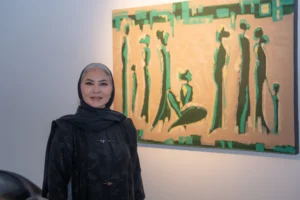

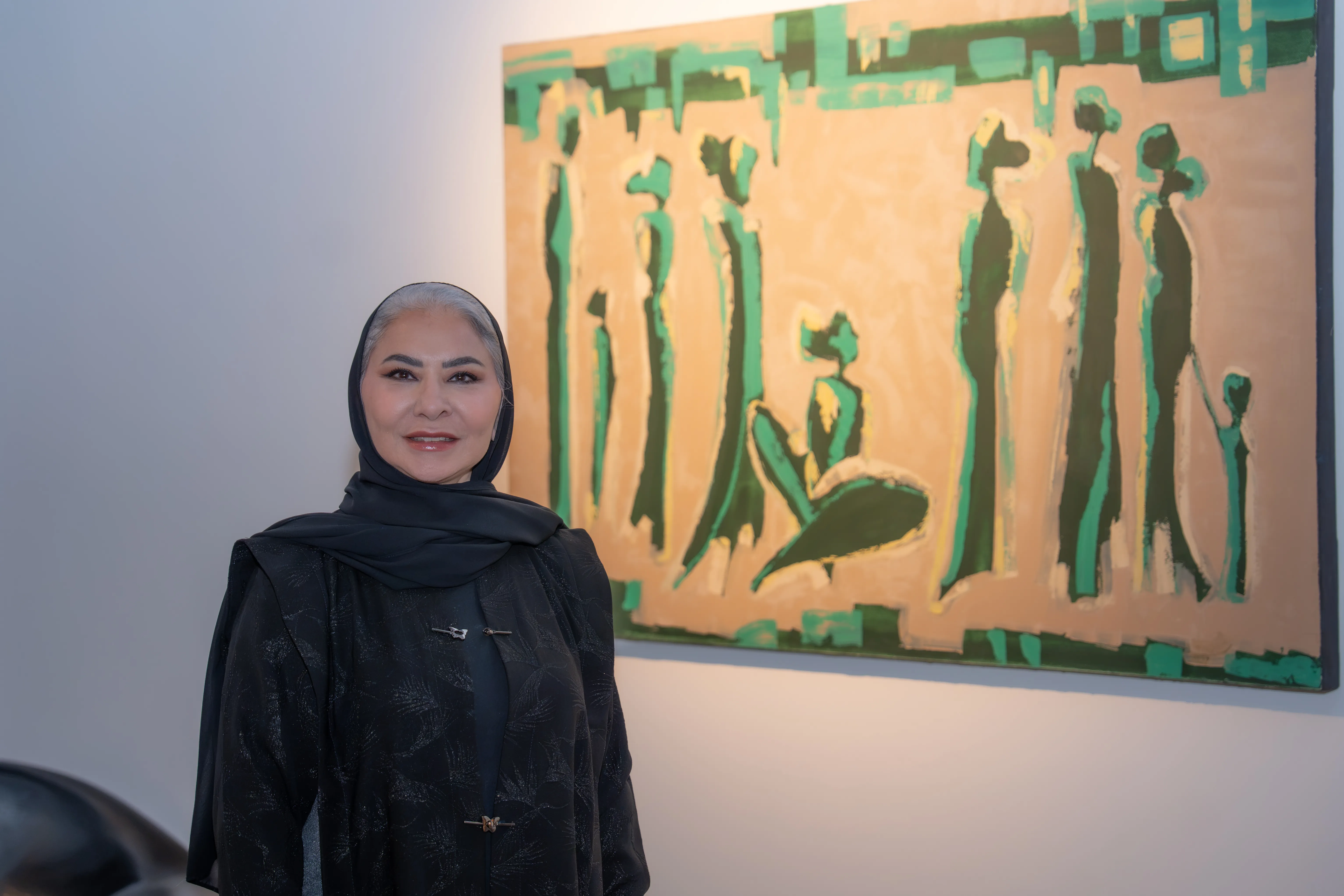
Saudi artist Najla Al-Saleem is exploring the relationship between traditional painting and modern technology through her exhibition A Shifting Horizon in Riyadh. The exhibition brings together her own artwork and pieces created by her father, the pioneering Saudi modernist Mohammed Al-Saleem. Alongside selected paintings, visitors can watch short animations created with artificial intelligence, allowing images from the original artwork to move and develop into new visual stories. The exhibition offers a fresh way to experience paintings while connecting different generations of artistic experimentation.
One of the most important pieces in the exhibition is Composition No. 5, a collection of digital artworks created by Mohammed Al-Saleem in 1995. Najla believes the works were among the earliest examples of digital art produced by a Saudi artist. She describes them as an important link between the country’s artistic experiments in the 1990s and the possibilities available today. The exhibition also includes her 2018 work Jamsh, which uses the artist’s distinctive visual language to explore traditional mud buildings and their importance in Saudi culture.
Artificial intelligence plays a central role in the presentation. The animations were developed after Najla described the figures and visual elements in her paintings to a team working with her son’s technology company. In one example, a painting titled Woman features a dark figure surrounded by bright yellow and orange shapes. The accompanying animation brings the figure to life, allowing it to move and turn in a way that adds another dimension to the original composition. Najla says the animations can help viewers discover new meanings within the artwork without replacing the original paintings.
The exhibition also raises questions about the responsible use of AI in creative work. Her son said the technology can be useful when artists have clear safeguards and control over how their work is used. He added that the artwork data is stored in Saudi Arabia and is not used to train AI models for other users. The exhibition manager believes the project creates an opportunity for younger artists to learn from earlier generations while experimenting with new tools. The result is a meeting between artistic heritage and technology that encourages visitors to consider how creativity may develop in the future.