

Hungary election Orban defeat has reshaped the country’s political landscape after 16 years of uninterrupted rule by Prime Minister Viktor Orban came to an end in a dramatic parliamentary vote in Budapest. The result marks one of the most significant political shifts in modern Hungarian history.
According to Daljoog News analysis… the Hungary election Orban defeat is not only a domestic transition but a geopolitical shockwave, weakening a leader long seen as a key bridge between Western institutions and Moscow-aligned interests.
The outcome has triggered immediate reactions across Europe and beyond, as allies and rivals reassess the balance of influence within the European Union and NATO amid growing global tensions.
What Happened?
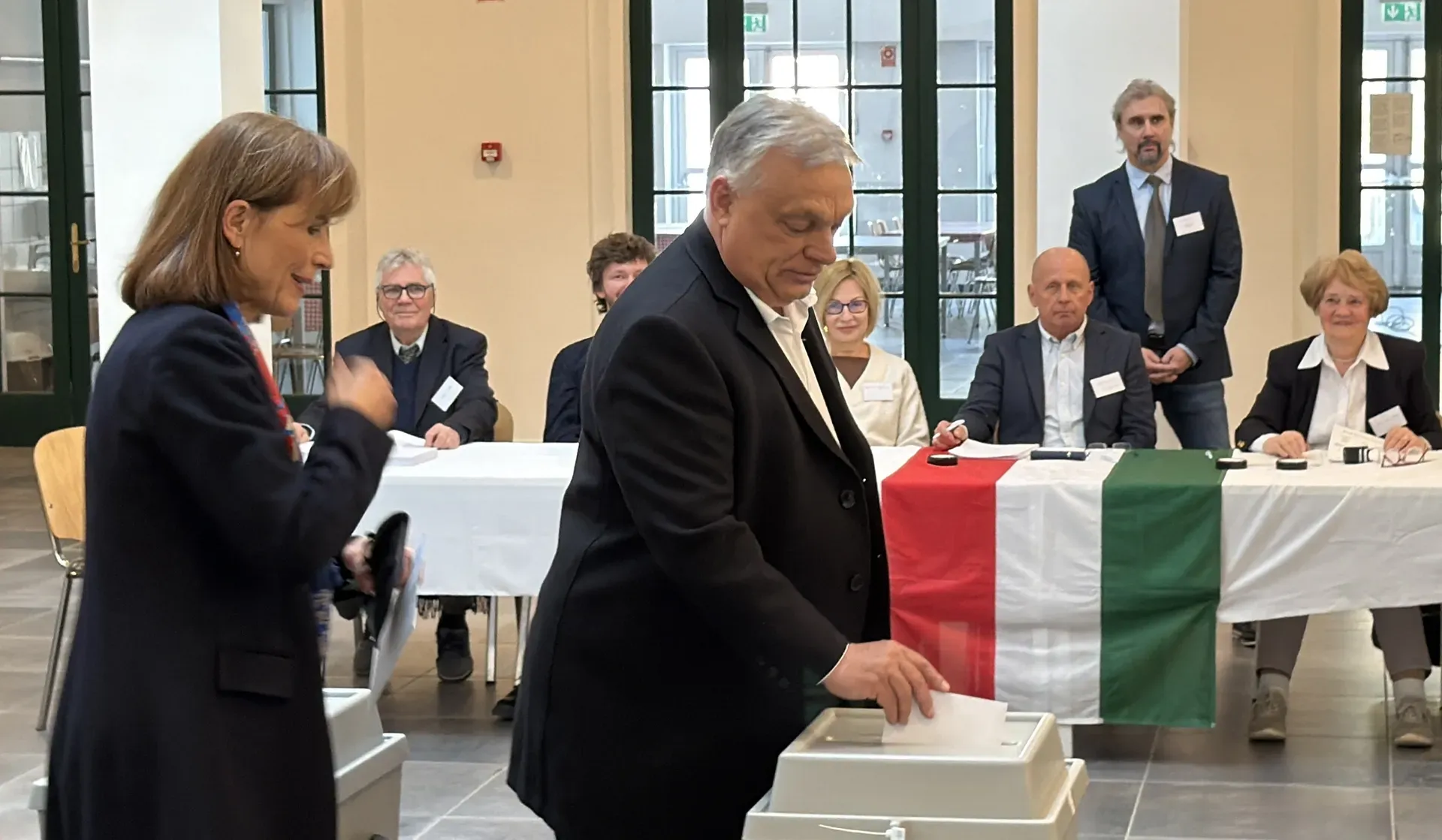
The Hungary election Orban defeat was confirmed after parliamentary results showed Viktor Orban’s long-dominant Fidesz party falling far behind opposition forces led by Peter Magyar.
With more than 98 percent of votes counted in the 199-seat parliament, Magyar’s center-right Tisza Party secured around 138 seats, while Fidesz managed only 55 seats. The far-right Our Homeland Movement took a small share of the remaining seats.
The result effectively ends Orban’s 16-year rule, a period marked by strong nationalist policies, repeated clashes with EU institutions, and a tightly controlled domestic political environment.
At 45, Peter Magyar now emerges as Hungary’s new prime minister-designate, representing a political force that once admired Orban’s leadership but later broke away to challenge his dominance.
Orban accepted the result publicly, congratulating the winner while acknowledging that his party would now serve in opposition after failing to secure a governing mandate.
Why This Matters
The Hungary election Orban defeat carries major implications for both European and global politics. Orban was widely seen as one of the EU’s most disruptive leaders, frequently using veto power to block collective decisions.
His government had repeatedly slowed or blocked EU financial and military support packages for Ukraine, while also resisting key regulatory and rule-of-law reforms pushed by Brussels.
With his departure from power, EU institutions are expected to face fewer internal obstacles in decision-making, particularly on Ukraine funding, sanctions policy, and energy strategy.
Beyond Europe, the shift also affects geopolitical alignments involving the United States and Russia, both of which had strong strategic interests in maintaining Orban’s leadership position.
What Analysts or Officials Are Saying
Political analysts describe the Hungary election Orban defeat as a rare example of rapid political realignment in a long-stable government system.
European Union officials have responded positively, suggesting the result signals a renewed alignment with EU values and decision-making frameworks. EU leadership has already indicated that Hungary’s renewed cooperation could strengthen internal unity.
In Washington, the result is being closely monitored due to Orban’s close political ties with US President Donald Trump and his broader alignment with conservative transatlantic networks.
Meanwhile, observers in Russia are assessing the loss of a key diplomatic partner within the EU, noting that Hungary previously served as an informal channel for information exchange and policy insight within European discussions on sanctions and Ukraine.
Daljoog News Analysis
The Hungary election Orban defeat reflects a deeper shift in European political dynamics, where long-standing nationalist governments are increasingly facing internal opposition driven by economic pressures and institutional fatigue.
Orban’s political model, once seen as stable and resilient, began facing growing resistance over issues related to governance standards, EU cooperation, and foreign policy alignment.
The rise of Peter Magyar suggests a recalibration rather than a complete ideological break, but it still represents a clear rejection of concentrated executive control that defined Orban’s tenure.
However, the transition phase will be critical. Hungary remains divided politically, and the new leadership will face immediate pressure to balance domestic expectations with EU obligations.
Daljoog News analysis suggests that while this change may improve Hungary’s standing within the European Union, it will also test the durability of Magyar’s mandate in a politically polarized environment.
What Happens Next
Following the Hungary election Orban defeat, Peter Magyar is expected to begin forming a new government, with cabinet appointments and policy priorities likely to be announced in the coming weeks.
Key early decisions will focus on Hungary’s relationship with the European Union, particularly regarding funding mechanisms, judicial reforms, and foreign policy alignment on Ukraine.
International stakeholders, including the EU and NATO, will closely monitor whether Hungary adopts a more cooperative stance or maintains elements of its previous independent approach.
The political transition also opens a new chapter in Hungary’s domestic politics, where Orban’s role as opposition leader could still influence parliamentary debates and national discourse in the years ahead.