

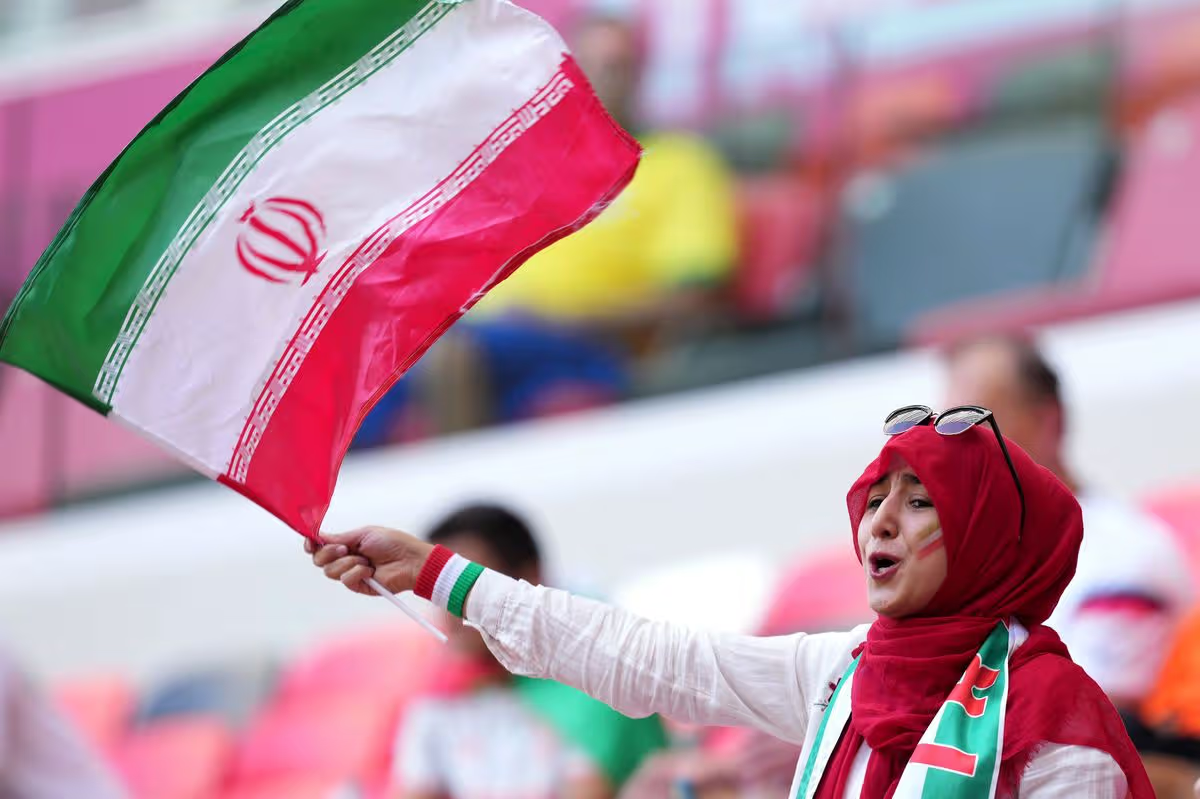
Iran is requesting that FIFA move its World Cup group-stage matches from the United States to Mexico due to security concerns amid ongoing tensions with Israel. The decision affects the upcoming tournament jointly hosted by the U.S., Canada, and Mexico.
According to Daljoog News analysis, the request highlights how geopolitical tensions are beginning to influence international sporting events, raising questions about athlete safety and logistical planning.
The standoff comes just weeks before the tournament, with both the Iranian Football Federation and FIFA under pressure to resolve the situation quickly to ensure Iran’s participation.
What Happened?
Iran’s national football team was originally scheduled to play its group-stage matches in the United States. However, officials in Tehran cited security concerns given the current U.S.-Israel conflict, and requested that FIFA consider moving the matches to Mexico.
President Donald Trump publicly stated that the U.S. could not guarantee the safety of Iranian players on American soil. In response, Iran’s federation emphasized that without a secure environment, they would not participate in U.S.-hosted games.
FIFA, which sets strict rules for venue and schedule consistency, has yet to formally respond to Iran’s request. Tournament organizers, including FIFA President Gianni Infantino, have reiterated that the official match schedule and venues are intended to remain unchanged.
Despite the uncertainty, Iran continues to train its squad. The Iranian Sports Minister reported that several domestic sports facilities have been targeted in attacks, allegedly supported by external actors, further complicating preparations.
Why This Matters
The dispute underscores the intersection of sports and politics. Iran’s concern over safety and the U.S.’s refusal to provide assurances risk sidelining one of the tournament’s qualified teams.
Relocating matches could also set a precedent for handling security concerns in future international competitions. Beyond sports, the situation adds another layer of tension to the U.S.-Iran-Israel dynamic, with potential diplomatic ramifications.
For global fans and organizers, any change in venue or schedule creates logistical challenges, including travel, broadcasting arrangements, and ticketing. The timing is especially critical as the World Cup is often billed as “The Greatest Show on Earth.”
What Analysts or Officials Are Saying
Iranian officials have criticized Trump’s inconsistent statements regarding safety and viewed them as morally and strategically unreliable. The Sports Minister described U.S. remarks as contradictory and lacking ethical balance, complicating diplomatic channels.
FIFA has maintained a firm stance: match venues will follow the draw unless compelling circumstances justify change. Analysts note that the governing body faces pressure to balance political realities with tournament regulations.
Daljoog News Analysis
The unfolding scenario illustrates how global sports are increasingly vulnerable to geopolitical disputes. Iran’s insistence on relocating its games reflects broader anxieties about safety, perception, and political messaging.
While the U.S. maintains it cannot ensure player protection under current conditions, FIFA faces a dilemma: uphold established rules or accommodate a legitimate security concern. This balance between regulatory integrity and practical safety is rarely straightforward.
Iran’s continued training despite attacks on sports infrastructure demonstrates resilience but also highlights the persistent shadow of political interference over athletic preparation. Fans may witness an event shaped as much by diplomacy and security as by football skill.
The situation also sends a signal to other nations: international competitions cannot exist in isolation from global conflicts, and sports governance bodies may need to prepare for more politically sensitive decisions in the future.
What Happens Next
FIFA’s response to Iran’s request will be crucial in determining whether the matches remain in the U.S. or move to Mexico. A decision in the coming days is likely, given the tournament timeline.
Iranian authorities will weigh safety assurances before confirming participation, while international observers monitor how political tensions may affect fan attendance, security logistics, and media coverage.
If FIFA rejects the relocation, Iran may face a difficult choice between risking participation in the U.S. or withdrawing, potentially impacting its standing in the tournament.
The coming days will reveal whether global football can navigate the intersection of sport and geopolitics without diminishing the spectacle of the World Cup.