

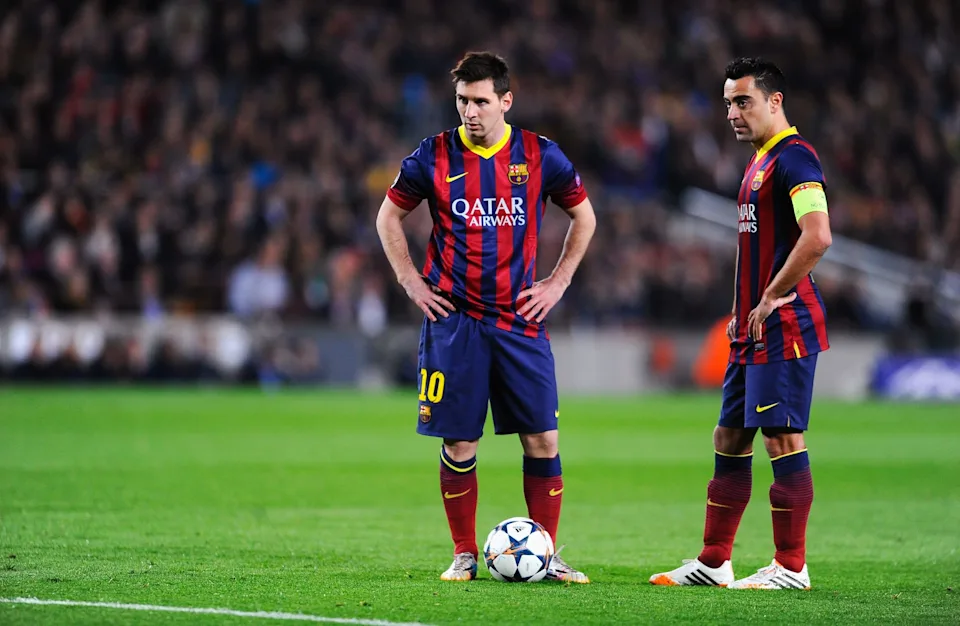
Xavi Hernandez, former FC Barcelona manager and legendary midfielder, has opened up about the failed 2023 return of Lionel Messi, directly blaming ex-president Joan Laporta for derailing the move.
According to Daljoog News analysis, Xavi’s revelations shed new light on internal tensions at Barcelona during Messi’s potential comeback from PSG. The dispute illustrates how club politics can influence high-profile player transfers, even when football considerations align.
The controversy has had lingering effects on relationships within the club, particularly between Xavi and Messi, though both insist their bond has now been restored.
What Happened?
Xavi detailed in an interview with La Vanguardia that Messi had expressed a strong desire to return to Barcelona after winning the 2022 World Cup and finishing his contract with PSG. Negotiations reportedly began in January 2023, with Xavi and Messi discussing terms and agreeing on the move.
The former manager claimed that Laporta had started direct talks with Messi’s father, Jorge, and that the deal had received provisional approval from La Liga. However, Xavi said Laporta abruptly withdrew support, effectively blocking the transfer.
“Laporta told me, word for word, that if Leo came back, he would wage war on him and that he couldn’t allow that to happen,” Xavi revealed.
Messi eventually stopped responding to Xavi, believing the manager may have been involved in the deal falling through, further straining their relationship.
Why This Matters
Messi’s return to Barcelona could have been a symbolic and sporting milestone, akin to a “last dance” at Camp Nou. Xavi argued that Messi’s presence would have bolstered the team’s attack and leadership on the pitch.
The failed move also highlights the influence of club governance on sporting decisions. Even with agreement on footballing terms, internal politics and personal agendas within management can override player and coach preferences.
Barcelona continues to navigate the fallout from high-profile departures, emphasizing the delicate balance between financial, political, and sporting priorities.
What Analysts or Officials Are Saying
Barcelona observers note that Xavi’s comments expose deeper fault lines between former management and the current sporting vision. Analysts suggest that the tension between Laporta and Messi may have been fueled by personal disagreements rather than football logic.
The episode also underscores the importance of alignment between a club president, manager, and star players when negotiating marquee transfers, especially with a global figure like Messi.
Daljoog News Analysis
Xavi’s account portrays the 2023 Messi saga as a missed opportunity shaped by internal power struggles. While financial and regulatory considerations often dominate football negotiations, this case demonstrates how interpersonal and political factors can have an outsized impact.
It also shows that even legendary players are not immune to boardroom decisions. Messi’s eventual decision to continue elsewhere reflects the limits of coaching influence when governance conflicts arise, offering lessons for clubs managing superstar returns.
What Happens Next
While Messi will continue his career outside Barcelona, Xavi remains committed to strengthening the team with existing and new talent. Barcelona’s leadership must balance internal cohesion, managerial strategy, and fan expectations to avoid similar controversies in the future.