


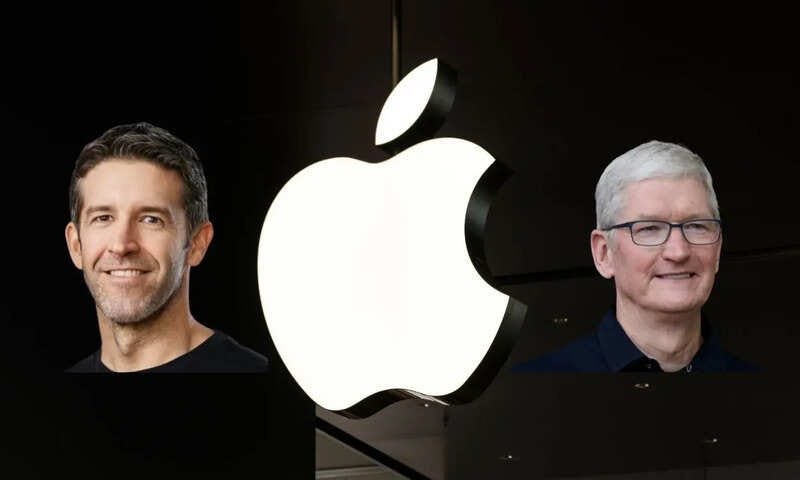
Apple CEO transition is reshaping the future of Apple Inc. as long-time chief executive Tim Cook prepares to step down after 15 years of leading one of the world’s most valuable technology companies.
According to Daljoog News analysis, the Apple CEO transition represents a carefully managed leadership change designed to protect stability while preparing for a new growth phase.
The shift comes at a time when Apple continues to dominate global tech markets, with investors closely watching how the company will evolve under new leadership.
What Happened?
Apple CEO transition was officially announced as Tim Cook confirmed he will leave his role as CEO after more than a decade and a half at the helm of Apple Inc. However, he is expected to remain in position until September 1 to ensure a structured handover.
The company has named John Ternus as the incoming CEO, signaling a significant leadership change at the top of the organization.
Cook joined Apple in 1998 and became CEO in 2011 following the death of Steve Jobs. His leadership period is widely credited with transforming Apple into a global technology powerhouse.
Under his tenure, Apple’s market value surged to nearly 4 trillion dollars, making it one of the most valuable companies in history.
The company also reported annual revenue of about 416 billion dollars in its most recent fiscal year, reflecting strong global demand across its product ecosystem.
Cook played a key role in expanding Apple’s core products, including the iPhone, iPad, Mac, Apple Watch, and AirPods, which became central to modern consumer technology.
Why This Matters
The Apple CEO transition marks a turning point for the global technology sector. Leadership changes at this scale often influence investor confidence, product strategy, and long-term innovation direction.
Tim Cook’s leadership focused on operational excellence, supply chain strength, and consistent product expansion. This helped Apple maintain stability while scaling into new markets and services.
Now, the challenge shifts to sustaining that momentum in an increasingly competitive environment shaped by artificial intelligence, hardware innovation, and global tech rivalry.
For markets worldwide, Apple remains a key indicator of broader tech industry performance.
What Analysts or Officials Are Saying
Market analysts view the Apple CEO transition as one of the most significant corporate leadership changes in recent years.
Experts highlight that Cook’s approach emphasized efficiency and long-term ecosystem growth rather than rapid disruption. This strategy helped Apple maintain consistent profitability and brand dominance.
Some analysts expect John Ternus to face pressure to accelerate innovation, particularly in emerging areas such as artificial intelligence, mixed reality, and next-generation devices.
Company observers note that the transition appears carefully planned to ensure continuity and avoid disruption in operations or investor sentiment.
Daljoog News Analysis
The Apple CEO transition reflects a rare example of structured leadership succession in the global tech industry. Instead of an abrupt change, Apple is executing a phased and controlled handover.
Tim Cook’s era will be remembered for transforming Apple into a diversified ecosystem that extends far beyond hardware into services and digital platforms.
However, the next phase will be more demanding. The company now operates in a fast-changing environment where innovation cycles are shorter, and competition is more aggressive.
Daljoog News analysis suggests that while stability is Apple’s strength, the real test for the new leadership will be maintaining dominance while adapting to new technological shifts.
What Happens Next
The Apple CEO transition will officially conclude after the September 1 handover period, when John Ternus is expected to assume full leadership responsibilities.
In the coming months, attention will focus on Apple’s strategic roadmap, including product development and technology investment plans.
Key areas to watch include artificial intelligence integration, new device categories, and expansion of Apple’s services ecosystem.
The outcome of this transition will likely shape Apple’s direction for the next decade and influence global tech industry trends.