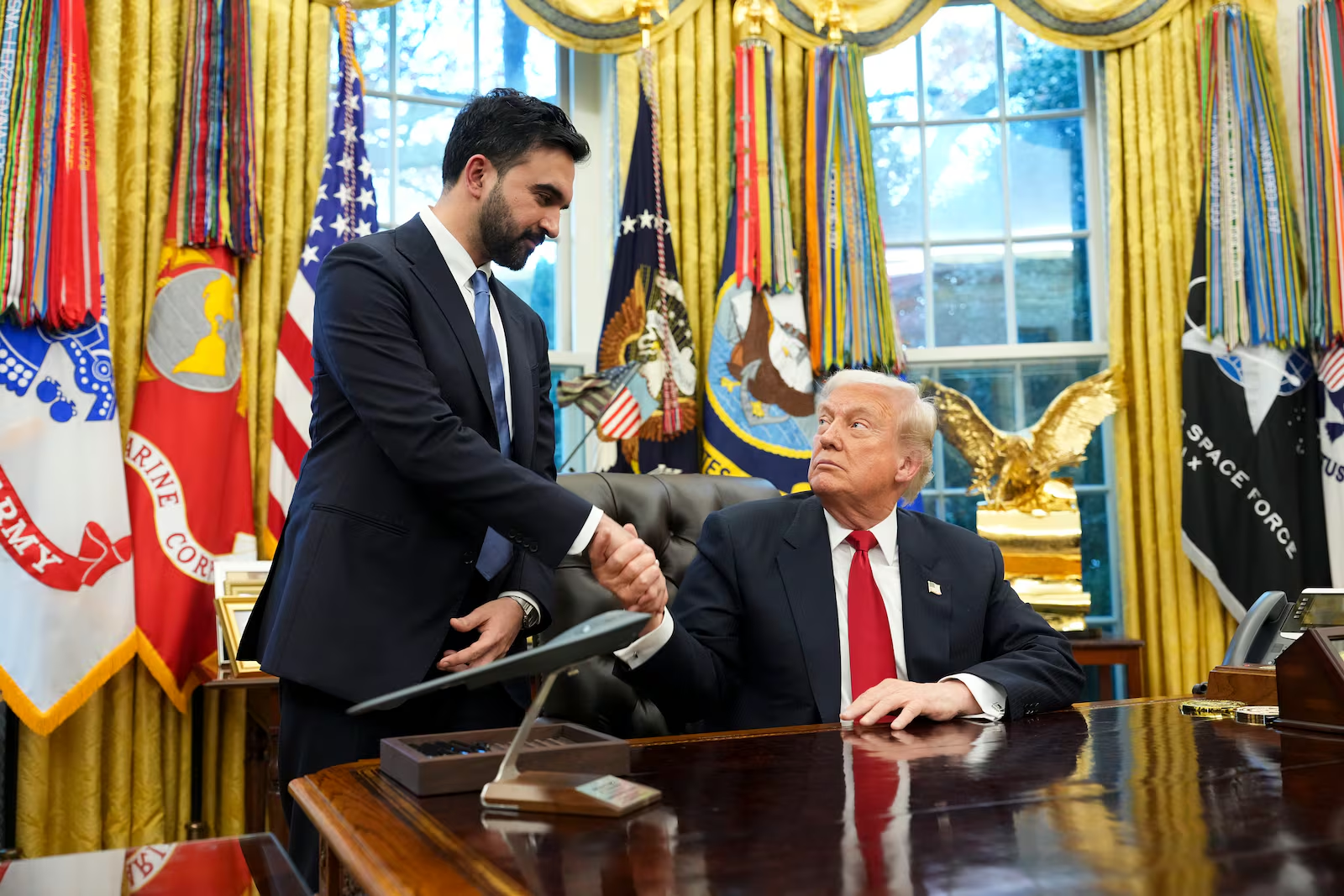
President Donald Trump and New York City mayor-elect Zohran Mamdani met Friday at the White House, walking away with an unexpected agreement to work together on housing, groceries, and cost-of-living issues affecting working-class voters.
Observers expected tension given months of harsh rhetoric. Trump had previously called Mamdani a “communist lunatic,” but the Oval Office meeting produced camaraderie and concrete plans for cooperation.
“We agreed a lot more than I would have thought,” Trump said, shielding Mamdani from aggressive questions from the press.
The mayor-elect, a self-described democratic socialist, won his November election with over 50% of the vote. Despite their political differences, both leaders focused on economic issues during the sit-down.
“I feel very confident that he can do a very good job,” Trump said. “The better he does, the happier I am. There’s no difference in party. We’re going to help him make everyone’s dream come true, having a strong and safe New York.”
The two politicians shook hands, with Trump congratulating Mamdani on his victory. He described Mamdani’s win as “an incredible race against smart people.”
Mamdani called the meeting “productive” and said it centered on shared goals for New York City. “We spoke about rent, groceries, utilities, and how people are being pushed out,” he told reporters.
Trump noted agreement on crime reduction and housing development. “Some of his ideas really are the same ideas I have,” he said.
This was the first face-to-face meeting between Trump and Mamdani. For the mayor-elect, a former leftwing state assembly member, it was an early test of his ability to negotiate with a president controlling federal resources critical to the city. Mamdani’s team initiated the meeting despite Trump previously threatening to withhold funding.
Ahead of the sit-down, Mamdani consulted with New York Governor Kathy Hochul, Senate Minority Leader Chuck Schumer, House Minority Leader Hakeem Jeffries, civil rights leader Al Sharpton, and former UBS Americas CEO Robert Wolf.
When asked about potential hostility, Mamdani remained confident. “I’ll stand up for New Yorkers every single day,” he said.
Mamdani emphasized advancing his campaign platform, which focuses on affordability. His proposals include free public buses, government-run grocery stores, rent freezes for over one million stabilized units, and universal childcare.
“This meeting is an opportunity to make my case,” he said. “I want to leave no stone unturned in making this city more affordable.”
White House press secretary Karoline Leavitt highlighted Trump’s openness to dialogue across party lines. “He is willing to meet with anyone to do what’s right for the American people, whether they live in blue or red areas,” she said.
Underlying tensions remained. Trump had intervened in the mayoral race, dismissing Republican candidate Curtis Sliwa, endorsing Independent Andrew Cuomo, and previously withdrawing federal aid for infrastructure projects such as the Gateway Tunnel and Second Avenue subway.
Despite these conflicts, exit polls suggested some voter overlap. While Trump received only 27% approval among New York voters, about 10% of his 2024 supporters also voted for Mamdani, reflecting shared populist economic messaging despite ideological differences.
The meeting signals a potential shift toward pragmatic collaboration between political opponents. Both Trump and Mamdani emphasized their commitment to improving living standards for New Yorkers, showing that shared economic goals can bridge deep partisan divides.