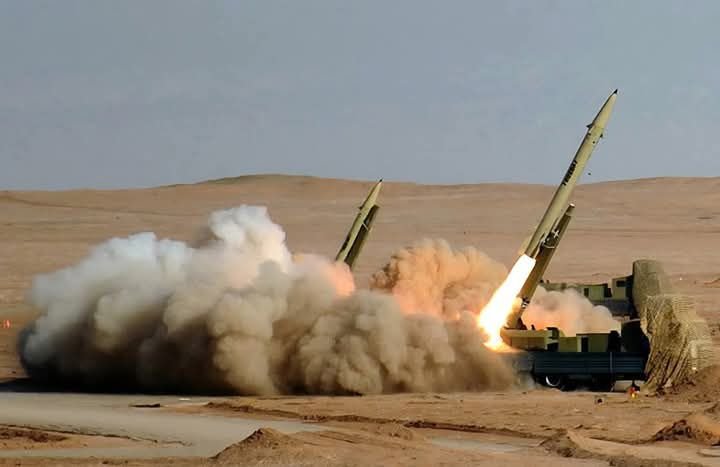

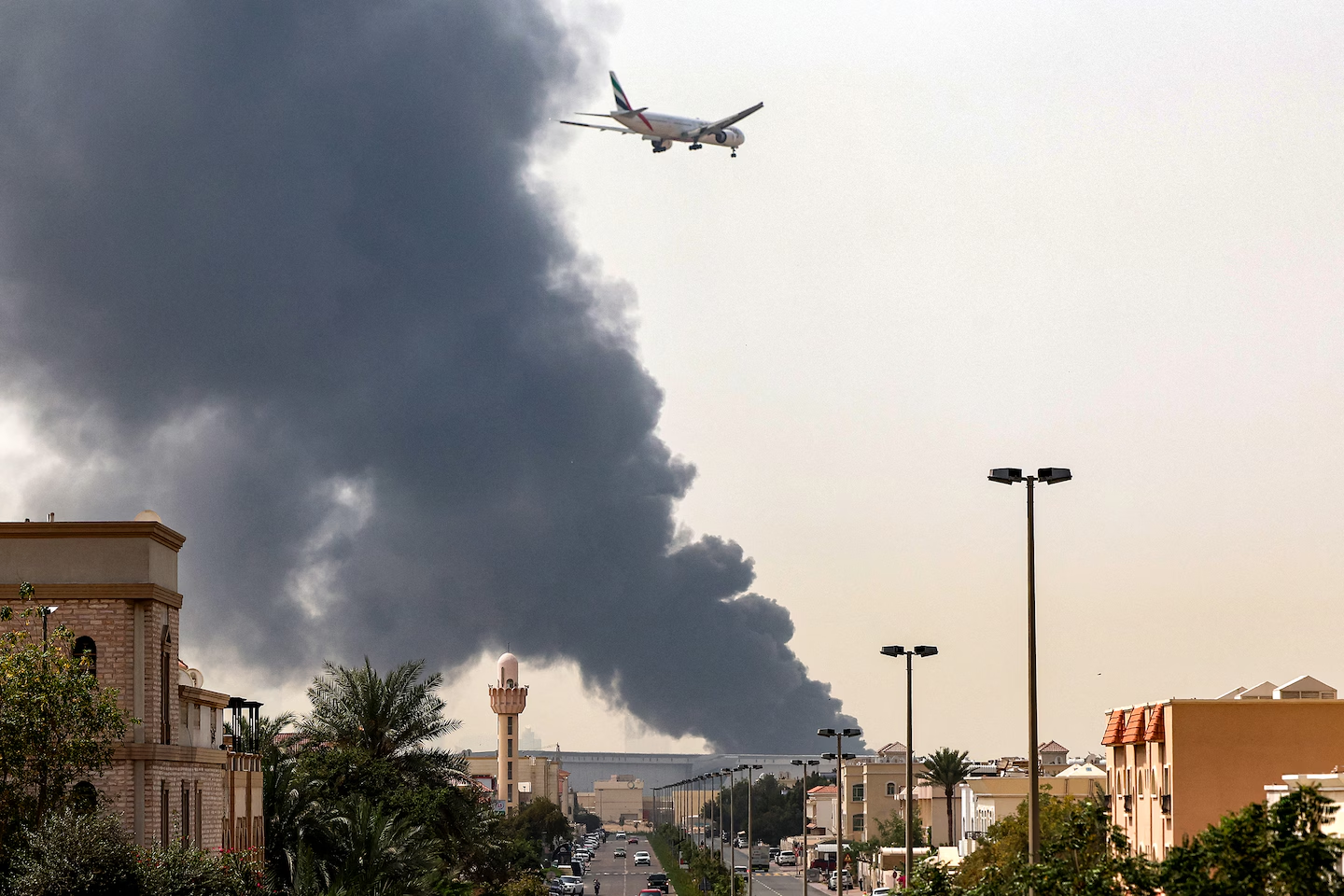
Iran’s military claims to have carried out coordinated missile and drone strikes targeting nearly 500 U.S. military personnel stationed in Dubai. The operation reportedly involved both aerospace and naval units of the Islamic Revolutionary Guard Corps (IRGC).
According to Daljoog News analysis, if confirmed, this represents a significant escalation in regional tensions, directly challenging U.S. military presence in the Gulf and raising the stakes for both sides.
The strikes come amid an ongoing period of heightened confrontation between the U.S., Israel, and Iran, where precision attacks, countermeasures, and strategic messaging have increasingly defined the conflict.
What Happened?
On Saturday, Iran’s Khattam al-Anbiya central command issued a statement claiming that the IRGC’s aerospace and naval forces launched missiles and drones against U.S. military positions in Dubai. Specific casualty figures were not disclosed, though the Iranian statement asserted “significant damage” to American forces.
Lieutenant Colonel Ebrahim Zolfakari said that U.S. personnel had evacuated to two designated locations in the city—one hosting over 400 soldiers and another housing more than 100—after the attacks. Both sites were reportedly targeted separately.
Following the strikes, injured personnel and commanders were transported by ambulance for several hours, according to the Iranian spokesperson. The statement also included a stark warning directed at Donald Trump and U.S. military leadership, suggesting that the area could become a “graveyard” for American troops if tensions persist.
Iran additionally claimed that at least six strategic U.S. naval vessels in the Persian Gulf were targeted, resulting in multiple casualties among personnel aboard those ships.
Why This Matters
Dubai hosts a substantial U.S. military presence, making it a strategic hub for operations across the Gulf region. Any successful attack in the city challenges U.S. force protection measures and signals Iran’s growing operational reach.
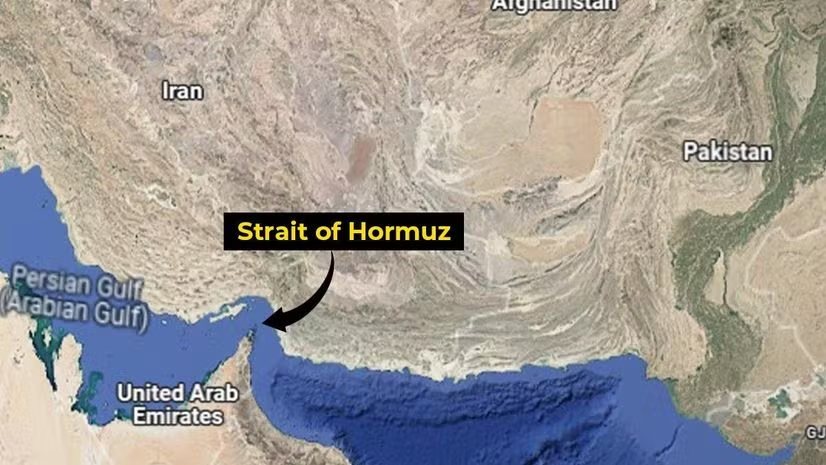
The incident carries broader implications for regional security, particularly in the Persian Gulf, a key artery for global energy supplies. Disruptions to U.S. naval capabilities could have immediate effects on shipping, oil markets, and international trade.
The attack also has diplomatic consequences. It directly tests the resolve of U.S. leadership and may influence ongoing negotiations or military planning related to the Iran-U.S. confrontation.
What Analysts or Officials Are Saying
Security analysts note that Iran has increasingly demonstrated its capacity to strike high-value targets with precision drones and missiles. Such claims, if verified, may indicate a shift from symbolic attacks to strategically significant operations.
Officials warn that even without confirmed casualty numbers, the psychological and operational impact on U.S. forces in the region could be substantial. Maintaining force readiness while navigating such threats remains a key challenge for military planners.
Observers are also monitoring potential escalation. The targeting of naval assets suggests Iran is signaling its capability to strike beyond fixed land positions, adding complexity to U.S. and allied defense planning.
Daljoog News Analysis
If the claims are accurate, these strikes underscore the evolving nature of modern regional conflicts where proxy, asymmetric, and precision attacks increasingly challenge traditional military deployments.
Iran’s messaging appears aimed not only at U.S. forces but also at projecting power regionally. Highlighting potential casualties and naming leadership directly demonstrates a deliberate effort to shape strategic perceptions.
For Washington, the challenge is twofold: protecting personnel while avoiding escalation that could broaden the conflict. The focus on Dubai, a major international hub, also signals Iran’s intent to operate in high-visibility areas, potentially influencing global attention and political calculations.
Strategically, this event could accelerate U.S. contingency planning and prompt adjustments to force posture across the Gulf, including naval deployment and defensive measures.
What Happens Next
U.S. military and diplomatic leadership are likely to reassess threat levels and reinforce security in Dubai and other regional installations. Evacuation protocols, air defense systems, and naval deployments may be adjusted to mitigate further risk.
Tehran’s statements suggest that additional strikes could occur if tensions continue, raising the potential for a rapid escalation cycle.
International stakeholders, including Gulf Cooperation Council members and global powers, will closely monitor the situation to prevent spillover effects that could impact trade, energy, and regional stability.
The coming days will be critical in determining whether these attacks represent a short-term tactical escalation or a broader shift in Iran-U.S. military engagement.