



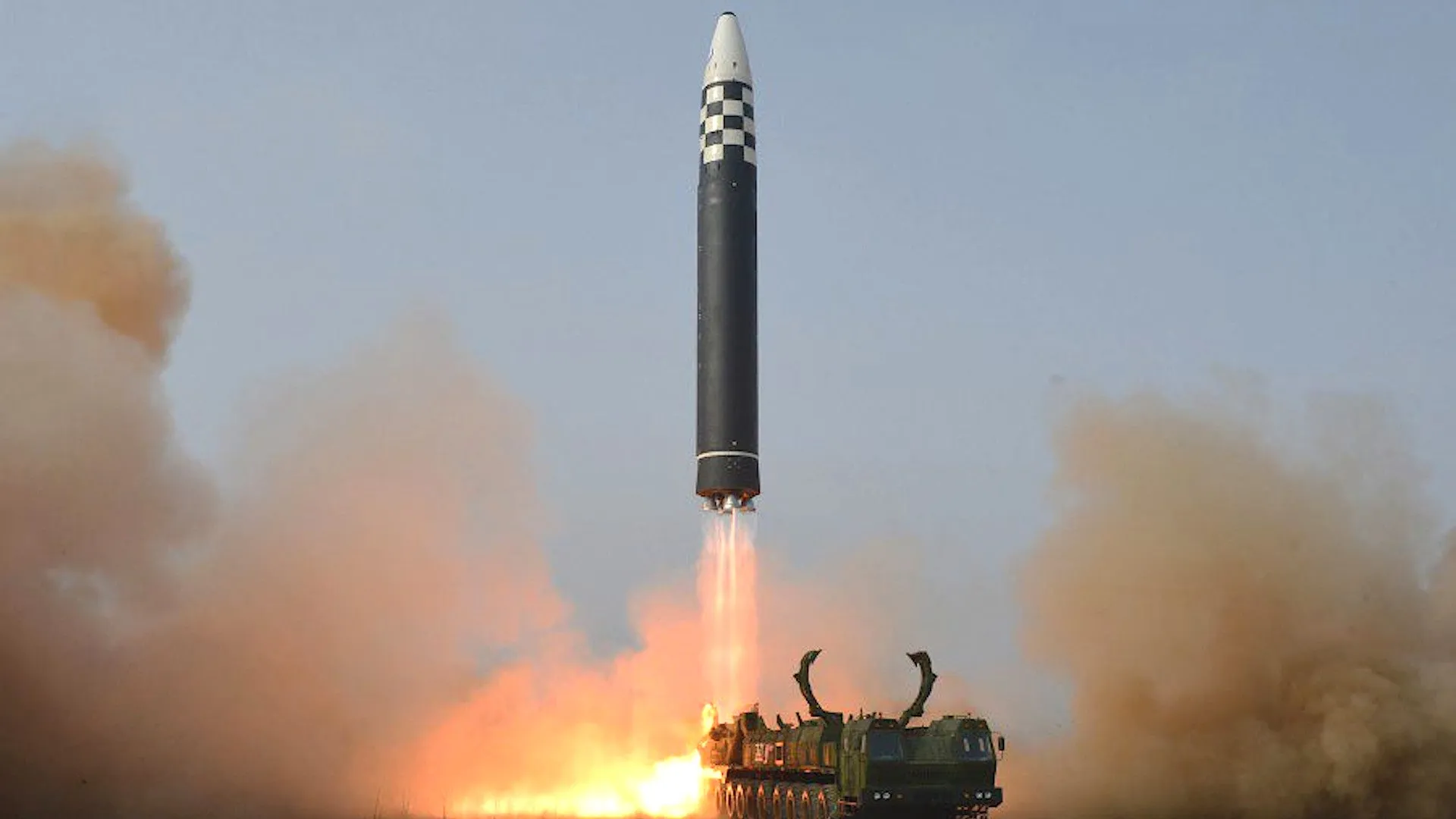
North Korea has escalated regional tensions by launching a ballistic missile near South Korea, delivering a strong response to recent U.S.-backed military developments.
On Friday, South Korea’s military reported that Pyongyang fired an unidentified ballistic missile into the East Sea. The launch came shortly after the U.S. approved South Korea’s plans to develop a nuclear-powered submarine, raising concerns across the Pacific region.
Analysts say the missile test underscores the growing unease as Seoul strengthens its nuclear capabilities. The move has alarmed both the international community and neighboring powers, including China.
In response to North Korea’s actions, the Trump administration has increased strategic support to South Korea, providing modern military technology to enhance its defense. The U.S. had recently authorized Seoul to build a nuclear-powered submarine and promised technical assistance, a step that angered North Korean leader Kim Jong-un.
Details of the missile remain unclear. South Korea’s Joint Chiefs of Staff did not disclose the missile type or its exact range. Japanese Prime Minister Suga Yoshihide confirmed that the missile landed outside Japan’s economic zone and reported no damage from the launch.
Security experts say North Korea’s missile test is part of a continued strategy to assert itself as an indomitable nuclear power. Since the failed 2019 summit between Kim Jong-un and former President Donald Trump, Pyongyang has repeatedly emphasized its nuclear deterrence capabilities.
Analysts warn that North Korea may increase its use of ballistic missiles, potentially complicating security in Northeast Asia. The region now faces heightened tensions as both military capabilities and political stakes rise.
The missile launch adds to a broader pattern of provocations in the area, challenging diplomatic efforts and highlighting the delicate balance of power in the Pacific. Experts emphasize that continued escalation could disrupt stability and pose risks to international security.
North Korea missile launch reflects Pyongyang’s determination to assert its military strength, signaling that regional powers must carefully navigate this volatile environment. The development underscores the need for vigilant monitoring and strategic cooperation among allied nations.
As the situation unfolds, security analysts stress that coordinated efforts are essential to manage tensions and prevent potential conflict. North Korea’s actions continue to shape the geopolitical landscape in East Asia, emphasizing the fragility of peace in the region.