

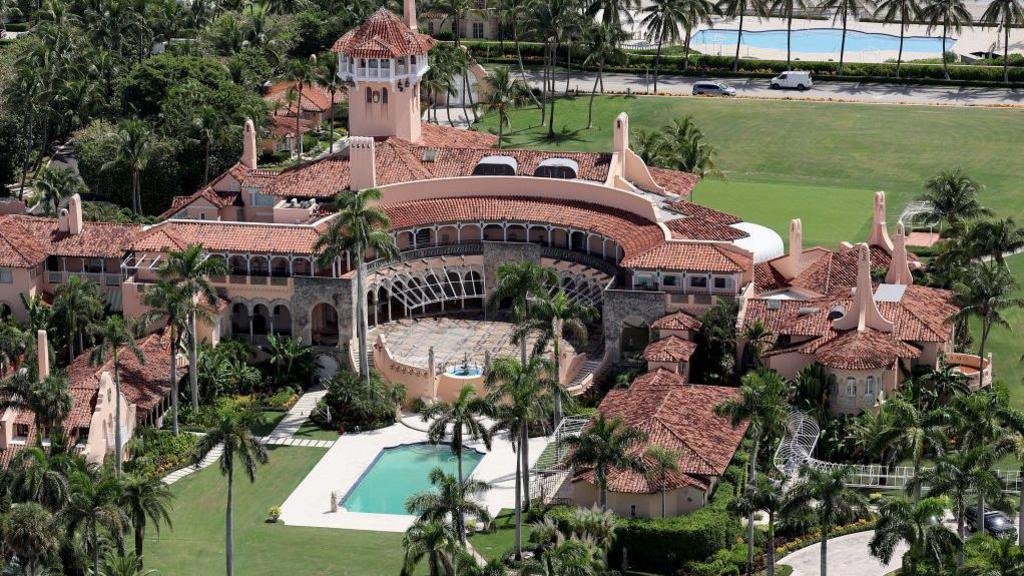
An armed man was shot and killed by US Secret Service agents after breaching the inner security perimeter of Mar-a-Lago, the Florida residence of President Donald Trump.
According to Daljoog News analysis, the incident underscores the ongoing security risks surrounding high-profile political figures and the layered protection systems guarding sensitive properties.
Authorities confirmed Trump was not in Florida at the time of the early-morning confrontation, which unfolded inside the secured grounds of the Palm Beach estate.
What Happened?
The shooting occurred shortly after 1:30 a.m. local time at Mar-a-Lago in Palm Beach, Florida.
US media identified the suspect as 21-year-old Austin T. Martin from North Carolina. Reports indicate he was armed with a shotgun and carrying a fuel container when he entered the estate’s inner security zone.
Officials said the man gained access near the north gate as a guest was exiting the property. Once inside the protected perimeter, Secret Service agents confronted him. A deputy from the Palm Beach County Sheriff’s Office assisted in the response.
Authorities confirmed agents discharged their weapons during the confrontation, resulting in the suspect’s death at the scene.
The United States Secret Service is leading the investigation, with local law enforcement agencies providing support. Officials are examining how the suspect traveled from North Carolina and whether he acquired the weapon during that journey.
Family members in North Carolina had reportedly filed a missing persons report on Saturday before the incident.
Why This Matters
Mar-a-Lago is not only a private residence but also a high-security location due to its association with a US president. Even when Trump is not present, federal protection protocols remain active.
Security breaches at properties tied to current or former presidents carry national implications. The Secret Service maintains strict layered defenses designed to prevent armed individuals from reaching secure zones. The fact that the suspect entered the inner perimeter raises immediate questions about perimeter access and gate control procedures.
This incident also arrives amid heightened political tensions nationwide. Law enforcement agencies across the United States have warned of increased threats targeting political figures and symbolic locations.
Any breach at a site like Mar-a-Lago draws swift federal attention, regardless of whether the protected individual is physically present.
What Analysts or Officials Are Saying
Law enforcement officials emphasized that the use of deadly force followed established protective protocols. When an armed individual enters a restricted perimeter and refuses or fails to comply with commands, agents are trained to neutralize the threat quickly.
Security experts note that the presence of both a firearm and a fuel container significantly elevates risk assessments. Combined, those items suggest potential for both direct violence and property damage.
Investigators are working to determine motive, travel history, and weapon acquisition details. Authorities are also reviewing surveillance footage and gate activity logs to reconstruct the suspect’s movements before the shooting.
Officials have not yet released further details regarding whether the suspect attempted to confront anyone directly or made specific threats.
Daljoog News Analysis
This incident highlights the narrow margin for error in protective security operations.
High-profile estates like Mar-a-Lago operate under complex security systems that balance privacy, guest access, and federal protection. While layered defenses exist, real-world conditions—such as vehicle movement at entry points—create moments of vulnerability.
The suspect’s ability to enter near an active gate suggests investigators will closely review procedural timing and access control coordination.
At the same time, the rapid response by agents demonstrates the decisive posture embedded in Secret Service doctrine. Protective missions prioritize immediate neutralization of credible threats to prevent escalation.
The broader pattern of armed individuals approaching political sites signals a growing challenge for law enforcement. Even when the protectee is absent, the symbolism of the location itself can attract unstable or ideologically motivated actors.
As political divisions deepen nationally, security agencies may face increasing pressure to reassess perimeter standards, staffing levels, and threat detection measures.
What Happens Next
The Secret Service will complete its internal review, a standard procedure following any agent-involved shooting.
Local and federal investigators will determine whether the suspect acted alone and clarify his intentions. Authorities are also expected to confirm where and when the firearm was purchased.
Forensic analysis, digital records, and travel data will likely shape the final assessment.
While Trump was not present during the incident, security measures at Mar-a-Lago and other protected locations may undergo additional review in the coming weeks.