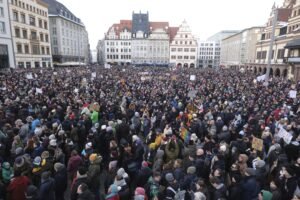


Several German cities experienced clashes and looting after demonstrations over the cost of living turned violent, creating a major public order challenge for police. The protests were organised by the campaign group Gen Z regelt, whose name means “Gen Z takes charge”. Thousands of people had joined the demonstrations to express frustration about rising living costs, underfunded schools, public spending cuts and plans involving military service.
Frankfurt was among the cities most seriously affected. Rioters looted shops in the city centre late on Saturday, while clashes between demonstrators and police disrupted parts of the financial district. Authorities reported violence in Berlin, Cologne and Hamburg as well, showing that the unrest had spread beyond a single location.
Police in several cities used water cannon to disperse groups who threw fireworks, stones and bottles. Emergency workers were also targeted during some confrontations, raising concerns about the safety of officers and members of the public. In Frankfurt, a large section of a major shopping street was closed as police attempted to restore order and prevent further damage.
The demonstrations began with wider concerns about economic pressure and public services. Many younger protesters have criticised the cost of living, arguing that housing, food and other basic expenses have become increasingly difficult to manage. They have also raised concerns about education funding and government spending priorities at a time when public institutions are facing financial pressure.
The protests were not limited to Germany. More than 320,000 people demonstrated in France on Saturday over rising costs and public services. Although the French demonstrations were largely peaceful, some clashes also occurred. The events in both countries reflect broader dissatisfaction among younger people who believe governments are not responding adequately to economic and social pressures.
In Germany, the demonstrations also included opposition to plans connected to military service. The debate has become more sensitive as European countries review defence requirements and consider how to respond to security concerns linked to the war in Ukraine. Some young people see the proposals as an additional burden at a time when they are already facing uncertainty about education, employment and housing.
The organisers of the demonstrations have said that violence was not part of their intended message. However, the looting and clashes have created a difficult situation for the movement, as the focus has shifted from its economic demands to the actions of people involved in the disorder.
Authorities have warned that attacks on emergency workers and damage to businesses will not be tolerated. Police made arrests and increased their presence in affected areas as officials assessed the scale of the damage. Local businesses were also left facing disruption, with some shops forced to close while officers secured streets and public spaces.
The unrest has placed pressure on Germany’s political leaders to respond to the concerns behind the demonstrations while maintaining public order. Economic frustration, education funding and military policy are likely to remain important subjects in the national debate. The events show how quickly peaceful demonstrations can become dangerous when groups engage in violence and attacks on property.