

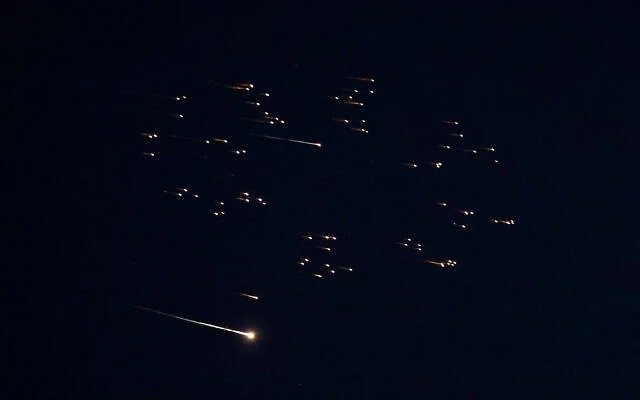
Iran launched a new wave of missile attacks toward Israel, including the reported use of cluster-style warheads targeting central parts of the country. The strikes triggered air raid sirens across major cities as Israel’s air defense systems attempted to intercept incoming projectiles.
According to Daljoog News analysis, the use of cluster-style munitions marks a troubling shift in the ongoing confrontation between Iran and Israel. The development suggests a willingness by Tehran to increase the destructive potential of its missile operations while testing the limits of Israel’s defensive shield.
The escalation comes as military activity spreads across multiple fronts in the Middle East. Iran continues targeting U.S.-allied installations in the Gulf region, while Israel has launched additional strikes against Iranian military infrastructure inside Iran itself.
What Happened?
Late Thursday night, Iran launched several missiles toward central Israel, including the Tel Aviv metropolitan area. Israeli authorities confirmed that air defense systems engaged multiple incoming projectiles.
While the Israeli military stated that most missiles were intercepted, several reportedly reached their intended targets. Iranian media and regional observers claim the missiles carried cluster-style payloads designed to disperse multiple explosive fragments over a wider area.
Air raid sirens sounded repeatedly across central Israel, forcing residents to seek shelter as emergency systems activated.
The attacks occurred alongside broader Iranian operations targeting U.S.-aligned infrastructure in the Gulf. Reports indicate continued strikes against energy installations and facilities connected to American military operations.
Meanwhile, new reports from the Washington Post suggest Russia may be providing intelligence support to Iran. According to unnamed U.S. officials cited by the newspaper, Moscow has shared information about the positions of American warships and aircraft operating in the Middle East.
The extent of Russia’s involvement remains unclear. Russian authorities have not issued immediate public comments addressing the allegations.
Israel also launched retaliatory operations inside Iran. Israeli military officials announced new airstrikes targeting infrastructure linked to Iranian armed groups.
Among the locations reportedly struck were sites in Tehran, Isfahan, and the religious city of Qom. Israeli military statements indicated that the operations focused on facilities believed to support Iran’s military networks.
Before striking certain industrial zones in Qom, Israeli forces reportedly warned civilians to evacuate nearby areas.
Why This Matters
The reported use of cluster-style missile payloads significantly raises the stakes of the conflict. Such weapons disperse multiple smaller explosives across wide areas, increasing the risk to both military targets and surrounding civilian zones.
Even if interception systems stop most incoming missiles, cluster-style munitions can complicate defensive strategies because they release multiple submunitions during descent.
The allegations of Russian intelligence support also introduce a new geopolitical dimension. If confirmed, it would suggest deeper coordination between Moscow and Tehran in confronting Western military influence in the region.
At the same time, Israel’s strikes inside Iranian territory signal that the confrontation is moving beyond proxy conflicts. Direct attacks on infrastructure in major Iranian cities could further escalate tensions and invite additional retaliation.
Regional leaders fear that the expanding cycle of strikes could pull multiple countries into the conflict, particularly if energy infrastructure or major population centers become sustained targets.
What Analysts or Officials Are Saying
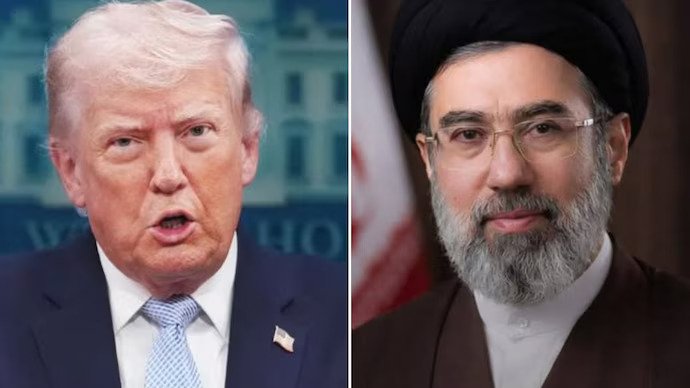
U.S. President Donald Trump issued one of the strongest statements since the crisis intensified. In a post on his social media platform, he called for Iran to surrender unconditionally and suggested that the United States and its allies would help rebuild the country under new leadership.
Trump also praised cooperation between American forces and Israeli military units, claiming that enemy forces were being weakened faster than expected.
Iranian officials rejected the demand. Foreign Minister Abbas Araghchi warned that Tehran is fully prepared to confront U.S. forces if the conflict escalates into a ground war.
Araghchi also dismissed the possibility of negotiations with Washington. Iranian leadership argues that previous diplomatic talks were interrupted by military attacks, leaving little trust in renewed dialogue.
Meanwhile, Israeli officials continue to emphasize their determination to neutralize Iranian military capabilities. Defense authorities maintain that ongoing air operations are designed to dismantle networks supporting Iranian armed groups.
In Lebanon, Israeli strikes have intensified in the southern region, where Iran-backed organizations maintain strong influence. Israeli Finance Minister Bezalel Smotrich warned that areas used by militant groups could face destruction comparable to what has occurred in Gaza if attacks on Israel continue.
More context about regional escalation can be found in this [Related Daljoog News Article].
Daljoog News Analysis
The introduction of cluster-style missile payloads indicates that the conflict is entering a more dangerous phase. While both sides have attempted to manage escalation carefully, the types of weapons now being deployed suggest that restraint is weakening.
Israel’s air defense network remains one of the most advanced in the world, yet repeated large-scale missile launches continue to test its capacity. Even a limited number of missiles penetrating the system could create psychological pressure and political demands for stronger retaliation.
The geopolitical layer involving Russia also deserves careful attention. Moscow and Tehran have developed closer strategic ties in recent years, particularly through military cooperation and shared opposition to Western influence.
If intelligence sharing between the two countries is confirmed, the conflict could evolve into a broader strategic confrontation involving multiple global powers.
Another critical factor is the widening battlefield. Israel is striking inside Iran, Iran is targeting U.S. allies in the Gulf, and tensions are spreading into Lebanon and Iraq.
Conflicts with this many interconnected fronts historically become difficult to contain.
What Happens Next
Several developments will shape the next stage of the crisis.
Israel is likely to continue targeting Iranian military infrastructure to weaken Tehran’s missile capabilities. Iranian forces may respond with additional missile and drone attacks aimed at Israeli cities and U.S.-aligned installations.
Diplomatic pressure will also increase. International actors may attempt to reduce tensions through mediation or emergency negotiations, though the political positions of the main players remain far apart.
Another key question is whether Russia’s role becomes more visible. Any confirmed intelligence or logistical support could shift the geopolitical balance and trigger stronger Western responses.
For now, the region remains on high alert. As missile exchanges continue and rhetoric hardens on all sides, the risk of a wider Middle Eastern war is steadily rising.